

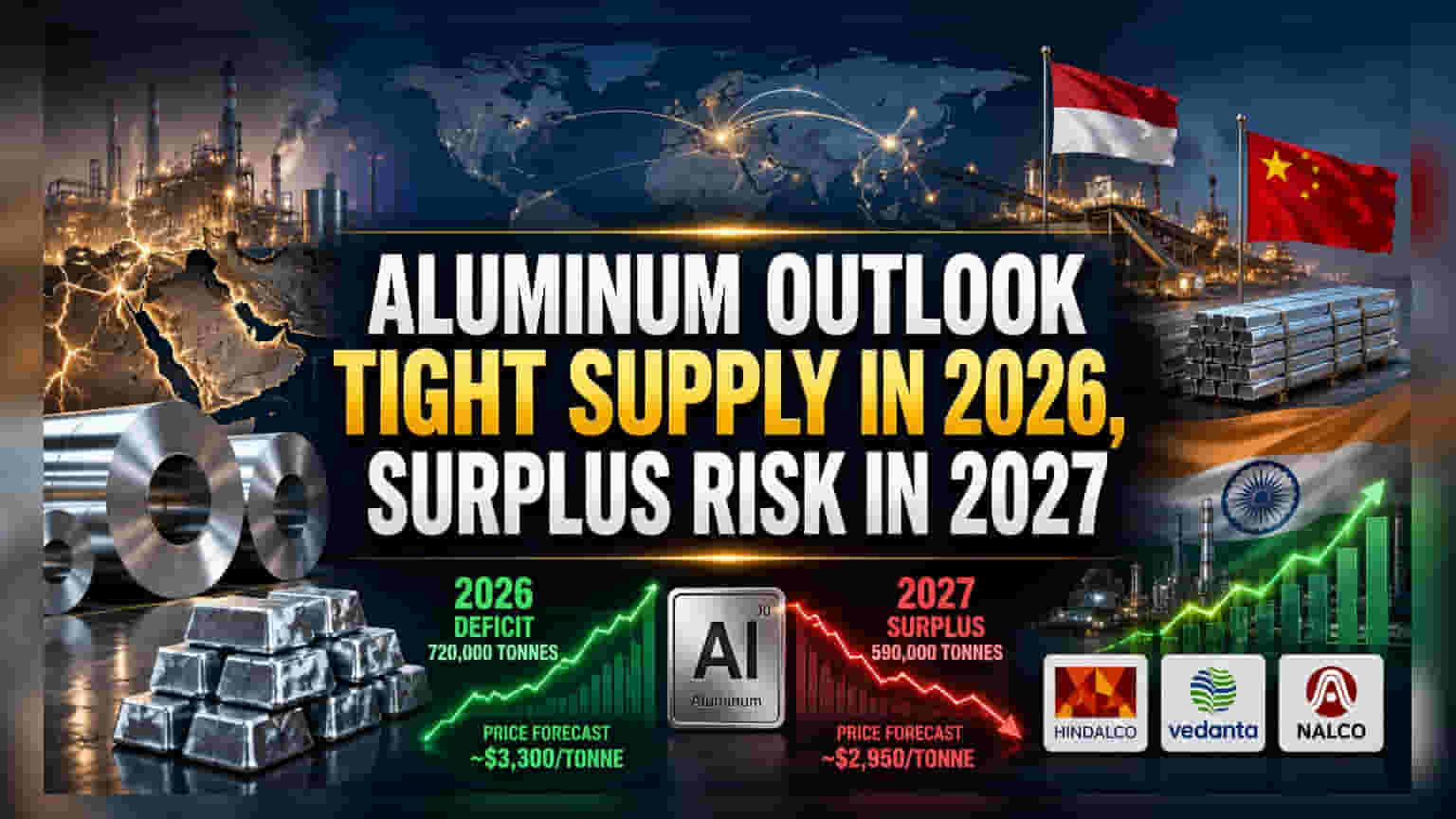
Goldman Sachs forecasts higher aluminum prices in 2026 due to Middle East production outages, but predicts a surplus by 2027 as output from Indonesia and China increases. For Indian investors, this global outlook is significant as major domestic producers like Hindalco, Vedanta, and NALCO often see their stock performance and profit margins fluctuate in line with global aluminum prices.
What Happened
Goldman Sachs has updated its outlook for the global aluminum market, signaling a period of tighter supply followed by a potential surplus. Near-term production disruptions in the Middle East are expected to persist, leading to a projected market deficit of 720,000 tonnes in 2026. This shortage is likely to keep global aluminum prices elevated, with the bank forecasting prices around $3,300 per tonne for the third quarter of 2026.
However, the outlook shifts by 2027. Increased production from Indonesia and China is expected to add significant volume to the market, potentially swinging the global balance into a surplus of 590,000 tonnes. As this new supply hits the market, the bank expects price support to weaken, leading to a long-term forecast of roughly $2,950 per tonne.
Why This Matters for Indian Investors
For investors in Indian metal stocks, global aluminum price movements are a critical factor. Companies such as Hindalco Industries, Vedanta, and NALCO are major players in the Indian aluminum sector, and their earnings and stock prices are often directly linked to global benchmark rates on the London Metal Exchange (LME).
When global aluminum prices rise due to supply constraints, these companies typically benefit from better realizations, which can boost their profit margins. Conversely, when prices fall, these companies face selling pressure. This correlation was clearly visible recently, when Indian metal stocks experienced volatility following news that geopolitical tensions in the Middle East might ease, leading to a drop in global aluminum prices.
The Balancing Act of Global Supply
The aluminum market is currently experiencing two competing forces. On one hand, damage to production facilities in the Middle East is limiting supply. These facilities require time for repairs, which supports prices in the near term. On the other hand, rapid production ramp-ups in Indonesia and China act as a counterbalance. As these nations bring more capacity online, they are expected to offset the global shortage, which could limit how high prices can go over the next year or two.
Risks and Margin Pressure
The primary risk for investors is the potential for margin pressure if the 2027 surplus materializes as forecasted. If global supply exceeds demand, aluminum prices could decline. For Indian producers, this means the profit-per-tonne could decrease, impacting quarterly results. Furthermore, while India's domestic consumption—driven by infrastructure, electric vehicles, and renewable energy—remains a strong pillar for these companies, it may not be enough to fully decouple them from global price trends if the international surplus becomes significant.
What Investors Should Track
Investors may monitor the following to understand the future impact on metal stocks:
- Global LME Price Trends: Any sustained movement in aluminum prices on the London Metal Exchange will likely influence the share prices of Indian aluminum producers.
- Global Production Data: Updates on the pace of production restarts in the Middle East and the actual output ramp-up in Indonesia and China will determine if the forecasted supply surge happens as expected.
- Domestic Demand: While global prices matter, India’s internal demand growth from the infrastructure and EV sectors continues to be a key monitorable for the long-term health of domestic producers.
- Input Costs: Changes in energy costs and raw material prices will remain important, as they determine the actual profit margins of these companies regardless of the final aluminum sale price.