

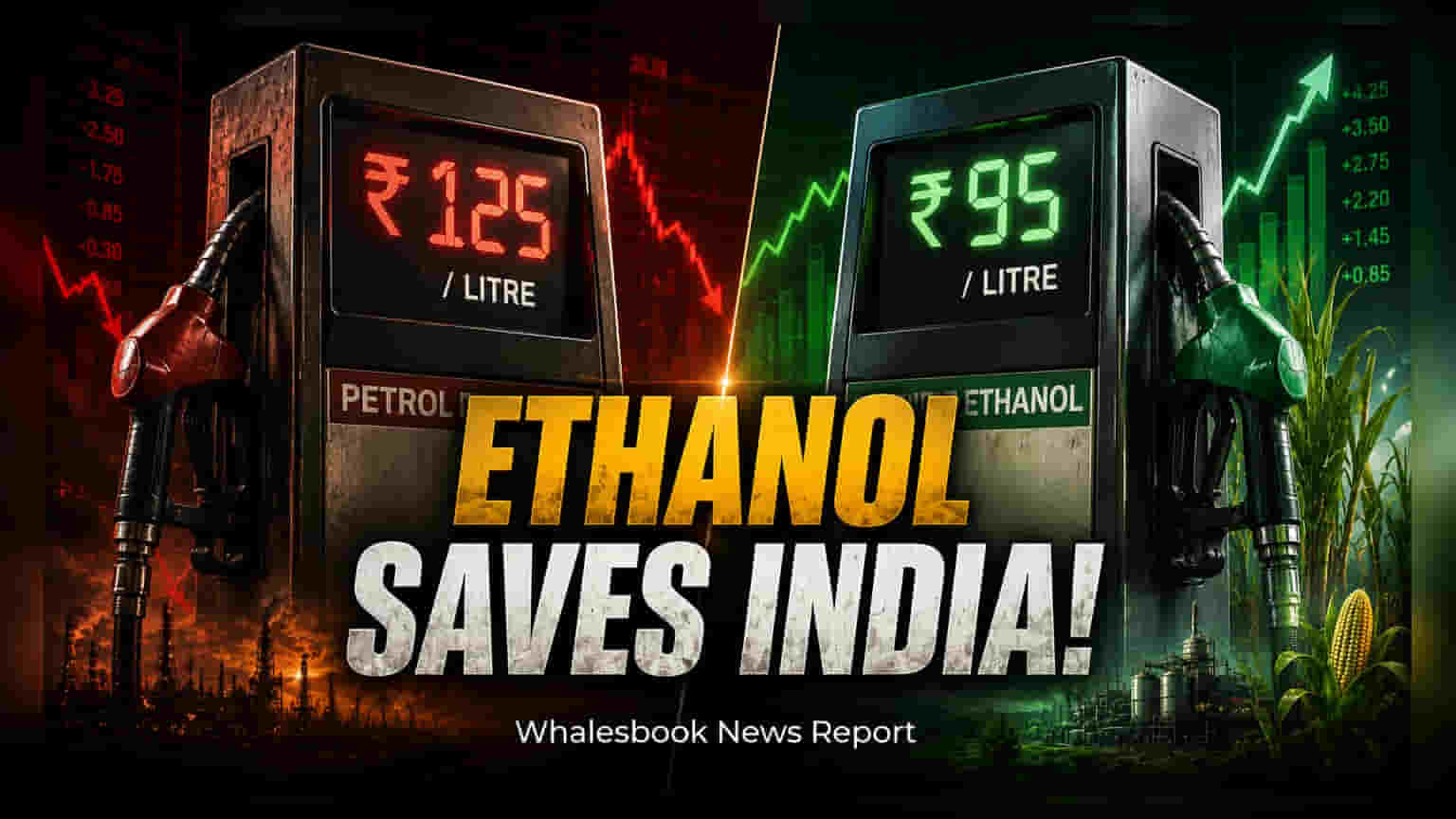
Union Minister Nitin Gadkari stated that ethanol blending prevented petrol prices from reaching ₹125 per litre during recent global tensions. By substituting crude oil imports, the program has saved significant foreign exchange and provided stability for consumers. The initiative, now utilizing E20 fuel, has also contributed ₹1.66 lakh crore in income for Indian farmers.
The Ethanol Blended Petrol (EBP) program has acted as a critical stabilizer for domestic fuel costs, according to statements made by Union Minister for Road & Highways Nitin Gadkari in Parliament on Thursday. By increasing the mix of ethanol in petrol, India has managed to soften the impact of international crude oil price spikes on local retail rates.
Impact of Ethanol on Retail Fuel Prices
During recent periods of geopolitical instability in West Asia, global crude oil prices saw significant volatility. Official data indicates that while international prices surged by 70-80% since February 2026, domestic petrol retail prices saw a much smaller increase of 7-8%. The government noted that oil marketing companies (OMCs) were able to procure ethanol at approximately ₹70 per litre, which helped keep the ex-Delhi price of petrol at ₹94.77 per litre. Without this blending initiative, it is estimated that the cost to consumers could have climbed toward ₹125 per litre.
Energy Strategy and Farmer Income
The EBP program is a core component of India's long-term energy security plan, aimed at reducing the nation's reliance on crude oil imports, which currently stand at nearly 88% of total consumption. Beyond price stability, the government highlights that the program has generated over ₹1.66 lakh crore in additional income for farmers, who provide the raw materials for ethanol production. Furthermore, the substitution of imported crude with domestic ethanol has led to cumulative foreign exchange savings of roughly ₹1.98 lakh crore.
Vehicle Performance and E20 Adoption
Concerns regarding the impact of ethanol-blended fuel on vehicle engines have been addressed by the Ministry of Petroleum & Natural Gas. With E20 fuel—containing 20% ethanol—now in use for over two-and-a-half years, the government reports no evidence of widespread mechanical issues. Data covering more than 20 crore two-wheelers and 3 crore passenger cars indicates that modern engines are operating within normal parameters. Additionally, vehicle manufacturers continue to maintain standard warranty obligations, reflecting confidence in the compatibility of current engine designs with higher ethanol blends.
Investors and market observers monitoring the energy and agriculture sectors may continue to track the pace of E20 fuel rollout and the infrastructure expansion of OMCs. The long-term financial success of the program will depend on sustained ethanol supply, the consistent pricing of feedstock, and the ability of the agricultural sector to balance grain and sugar production to meet blending targets.