

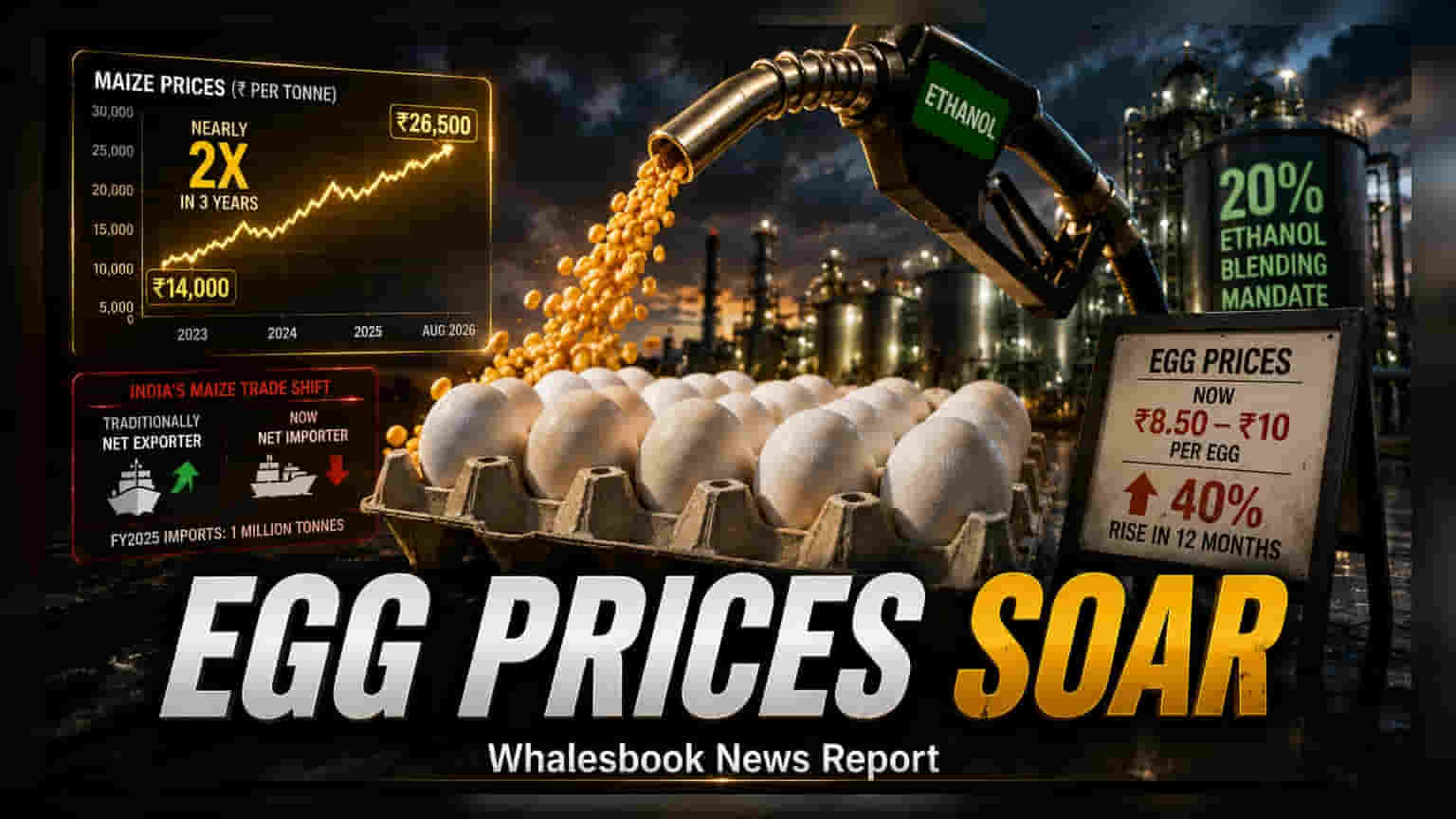
Egg prices have surged 40% over the last year as record amounts of maize are diverted to produce ethanol for fuel. With maize making up the majority of poultry feed costs, farmers are passing these expenses to consumers. Investors should monitor whether poultry companies can maintain profit margins amidst these sustained high raw material costs and shifting import dynamics.
The Indian poultry industry is facing a significant inflationary challenge as the country’s aggressive biofuel goals collide with the requirements of the livestock sector. With India pushing to meet a 20% ethanol blending mandate, a substantial portion of the domestic maize crop—the primary ingredient in poultry feed—is being redirected to ethanol distilleries rather than poultry farms.
This competition for maize has led to a sharp increase in input costs for poultry producers. Maize accounts for approximately 65% to 70% of the total production cost for chicken and eggs. Over the last three years, maize prices have nearly doubled, climbing from ₹14,000 per tonne to roughly ₹26,500 per tonne. As producers struggle to absorb these costs, retail egg prices have risen by about 40% over the past twelve months, with prices in many markets now ranging between ₹8.50 and ₹10 per egg.
The Shift from Exporter to Importer
This structural change in the maize market has altered India's trade position. Traditionally a net exporter of the grain, India has been forced to import maize to cover the domestic deficit created by the ethanol diversion. In the fiscal year 2025, imports reached 1 million tonnes, as the country sought non-GMO grain from international suppliers to stabilize supply. This reliance on imports introduces new risks, including price volatility in global commodity markets and logistical delays that could further disrupt feed availability.
Investor Perspective and Sector Pressure
For investors, the primary concern is the impact on profit margins for companies in the poultry and feed sectors. When input costs rise this rapidly, companies face a difficult choice: absorb the costs and see margins shrink, or pass the price increase to consumers and risk a drop in demand.
Historically, the poultry industry operates on thin profit margins. Persistent high costs for feed can lead to operational strain, where smaller producers might cut back on production or cull flocks to reduce overhead. Furthermore, the industry is entering a period where seasonal demand, particularly during the winter months, typically spikes. If the structural shortage of maize remains unresolved, this could put additional upward pressure on retail prices and keep volatility high in the poultry supply chain.
What to Track Next
The most important monitorables for investors include the upcoming maize harvest, any adjustments to government ethanol policy regarding food-grade grain usage, and the trend in domestic maize imports. Market participants will also be watching for updates in quarterly financial results to see if companies are successfully managing these inflationary pressures or if margins are beginning to show signs of stress. Any significant change in government policy regarding ethanol feedstock or import duties on maize could also trigger a shift in market sentiment for the sector.