

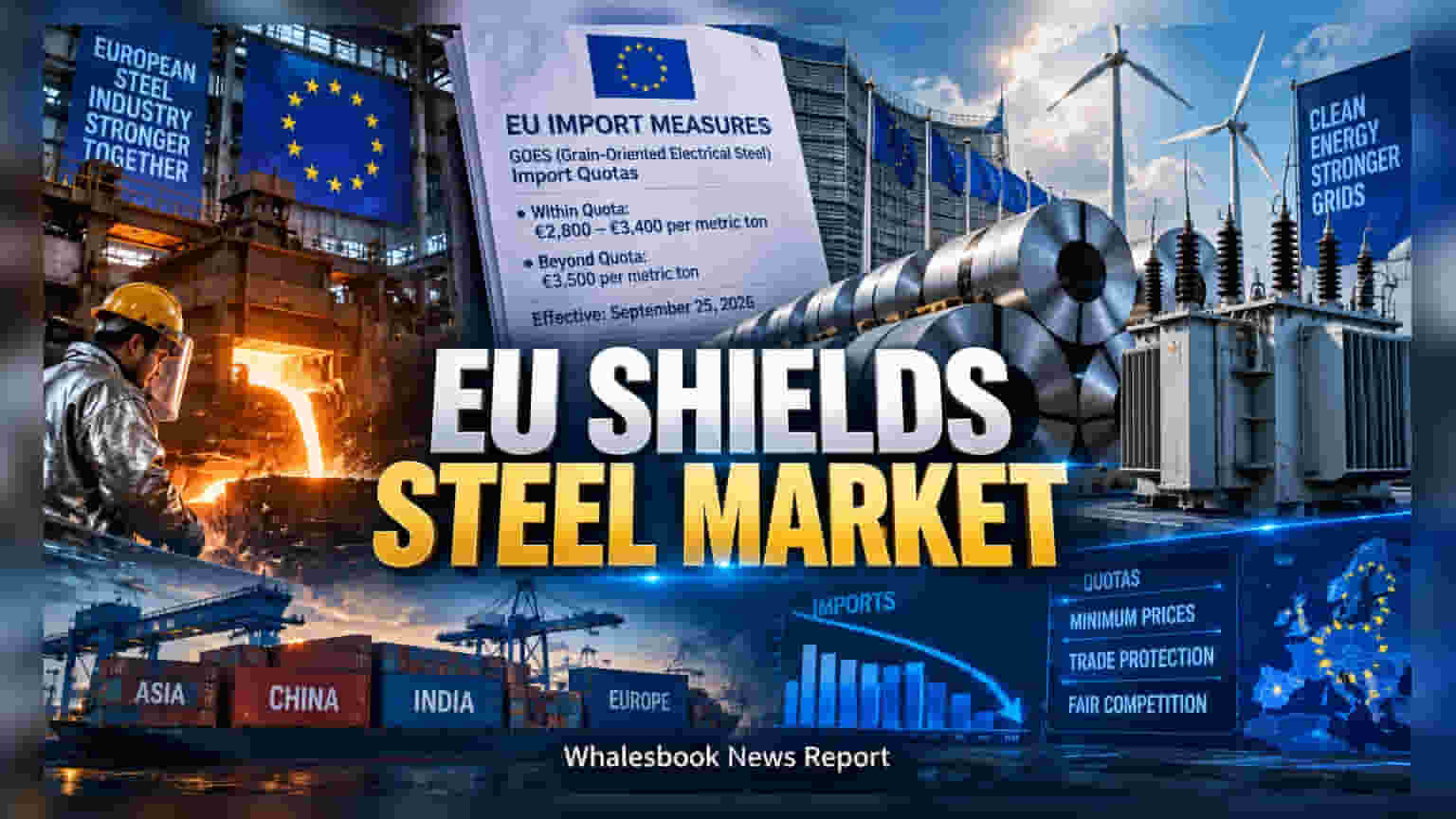
The European Union will implement new import quotas and price floors on Grain-Oriented Electrical Steel (GOES) starting September 25, 2026. This protective trade measure targets low-priced imports to support domestic manufacturers, which may impact pricing dynamics for global steel exporters supplying the European energy infrastructure market.
The European Union is moving to protect its domestic steel industry by introducing strict import quotas and minimum price requirements for Grain-Oriented Electrical Steel (GOES) and related products, effective September 25, 2026. This regulatory shift comes as the European Commission continues an ongoing safeguard investigation that began in March, aimed at shielding local manufacturers from the impact of low-priced imports, primarily from Asian markets.
Under the new framework, the European Union has set specific price benchmarks. For imports within the assigned quota, prices must range between €2,800 and €3,400 per metric ton. Any imports exceeding these quotas will be subject to a higher minimum price of €3,500 per metric ton. These rules also extend to downstream products, including transformer cores and laminations, which are critical components for electrical grids and wind energy equipment.
Impact on Global Steel Trade
This move by Brussels is a significant development for global steel producers, including Indian companies that have been expanding their capabilities in value-added steel products. While the European Commission intends to support domestic players like Germany's Thyssenkrupp and Poland's Stalprodukt SA, the policy creates a hurdle for exporters who have relied on price competitiveness to penetrate the European market. With China accounting for over 50% of the European Union's imports of these products in 2025, the measure is clearly aimed at curbing what European policymakers have described as an oversupply of low-priced foreign material.
For Indian steel majors like Tata Steel and JSW Steel, which have been increasing their focus on high-end electrical steel as part of their strategy to serve the energy transition sector, the European market remains a key destination. This new trade barrier implies that Indian exporters will need to navigate stricter pricing and volume constraints if they intend to maintain or grow their market share in Europe. The shift essentially raises the entry barrier for non-EU producers, potentially affecting margins if they are forced to lower prices to accommodate the new cost structures or if they are unable to fill the quotas.
Market Context and Monitorables
This decision marks a departure from earlier periods where electrical steel had been excluded from broader steel protection measures. The new framework is separate from existing anti-dumping duties that have been in place for various steel products since 2015. Investors and market watchers should note that the current measures are provisional. The path toward permanent safeguards will depend on the final outcome of the European Commission's investigation and requires approval from the majority of European Union member states.
The key monitorable for investors will be the volume of exports from Asian producers to the European Union following the implementation date. Additionally, market participants will track whether global steel prices see upward pressure as a result of these artificial floors, or if demand for specialized electrical steel in Europe shifts toward internal suppliers, thereby altering trade flows in the global steel sector.