 Whalesbook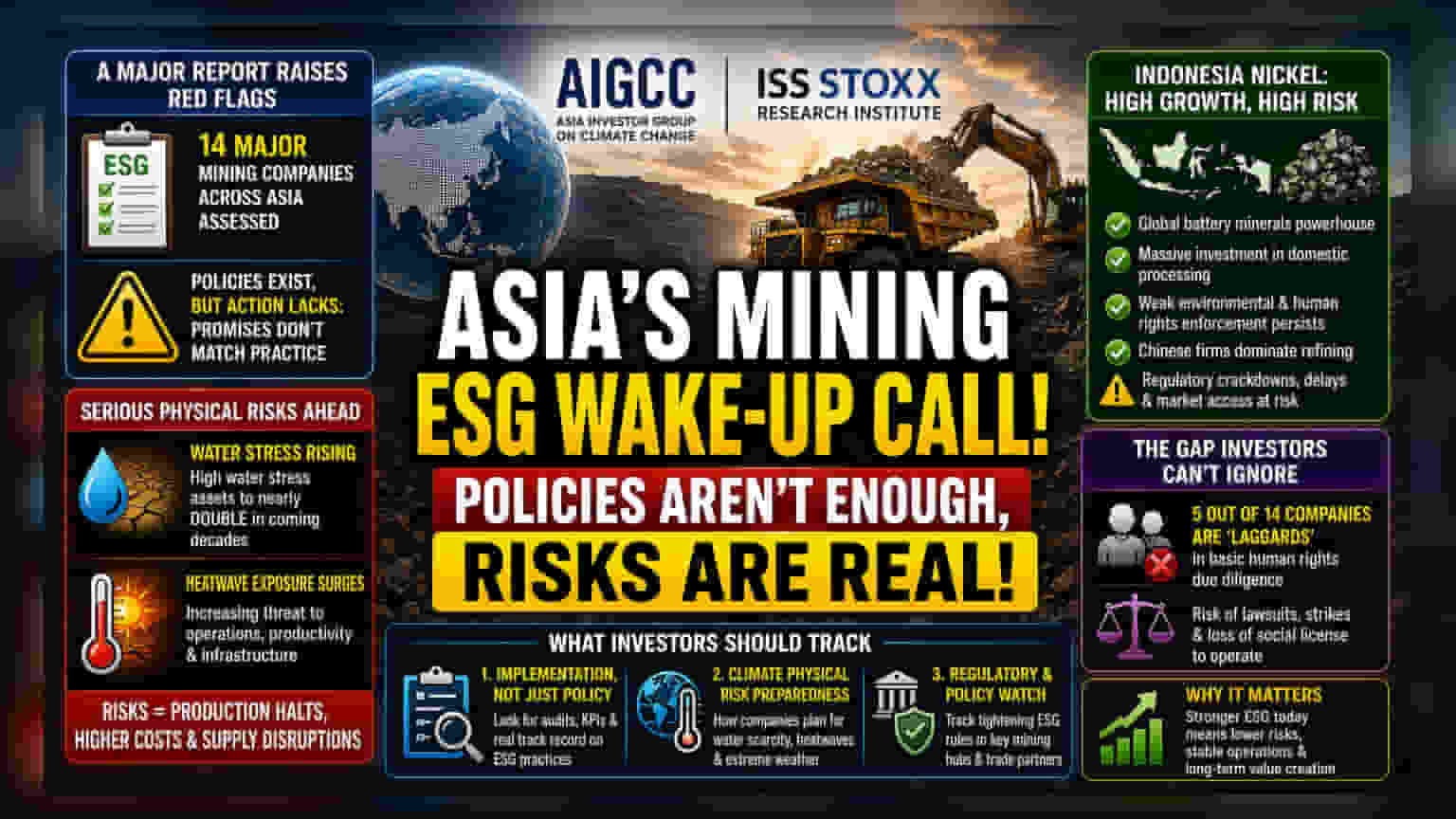


A new report from the Asia Investor Group on Climate Change and ISS STOXX finds a significant gap between sustainability policies and actual operations in Asian critical minerals mining. Investors face hidden risks, including potential supply chain disruptions, environmental challenges, and regulatory issues. As demand for minerals like nickel and copper grows, understanding the difference between policy promises and operational reality is essential for managing investment risk.
What Happened
A recent report by the Asia Investor Group on Climate Change (AIGCC) and ISS STOXX Research Institute has highlighted serious concerns about how mining companies in Asia manage environmental, social, and governance (ESG) responsibilities. The study assessed 14 major mining operators across the region. While many of these companies have written policies regarding human rights, labor, and environmental protection, the report found that these policies often fail to translate into effective daily actions. This gap between promise and practice is a crucial red flag for investors who rely on sustainability disclosures.
The Real Operational Risks
For investors, the findings suggest that the risks are not just about reputation but also about potential operational disruptions. The report identified two major physical threats that could impact the bottom line of these mining firms. First, water stress is rising. The number of mining assets facing high water stress is projected to nearly double in the coming decades, which could lead to production halts or increased costs to source water. Second, heatwave exposure is expected to surge, further threatening operational continuity.
These physical risks can increase capital spending as companies struggle to adapt their infrastructure to extreme weather. When companies fail to manage these risks effectively, it often leads to supply chain volatility, which affects downstream industries like electric vehicle manufacturing and renewable energy storage.
Indonesia’s Nickel Market and Investor Caution
The report specifically analyzed the nickel market in Indonesia, a region that has become a global powerhouse for battery minerals. While Indonesia has attracted significant investment to boost domestic processing, the report notes that weak enforcement of environmental and human rights standards remains a persistent issue. With Chinese firms holding a large share of the refining capacity, investors need to be aware of the regulatory and social complexities involved. Poor environmental or labor practices in these regions can lead to sudden regulatory crackdowns, project delays, or loss of access to international markets that demand strict sustainability compliance.
Why Investors Must Look Beyond Policies
In the current market, many companies publish elaborate sustainability reports. However, this study warns that investors should not mistake a policy document for operational excellence. The report found that five of the 14 companies assessed were categorized as 'laggards' in performing basic human rights due diligence. This creates a hidden risk for investment portfolios, as these companies may be prone to lawsuits, strikes, or loss of 'social license to operate'—the acceptance of a company's activities by the local community.
What Investors Should Track
Investors looking at companies in the critical minerals sector—or funds heavily exposed to these commodities—should focus on three key areas. First, look for evidence of implementation rather than just policy statements. Does the company have a track record of auditing its water usage or labor practices? Second, monitor how companies are preparing for climate-related physical risks, such as water scarcity and heatwaves, as these directly threaten asset productivity. Finally, stay updated on the regulatory landscape in major mining hubs. As environmental enforcement tightens, companies that have ignored these issues in the past are the most likely to face sudden financial hits from penalties or operational restrictions.