

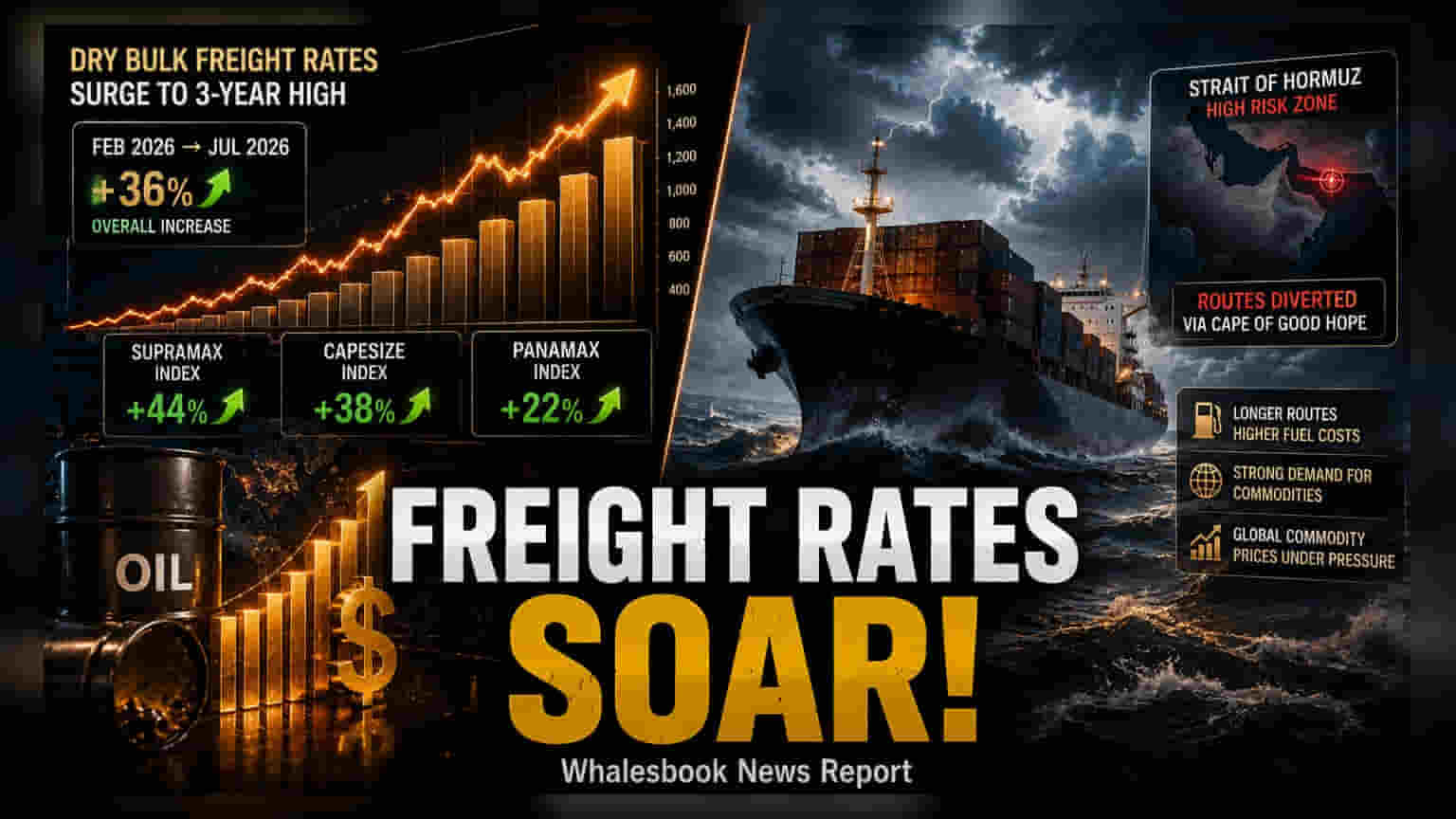
Dry bulk freight rates have jumped 36% between February and July 2026, reaching a three-year peak. The surge is driven by higher oil prices and the US-Iran conflict, which is forcing ships to take longer routes. This increase is raising input costs for commodity-reliant businesses and creating inflationary pressure across global supply chains.
Global shipping costs have witnessed a sharp rise, with dry bulk freight rates surging approximately 36% between February and July 2026. This climb marks the highest levels seen in three years, largely driven by a combination of rising international oil prices and intensifying geopolitical instability, particularly the ongoing US-Iran conflict.
According to data from Bank of Baroda Research, the increase is widespread across different vessel types. The Supramax index, which tracks mid-sized carriers responsible for transporting grains, coal, fertilizers, and construction materials like cement and steel, saw the steepest rise of 44%. Meanwhile, the Capesize index—which represents the largest ships primarily used for coal and iron ore—climbed by 38%, and the Panamax index rose by 22%.
Why Shipping Costs Are Rising
Two main factors are creating this pressure. First, the geopolitical tension in critical waterways like the Strait of Hormuz has forced many vessels to avoid these zones. To ensure safety, ships are instead rerouting via the Cape of Good Hope. This added distance means ships consume significantly more fuel and take longer to complete their journeys, adding to operational expenses.
Second, global demand for essential commodities, including agricultural products, electricity-generating coal, and infrastructure materials, remains strong. When demand for raw materials stays high while shipping capacity is stretched by longer routes, freight rates naturally move upward.
Impact on Global Commodity Prices
This surge in logistics costs is not staying within the shipping industry; it is beginning to affect commodity prices globally. As shipping becomes more expensive, the final landed cost of raw materials increases. Manufacturers and companies that rely on imports of iron ore, coal, or agricultural products are seeing their input costs rise. This situation often leads to a ripple effect, where the extra cost is passed down the supply chain, potentially leading to higher prices for finished goods.
Broader Logistics Headwinds
The impact is not limited to ships. The conflict and rising aviation fuel costs have also pressured air cargo volumes, which saw a significant decline in international operations between February and June 2026. Domestically, road freight rates in major cities have also climbed to five-year highs, reflecting a broader inflationary environment in the logistics sector.
For investors, the key monitorable will be the volatility of oil prices and the duration of these geopolitical tensions. If freight rates remain at these elevated levels, companies with thin profit margins that rely heavily on imported commodities may face earnings pressure. On the flip side, the environment places focus on logistics and shipping companies as they navigate these operational challenges.