

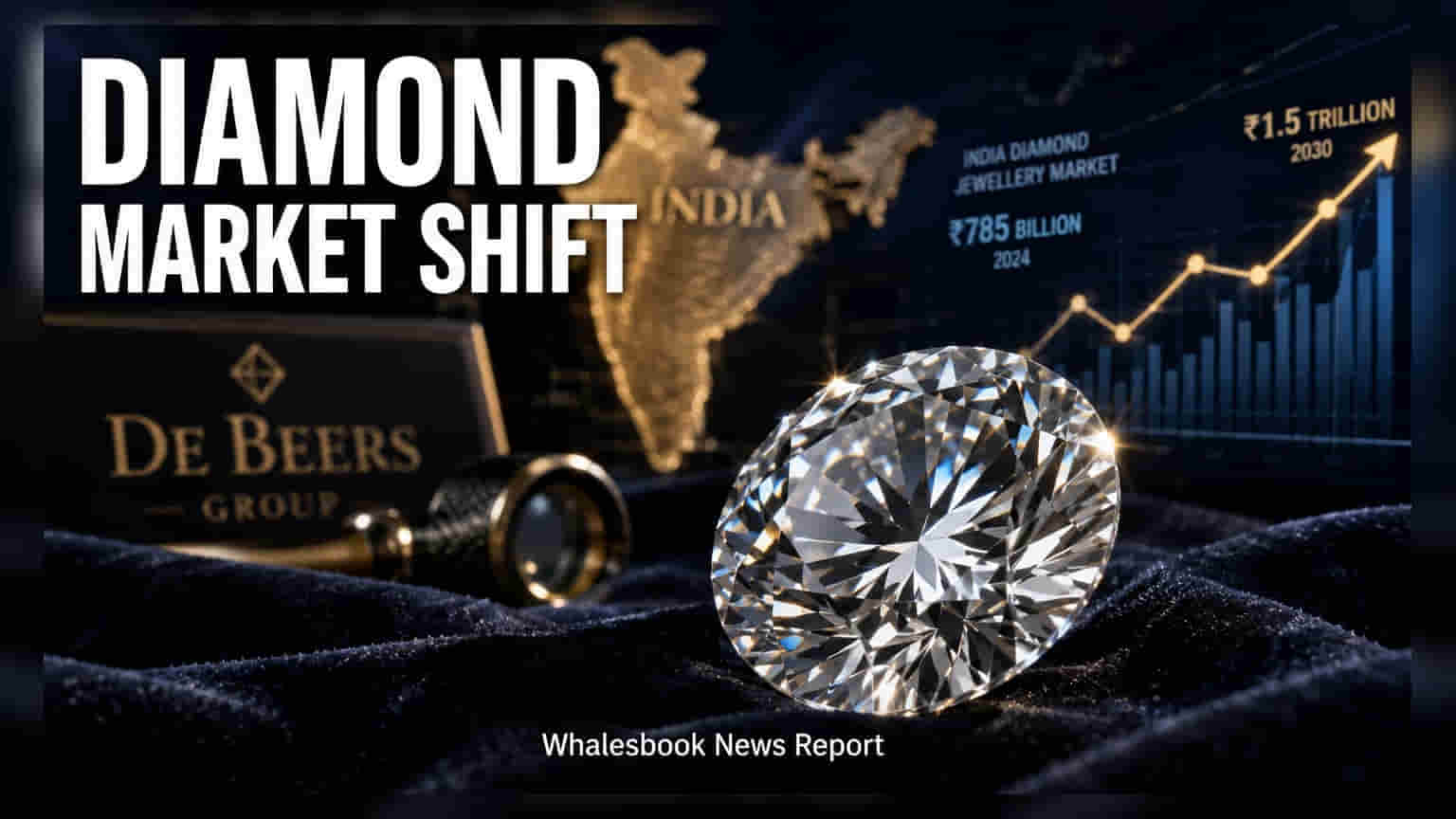
De Beers is increasing its focus on the Indian market, which has become the world’s second-largest consumer of natural diamonds. This strategic pivot aims to offset cooling demand in China and ongoing industry-wide pressure from lab-grown alternatives. Despite recent signs of price stabilization, the mining giant continues to face significant financial hurdles and restructuring challenges.
De Beers, the global mining giant, is shifting its primary growth strategy toward India to counteract a slowdown in Chinese luxury spending and a broader industry downturn. As global natural diamond prices begin to stabilize after a 20-30% correction from their post-pandemic peaks, the company is positioning India as its most critical market. India has recently surpassed China to become the world’s second-largest hub for natural diamond jewellery, trailing only the United States.
Financial Pressure and Structural Shifts
For investors, it is important to note that De Beers is not a publicly traded company on the Indian stock exchanges. It is 85% owned by the global mining group Anglo American, which is currently evaluating options to sell or spin off the business. De Beers has been grappling with intense financial stress, reporting an underlying loss of $188 million in the first half of 2026. While this marked a 23% improvement from the previous year due to cost-cutting measures, the company has faced massive writedowns totaling $6.8 billion over the last three years. In an effort to manage excess inventory and preserve cash, the company has even paused production at its Venetia mine in South Africa for a two-year period.
The Challenge of Lab-Grown Diamonds
Beyond the slowdown in China, the natural diamond industry faces a persistent structural challenge: the rise of lab-grown diamonds. These stones are significantly cheaper and have rapidly captured market share from natural diamonds, putting downward pressure on prices and profit margins across the sector. This shift has forced major players to rethink their long-term supply and marketing strategies. While De Beers is emphasizing the value of natural stones, the cost advantage of lab-grown alternatives remains a key factor that continues to influence consumer choices in India and globally.
Indian Growth Drivers
Despite these industry-wide challenges, the outlook for the Indian market remains strong. De Beers projects the Indian market, valued at ₹785 billion in 2024, to reach a valuation of ₹1.5 trillion by 2030, representing a compound annual growth rate of 12%. This growth is being driven by a younger demographic, with Gen Z and millennials now accounting for the majority of the market value. Additionally, consumption patterns are changing; while bridal jewellery remains a staple, there is a clear rise in daily-wear jewellery and self-purchasing by women, which reduces dependence on the wedding season.
For investors tracking Indian jewellery retailers like Titan, Kalyan Jewellers, or Senco Gold, the core monitorable will be how the mix of natural versus lab-grown diamonds evolves in retail showrooms. As global mining giants like De Beers step up their marketing and investment in India, the competitive landscape for natural diamond jewellery will likely intensify, potentially impacting margins and consumer trends in the coming years.