 Whalesbook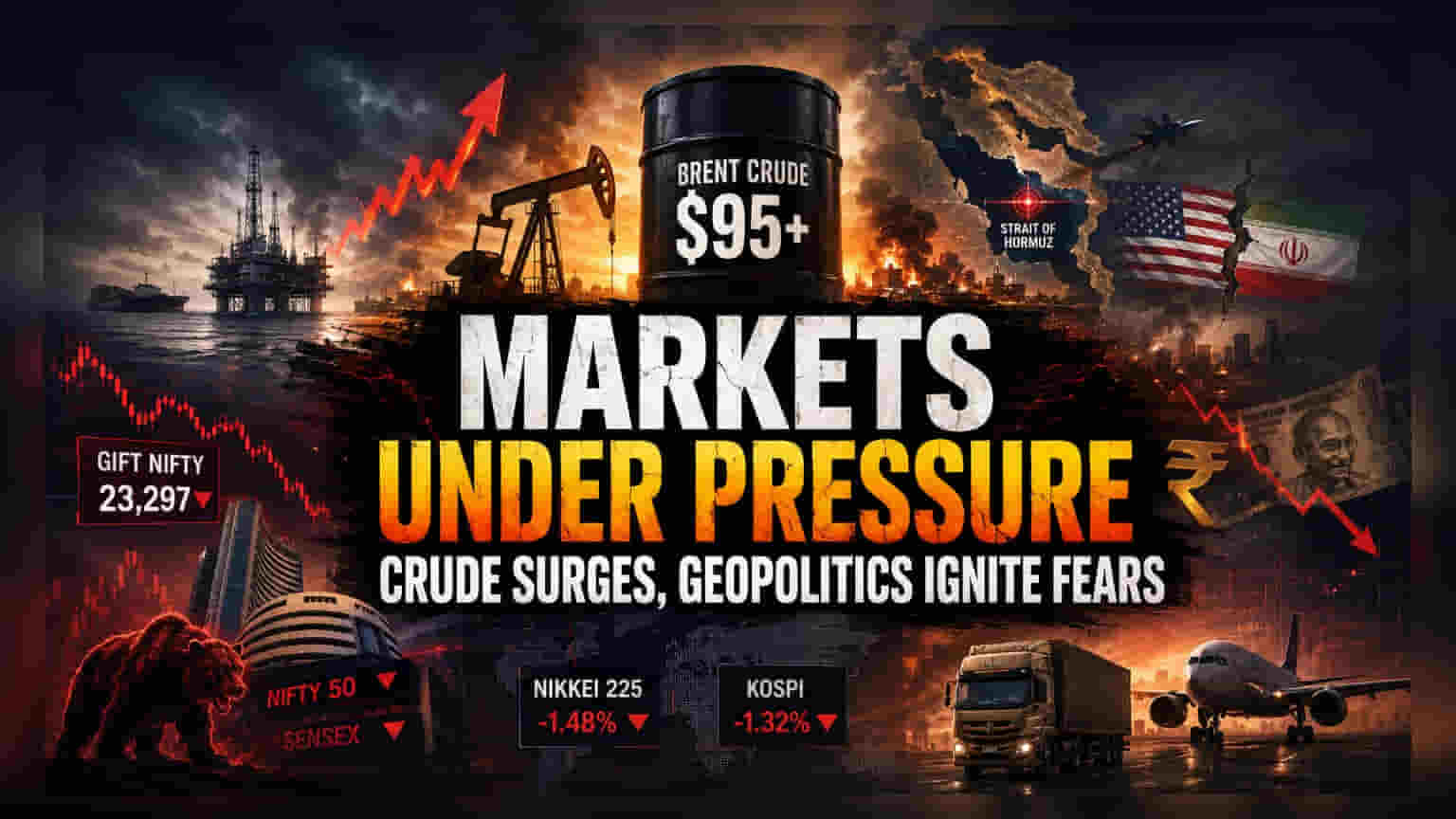


The Macro-Crude Transmission Mechanism
Indian equity benchmarks are confronting a classic cost-push inflationary signal as Brent crude prices surged 4.2%, breaching the $95 threshold. This move is not merely a reflection of immediate supply-side fears regarding the Strait of Hormuz, but a repricing of the energy risk premium that has remained dormant for much of the quarter. For the Nifty 50 and Sensex, the structural risk lies in the lag between crude spikes and retail fuel pricing, which threatens the operating margins of state-owned Oil Marketing Companies (OMCs) and complicates the Reserve Bank of India’s inflation trajectory. As the GIFT Nifty signals an opening near 23,297, the technical breakdown below recent support levels suggests that institutional desks are de-risking ahead of potential supply chain disruptions.
The Geopolitical Divergence
The current market environment is characterized by a high-stakes informational gap between diplomatic optimism and military reality. While US leadership has signaled a potential breakthrough in ceasefire negotiations involving the Strait of Hormuz, the local sentiment on the ground, underscored by the suspension of direct bilateral talks, suggests that the conflict remains highly liquid. This creates a dangerous environment for algorithmic trading, as contradictory headlines regarding military strikes in Beirut and ceasefire progress are triggering rapid, whipsaw movements in Asian indices. Japan’s Nikkei 225 and the Kospi have already absorbed a significant portion of this risk, acting as a lead indicator for potential further slippage in Indian mid-caps that lack the hedging capacity of larger constituents.
The Structural Bear Case
The primary danger for domestic investors is the double-bind of energy dependence and currency depreciation. If the $95 level for Brent holds, the resulting widening of the Current Account Deficit will likely force the INR into a defensive posture against the USD, creating an unwanted confluence of rising input costs and higher cost of capital. Furthermore, unlike the cyclical volatility observed in the previous fiscal year, the current market is pricing in a 'geopolitical tax' that disproportionately punishes domestic industrials. Companies with high leverage and significant fuel intensity—particularly within the logistics and aviation sectors—face a margin squeeze that is not currently reflected in their trailing valuation multiples. Investors should remain wary of the 'dip-buying' impulse, as the confluence of momentum-driven selling and inflationary pressure creates a poor risk-reward ratio for short-term entry.
Forward Trajectory and Market Sentiment
Brokerage sentiment remains split between the optimistic outlook of a rapid diplomatic resolution and the cynical reality of energy supply fragility. While the long-term fundamentals of the Indian economy remain distinct from Middle Eastern instability, the short-term correlation between energy price shocks and domestic capital outflows remains high. Markets will likely monitor currency movements and the persistence of the crude premium above $90 as the definitive indicators for a sustained recovery or a deeper consolidation phase.