

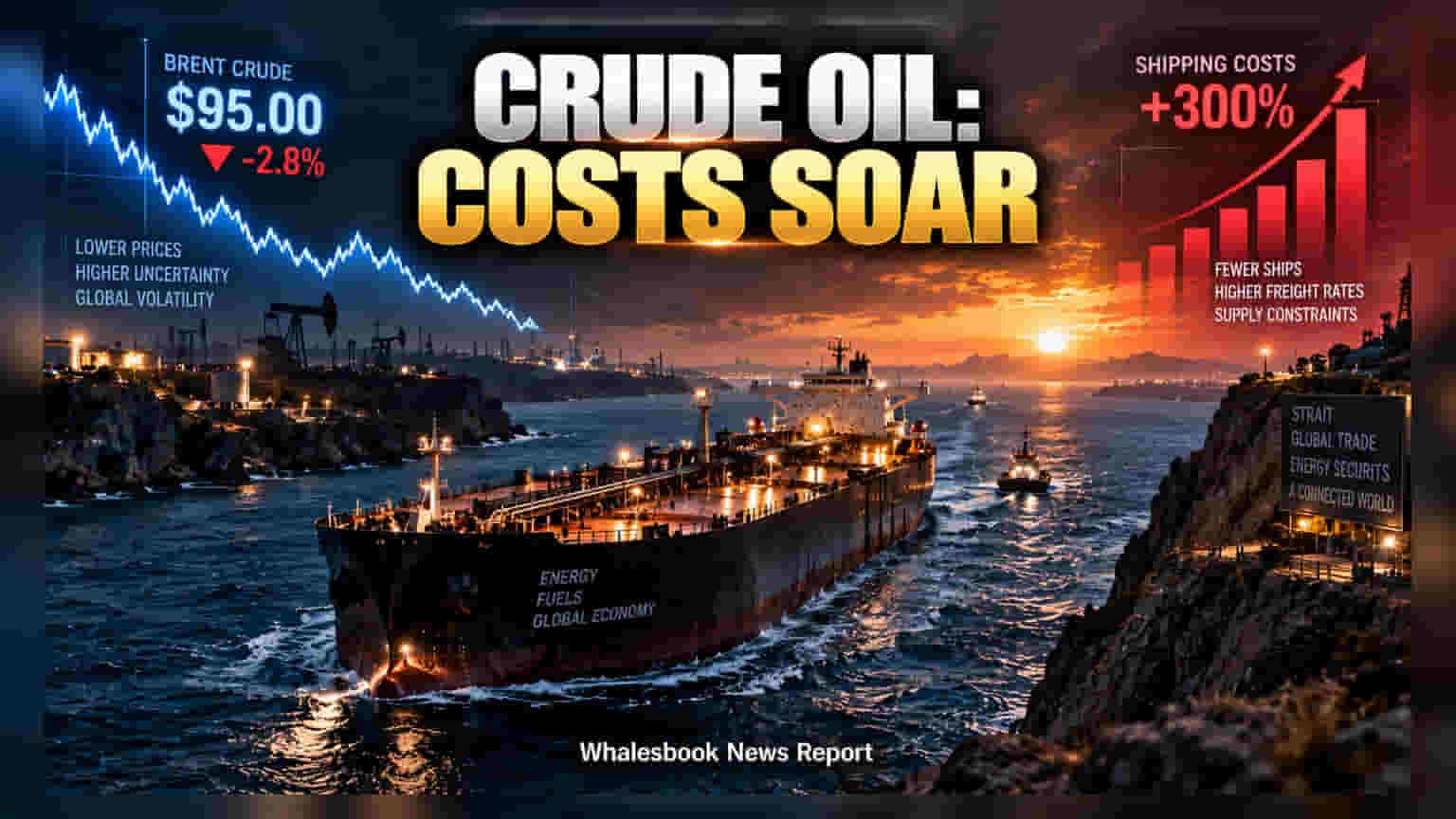
While global crude prices have dipped on diplomatic optimism, the cost of moving oil has hit record highs, creating a paradox for energy markets. For Indian investors, the disconnect between falling oil prices and expensive delivery means that fuel inflation and profit margin pressure for oil marketing companies could persist.
Global energy markets are witnessing a rare disconnect between commodity prices and logistics costs. While crude oil prices have recently eased, trading near $95, the cost to deliver that energy to refineries has decoupled from the commodity price itself. This trend is driven by a severe shortage of supertankers, forcing shipping costs to record levels where transit fees now account for up to 25 percent of contract values.
The Logistics Bottleneck
Shipping a full load of crude on a supertanker now costs between $1.2 million and $1.4 million per day for routes from the Middle East to Asia. This surge is largely due to years of low investment in new ships, leaving the global fleet unable to handle current demand. Furthermore, western sanctions on the 'dark fleet'—vessels often used to transport oil from sanctioned regions—have forced nearly 15 percent of the global Very Large Crude Carrier fleet into longer, less efficient routes or ship-to-ship transfers. Since building new ships takes years, this supply constraint is unlikely to resolve quickly.
Impact on Indian Oil Companies
For Indian oil marketing companies (OMCs) like Indian Oil Corporation (IOC), Bharat Petroleum Corporation (BPCL), and Hindustan Petroleum Corporation (HPCL), this situation presents a complex challenge. While lower crude spot prices are generally favorable, the high 'landed cost'—the total cost including the expensive shipping—means that the benefit of cheaper oil is partially offset by rising delivery bills. If these companies cannot fully pass on the higher shipping costs to the retail consumer, their profit margins may come under pressure.
Meanwhile, private refiners like Reliance Industries are navigating this by optimizing their processing rates to capture wide 'crack spreads'—the difference in price between crude oil and finished products like diesel and jet fuel. Demand for these refined products remains strong, which helps support refining margins. However, the overall profitability for the sector will rely on whether the high shipping costs stabilize.
Inflation and Economic Risks
For the broader Indian economy, the high cost of transporting energy is a concern. As a major importer, India’s total import bill is sensitive to both oil prices and shipping rates. Persistent high delivery costs can contribute to imported inflation, potentially affecting the Current Account Deficit and the value of the Rupee. Investors should monitor retail fuel price revisions, as these serve as a primary indicator of how well OMCs are managing the impact of these logistics costs. The next important update for shareholders will be management commentary on how these rising transit fees are being balanced against demand for refined products.