

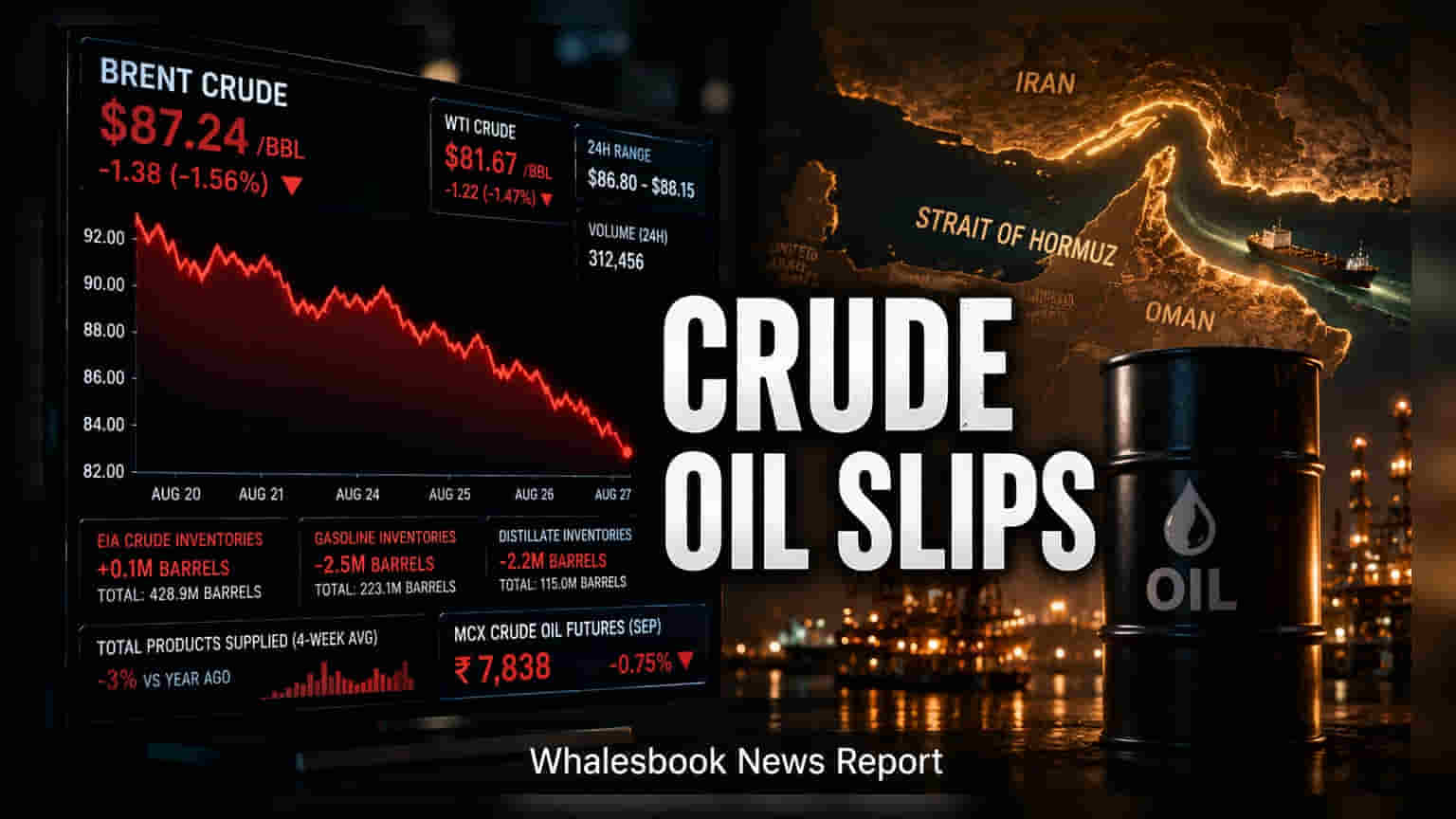
Crude oil prices fell on August 27, 2026, as diplomatic progress regarding the Strait of Hormuz reduced fears of supply disruptions. Despite a significant drop in US gasoline and diesel inventories, concerns over weak energy demand are weighing on prices. Domestic MCX futures also tracked lower, reflecting the global bearish sentiment.
Crude oil prices declined on Thursday as investors adjusted their positions following signs of easing tensions in West Asia. Brent crude prices dipped to approximately $87.24 per barrel, while West Texas Intermediate (WTI) traded below $82, near $81.67 per barrel. This downward movement reflects a reduction in the risk premium that traders had previously added to oil prices due to fears that conflict might disrupt the flow of oil through the Strait of Hormuz, a critical maritime route for global energy supplies.
The market’s focus has shifted to ongoing diplomatic mediation efforts, specifically discussions involving Iran and Oman. These talks aim to establish regulatory measures for the waterway, which has provided some relief to traders who were previously pricing in the possibility of supply-side disruptions. When geopolitical tensions cool, the urgency to hold oil as a safety hedge often decreases, leading to price consolidation.
Adding to the market dynamics is the latest report from the United States Energy Information Administration, which presented mixed data for the week ending August 21, 2026. Commercial crude oil inventories in the US saw a marginal increase of 0.1 million barrels, bringing total stocks to 428.9 million barrels. However, the data also highlighted a sharp tightening in refined product availability, with gasoline and distillate inventories falling by 2.5 million and 2.2 million barrels, respectively.
Despite the decline in gasoline and diesel stockpiles, investors remain cautious about the broader demand picture. US consumption data indicates that the total amount of products supplied over the last four weeks is down by 3% compared to the same period last year. This persistent softness in energy demand suggests that the global appetite for fuel may be cooling, which acts as a counterweight to any supply-side news that would otherwise support prices.
Domestic markets in India mirrored this international trend. On the Multi Commodity Exchange, crude oil futures for September dropped 0.75%, trading at ₹7838. For Indian investors, crude price volatility is a key indicator to track, as it impacts the country’s import bill and can influence inflation levels, particularly in the energy and transport sectors.
While the current diplomatic thaw is helping to stabilize prices, the market remains fragile. The primary risk for investors is that the geopolitical situation in the region is highly dynamic. Any breakdown in the current negotiations could quickly reverse the price decline. Additionally, the softening demand trend in the US remains a structural headwind that traders will continue to monitor in the coming weeks.