

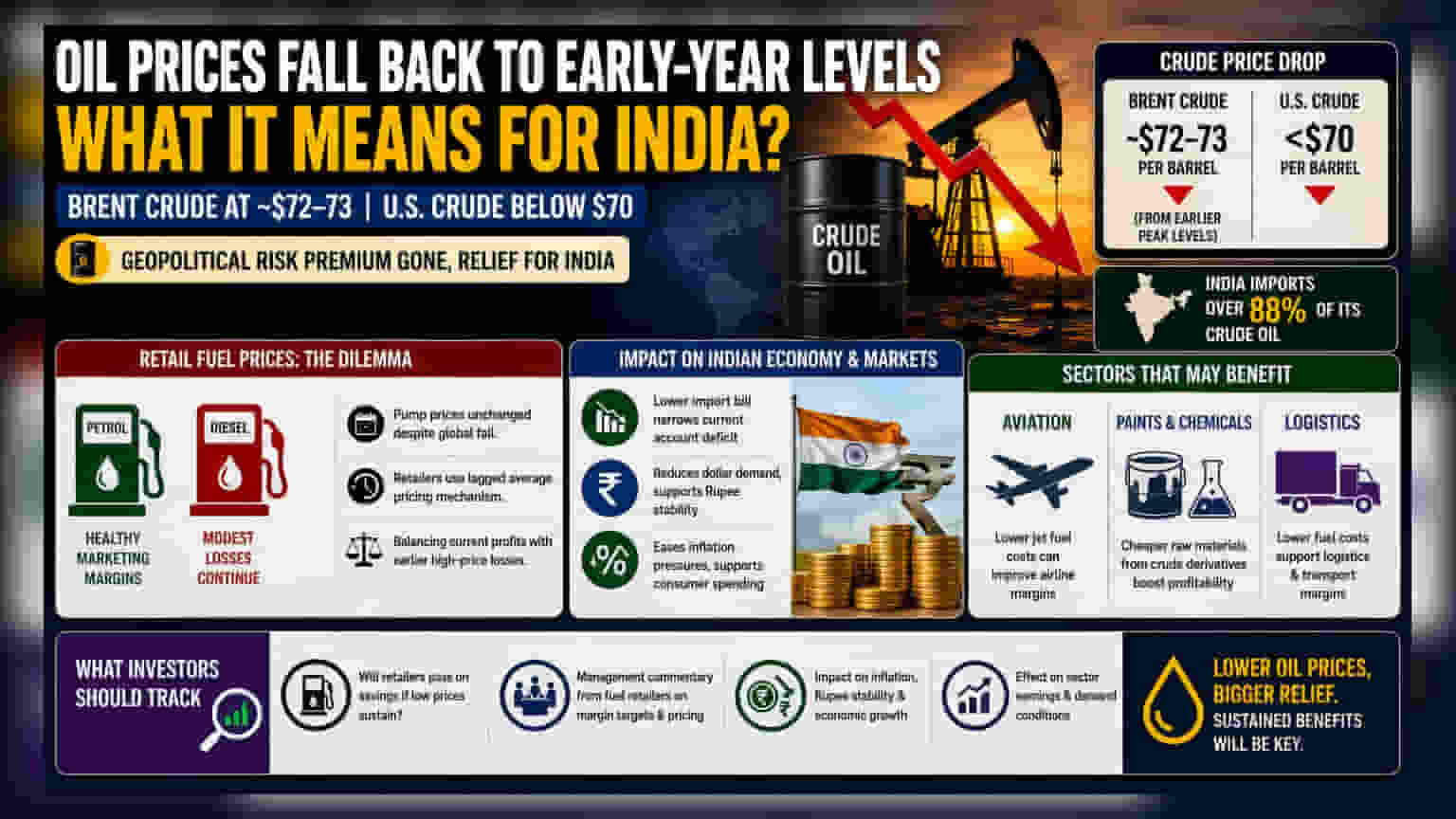
Brent crude has dropped to approximately $72 per barrel, easing pressure on India's import bill and inflation. While global prices have fallen, state-run fuel retailers are keeping pump prices unchanged for now. Investors are watching whether this leads to fuel price cuts or helps retailers recover past losses, while sectors like aviation and paints may see relief from lower input costs.
What Happened
Global oil prices have retreated significantly, with the Brent crude benchmark falling to around USD 72-73 per barrel. This is a sharp decline from the peak levels seen earlier this year, effectively removing the geopolitical risk premium that was added due to tensions in the Middle East. US crude prices have also dipped, falling below USD 70 per barrel. For India, which imports over 88% of its crude oil requirements, this shift marks a return to price levels last seen in late February.
The Retail Fuel Price Dilemma
Despite the global drop, retail petrol and diesel prices in India have remained unchanged. Fuel retailers in India do not typically adjust pump prices on a daily basis in response to immediate global price volatility. Instead, they rely on a lagged average pricing mechanism.
Currently, state-owned fuel retailers are navigating a mixed profit scenario. Industry data indicates that while these companies are seeing healthy marketing margins on petrol, they continue to incur modest losses on diesel sales. Because of this, retailers have been cautious about lowering pump prices, as they are likely looking to balance their current profits with the need to recover losses from when international prices were elevated.
Impact On Indian Economy And Markets
The Indian basket of crude oil averaged USD 70.71 per barrel on June 24, a notable decrease from the high levels recorded during the recent market spike. This decline offers broad economic benefits. A lower import bill helps narrow the country’s current account deficit and reduces the demand for foreign currency, which supports the stability of the Indian Rupee.
Furthermore, lower crude prices can act as a cooling factor for domestic inflation. By reducing fuel, transportation, and manufacturing costs, the economy may see a reduction in inflationary pressure, which can support higher consumer spending.
Sectors That May Benefit
While investors are watching how the fuel retailers manage their margins, other industries stand to gain from cheaper energy and petrochemical derivatives. Companies in fuel-intensive sectors often see their input costs fall when oil prices drop. Key sectors to observe include:
- Aviation: Jet fuel is a major expense for airlines. Lower crude prices could help stabilize or improve their operating margins.
- Paints and Chemicals: These industries rely heavily on crude oil derivatives for raw materials. Lower input costs can be a significant tailwind for profitability.
- Logistics: Transportation and fuel costs are primary expenses, and lower diesel or fuel prices typically support the bottom line for logistics players.
What Investors Should Track
The most important monitorable is whether retailers will pass on these savings to consumers if international prices remain low for a sustained period. Investors should track management commentary from major state-run fuel retailers regarding margin targets and any potential retail price revisions. Additionally, while the broader market often reacts positively to lower oil prices, the final impact on individual company earnings will depend on whether these businesses can effectively capture the cost benefits without facing significant demand-side pressures.