

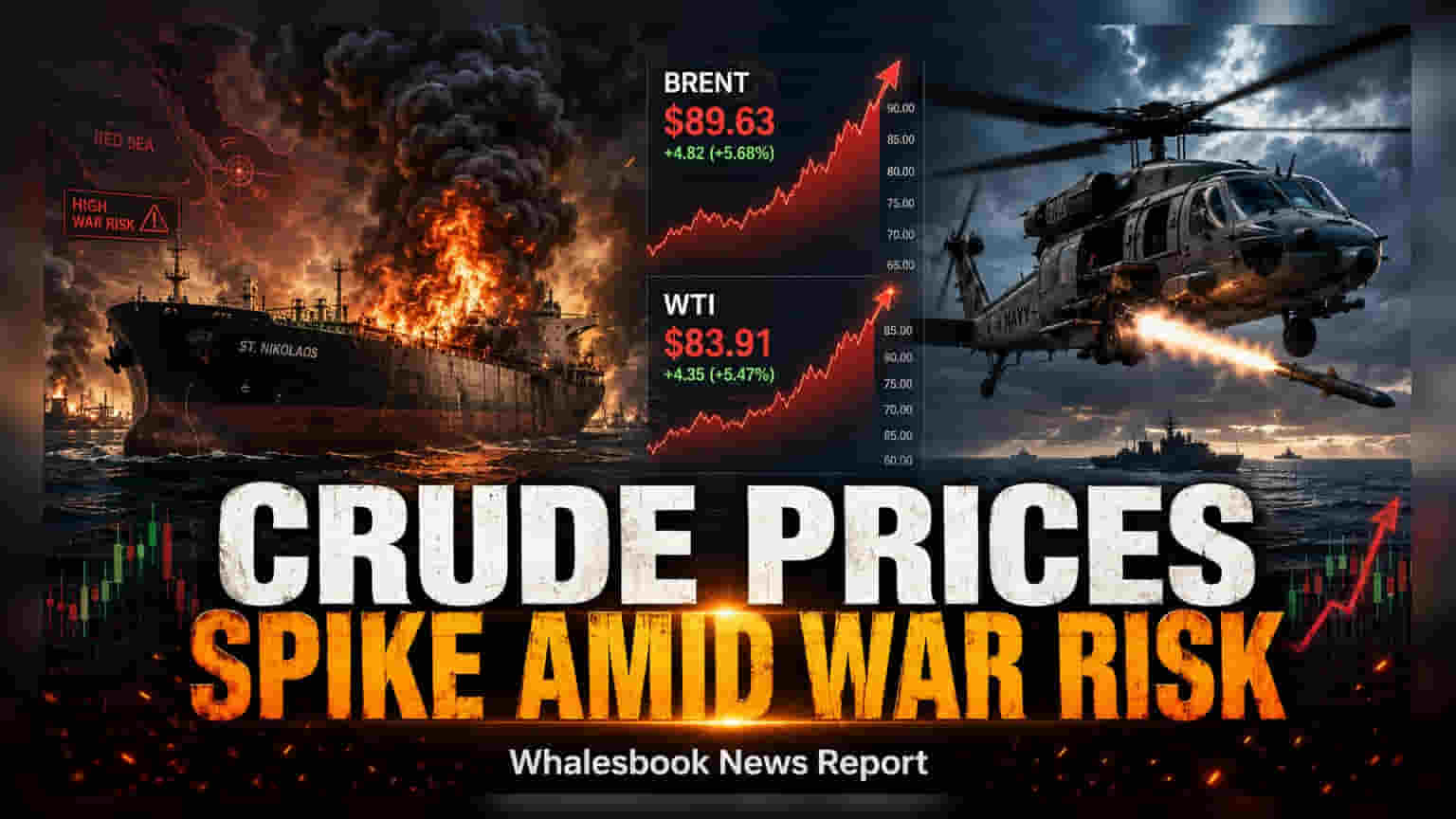
Brent crude rose to $89.63 per barrel following Houthi missile strikes on the 'Tihamah' vessel and U.S. enforcement actions near the Strait of Hormuz. For Indian investors, sustained high crude prices increase the risk of a larger import bill and potential inflationary pressure on the domestic economy.
Global crude oil prices moved higher on Wednesday as geopolitical tensions escalated in critical West Asian shipping lanes. Brent crude futures increased to approximately $89.63 per barrel, while West Texas Intermediate (WTI) rose to around $83.91 per barrel, reflecting market concerns over potential supply chain disruptions.
The rise follows fresh maritime security incidents involving commercial vessels. On August 11 and 12, 2026, Houthi rebels launched missile strikes on the Tanzania-flagged cargo vessel 'Tihamah' in the Bab el-Mandeb Strait, an attack that resulted in six fatalities. In a separate development in the Gulf of Oman, U.S. Central Command confirmed that U.S. forces disabled the steering gear of the Panama-flagged 'm.v. Vela Nova' using Hellfire missiles after the crew ignored warnings while attempting to breach a blockade on Iranian ports.
Market participants are closely tracking these developments due to threats from Iran to keep the Strait of Hormuz closed until resolution of ongoing war-related demands. The Strait of Hormuz serves as a vital route for global energy transit, with a significant portion of the world's oil supply passing through the waterway. Any prolonged closure or disruption poses a risk to global energy supplies and could drive up shipping and insurance costs.
For Indian investors, the rise in crude oil prices carries direct economic implications. India is a major importer of crude oil, and higher global prices typically increase the country's import bill, which can put downward pressure on the Indian Rupee and contribute to domestic inflationary trends.
The sector impact varies across different industries. Oil Marketing Companies (OMCs) often face pressure on their profit margins when global crude prices rise if they are unable to pass these costs on to consumers through higher retail fuel prices. Conversely, upstream oil and gas companies, such as ONGC and Oil India, may see higher realizations from their oil sales, although these benefits are often tempered by government windfall taxes and price caps.
Other sectors sensitive to oil prices, such as aviation, logistics, paint, and tyre manufacturing, may face challenges. These companies rely heavily on fuel or petroleum-based raw materials, and sustained high oil prices can raise their operating and production costs. Investors may monitor the duration of the current conflict and the consistency of oil price movements to assess the potential impact on corporate earnings in the upcoming quarters.