

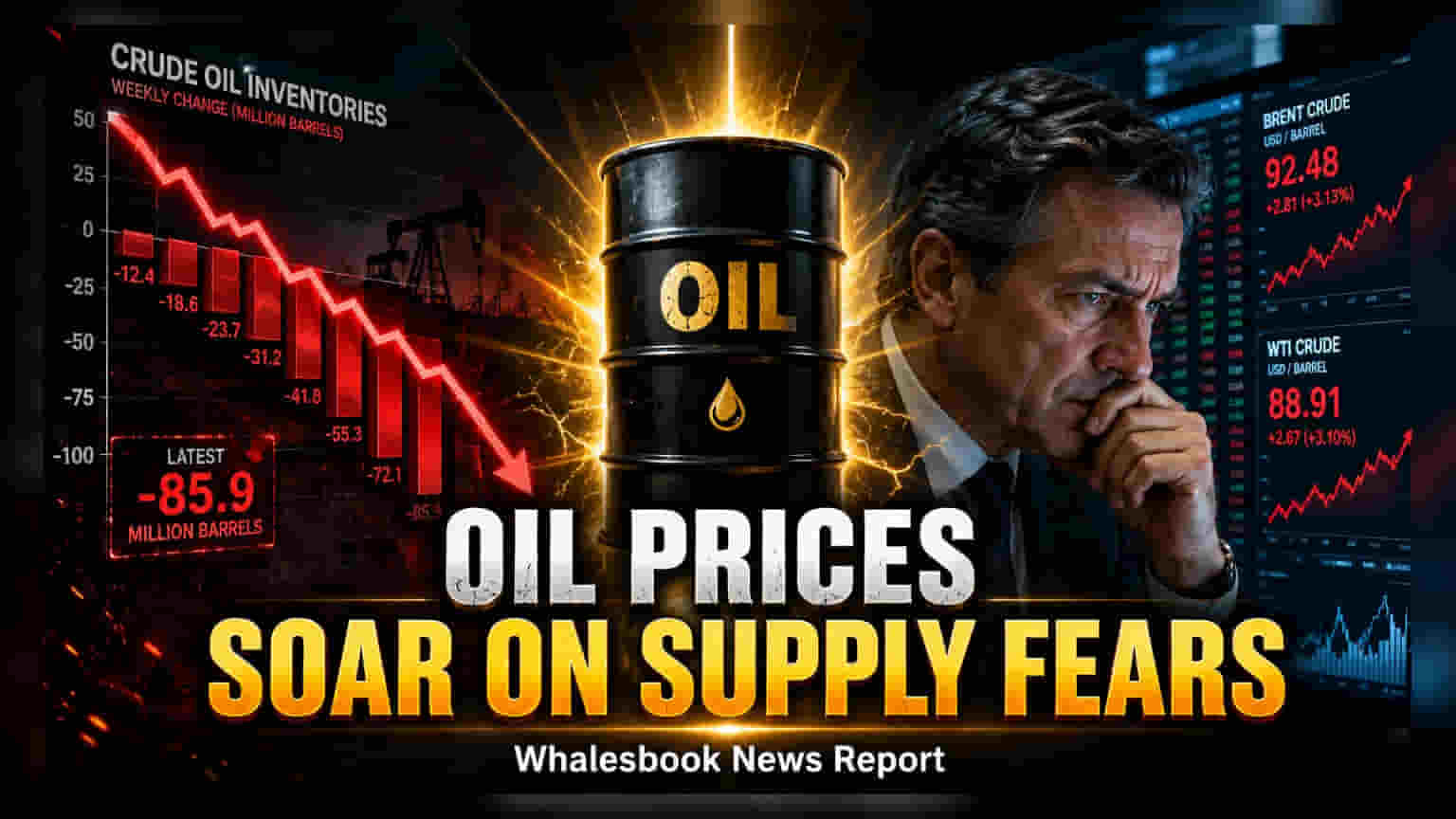
Brent and WTI crude oil futures climbed over 3% on Wednesday following a 3.3 million barrel drop in U.S. crude stockpiles. The price increase is further supported by speculation that OPEC+ may delay planned production hikes to keep global supply tight. Investors are now tracking official government data to confirm these supply trends and their impact on global energy costs.
Global oil prices saw a sharp recovery on Wednesday morning, with Brent crude futures rising 3.2% to $86.80 per barrel, while U.S. West Texas Intermediate (WTI) crude gained 3.4% to reach $81.95 per barrel. This rally helps recover losses from the previous trading session, which had been pressured by cooling geopolitical tensions between the United States and Iran.
Impact of U.S. Inventory Drawdown
The immediate trigger for this price movement is the latest report from the American Petroleum Institute (API), which indicated a significant reduction in U.S. crude oil stockpiles. Inventories fell by approximately 3.3 million barrels during the week ending July 24. A sharp drop in crude reserves often signals robust demand or supply tightening, which typically exerts upward pressure on prices. While crude stocks fell, the data also showed a modest rise of 918,000 barrels in gasoline and 355,000 barrels in distillate inventories. Market participants are now waiting for the official Energy Information Administration (EIA) report, which is expected to provide a more comprehensive view of U.S. oil supply levels later today.
OPEC+ Strategy and Market Geopolitics
Beyond immediate inventory figures, sentiment is being shaped by expectations regarding the Organization of the Petroleum Exporting Countries and its allies, known as OPEC+. Reports suggest the group may choose to extend current production cuts, potentially delaying planned output increases that were scheduled to begin in October. By limiting supply, OPEC+ aims to stabilize prices in a market that has been characterized by high volatility.
This supply-side uncertainty is occurring against a backdrop of ongoing geopolitical developments. While crude prices experienced a decline of nearly 5% on Tuesday due to hopes for a diplomatic breakthrough between the U.S. and Iran, the situation remains fluid. Tehran has publicly denied seeking new negotiations despite comments from U.S. officials. Additionally, the Strait of Hormuz remains a critical monitorable for investors, as any disruption to this major shipping lane could significantly impact global supply chains and energy pricing.
For investors, the key focus will be whether the official EIA figures align with the API’s reported drawdown. Any significant deviation could lead to further price fluctuations. Furthermore, the market will monitor official announcements from OPEC+ regarding their production schedule for the final quarter of the year, as this will be a major indicator of global supply intentions heading into the winter season.