

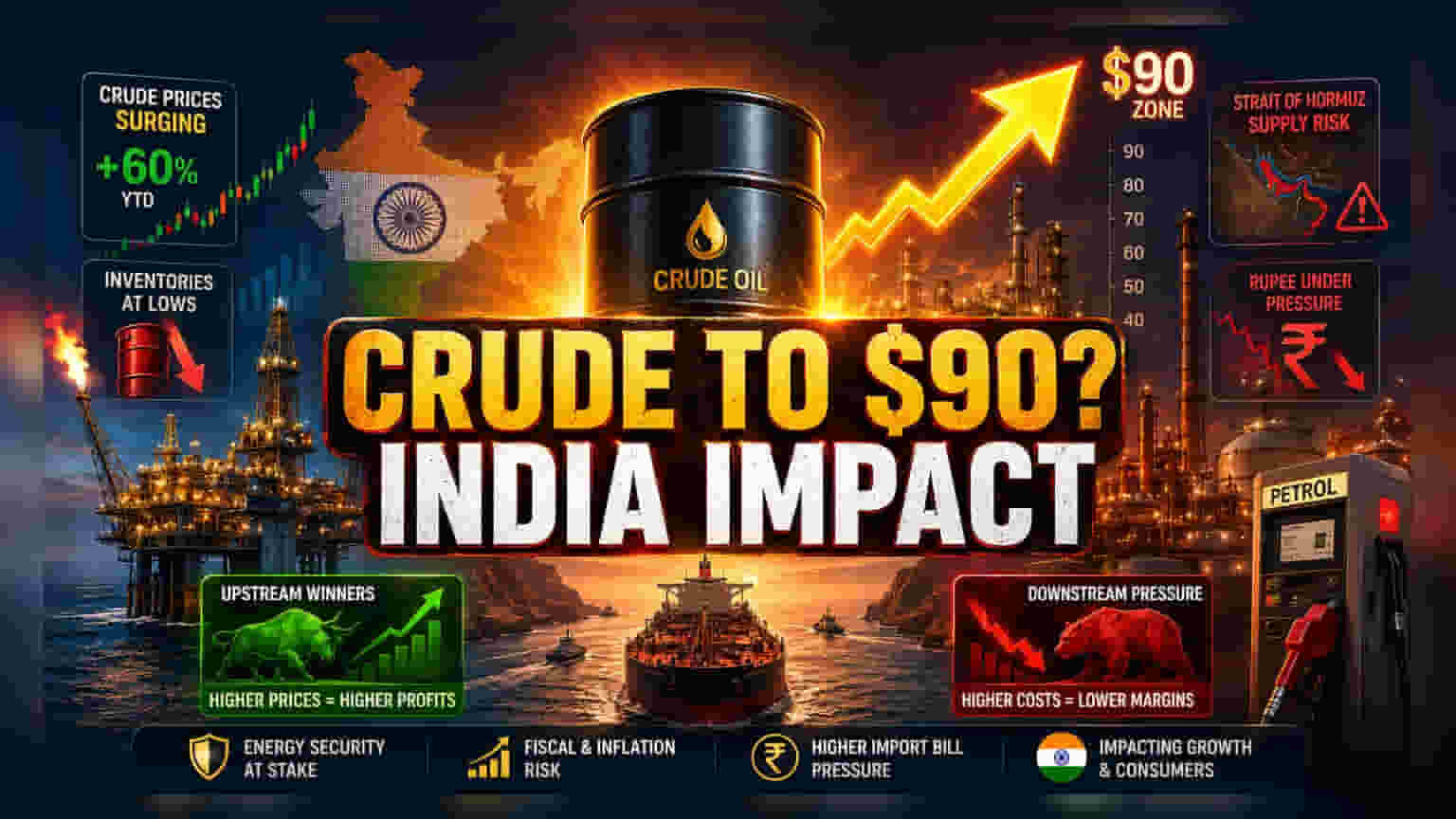
Global crude oil prices are expected to rise to $80-$90 per barrel by late 2026 as inventories drop following supply disruptions at the Strait of Hormuz. This outlook brings focus to India's energy import costs, potentially impacting the profit margins of oil marketing companies and broader inflation metrics.
What Happened
Global crude oil prices are projected to climb to between $80 and $90 per barrel in the second half of 2026. Market analysts indicate that this upward pressure is driven by a steady decline in global oil inventories, a situation exacerbated by supply constraints originating from the Strait of Hormuz. While the global energy system has shown the ability to adapt through alternative routing and supply chain adjustments, inventory levels remain low, creating a foundation for higher prices in the coming months.
How Investors May Read This
The movement in crude oil prices has a direct and significant impact on listed Indian energy companies, though the effect varies by the business model. For upstream companies like Oil and Natural Gas Corporation (ONGC) and Oil India, higher crude realizations per barrel generally improve profitability, provided there are no changes in windfall tax structures. Conversely, for downstream oil marketing companies (OMCs) such as Indian Oil Corporation (IOCL), Bharat Petroleum (BPCL), and Hindustan Petroleum (HPCL), rising crude costs can compress marketing margins if the companies are unable to fully pass these costs to consumers through retail petrol and diesel price adjustments. Investors typically monitor the government's stance on retail fuel pricing when global crude prices spike.
The Macro Economic Reality
India is a net importer of crude oil, relying on international markets for over 80% of its requirements. A sustained rise in oil prices to the $80-$90 range increases the national import bill, which can put pressure on the Indian Rupee and impact the Current Account Deficit. Additionally, higher energy costs can influence domestic inflation, affecting the broader economy and corporate costs across sectors like transportation, aviation, and chemicals that are sensitive to energy prices.
Diversification As A Shield
India has been actively diversifying its energy sourcing to mitigate supply chain risks. Recent data suggests that the country has successfully reduced its reliance on specific routes by sourcing supplies from Oman, the US, Nigeria, and Angola. This strategic shift helped the country maintain steady LNG and crude imports even during periods of severe disruption in the Strait of Hormuz. This ability to secure alternative barrels is a critical factor that helps limit the severity of supply shocks compared to historical standards.
What Investors Should Track
Investors monitoring this sector should track three primary factors. First, the ability of OMCs to maintain marketing margins in an environment of high input costs will be essential for their quarterly financial performance. Second, the movement of the Indian Rupee against the dollar, as a weaker currency makes oil imports more expensive. Third, updates on global inventory levels; if replenishment happens slower than expected, price volatility could persist, keeping the focus on how effectively India manages its diversified supply chain to ensure energy security.