

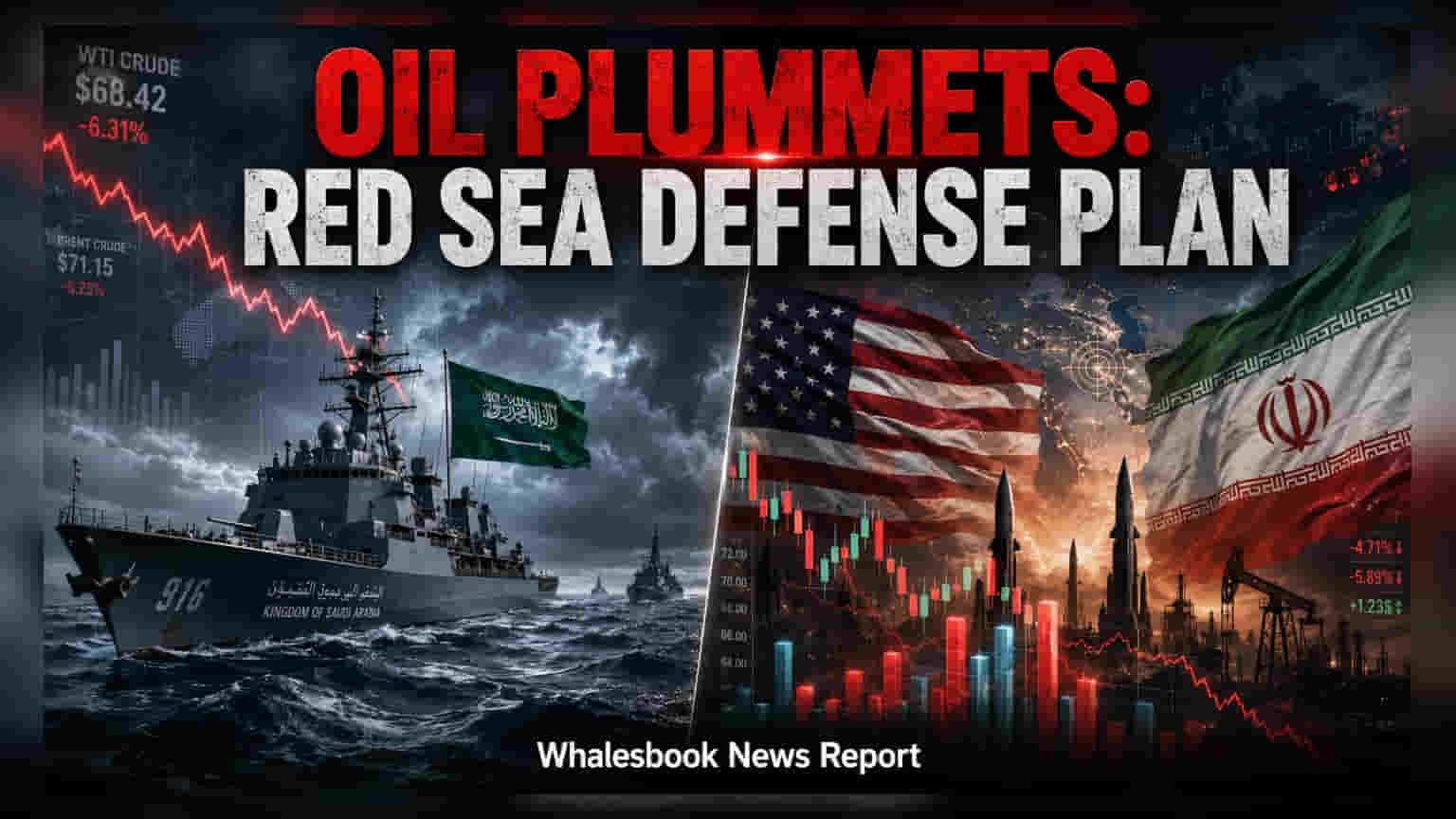
Crude oil futures dipped on Thursday after Saudi Arabia proposed a multinational maritime defense coalition for the Red Sea. The move seeks to secure key shipping lanes and reduce fears of supply disruptions. Investors are now weighing the potential for stabilized trade flows against persistent geopolitical tensions in the Middle East.
Crude oil prices moved lower on Thursday as market sentiment shifted following the announcement of a proposed Saudi Arabia-led maritime defense coalition. The initiative aims to protect vital shipping routes, including the Red Sea, the Bab El-Mandeb Strait, and the Gulf of Aden. These waterways are essential for global energy transport, particularly for oil shipments heading to Asian markets, and have recently been under threat from Houthi militant activities.
Impact on Global Energy Flows
The proposed coalition includes nations such as Turkey, Pakistan, Egypt, Sudan, and Djibouti. The primary goal is to ensure the free movement of trade in response to threats of naval blockades. For oil markets, the security of these straits is critical. Any disruption in these regions typically forces tankers to take longer routes, which increases transportation costs and creates delivery delays. By attempting to formalize security, the coalition seeks to mitigate these risks and prevent extreme spikes in energy costs.
Market Sentiment and Supply Factors
While geopolitical tension in the Middle East often drives oil prices higher due to supply uncertainty, the market reaction on Thursday remained cautious. Some investors are looking past the immediate conflict, focusing instead on the potential for existing supply to reach the market once stability returns. The persistent nature of regional incidents—such as drone-related reports at infrastructure facilities in Egypt, Russia, and Saudi Arabia—continues to provide a baseline level of volatility. However, the market is also balancing these risks against the ongoing diplomatic efforts to manage transit through the Strait of Hormuz.
Diplomatic Efforts and Future Monitorables
Diplomatic channels remain active, with ongoing discussions between Iran and Oman regarding the management of the Strait of Hormuz. While previous proposals for joint regional management were not accepted by Iran, the continuation of these talks is being watched as a possible sign of interest in de-escalation. Investors will likely continue to monitor reports regarding maritime security, progress in diplomatic talks, and any further drone or missile activity near energy infrastructure. These developments will play a significant role in determining short-term oil price trends, as the market remains highly sensitive to any sign that global supply chains might be further restricted or, conversely, stabilized.