

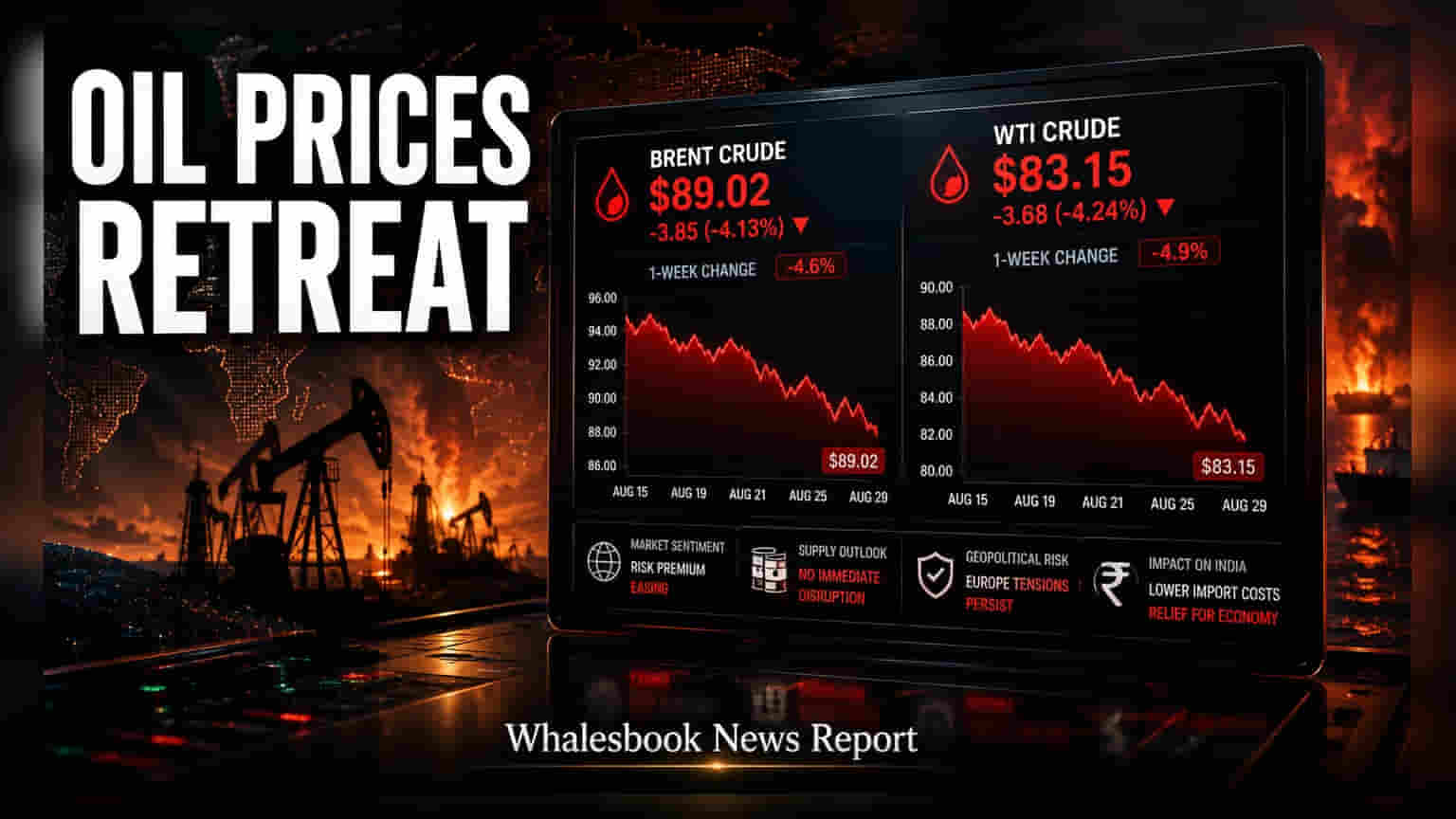
Global crude oil prices have fallen this week, with Brent trading near $89, as markets re-evaluate the immediate impact of U.S. sanctions on Iran. For the Indian economy, a cooling in oil prices is generally viewed as a positive development, as it helps ease pressure on the import bill and domestic inflation, though geopolitical risks remain high.
Global crude oil prices shifted lower during Friday's trading, ending a two-week period of rising costs. Brent crude futures moved down to approximately $89 per barrel, while West Texas Intermediate (WTI) futures slipped to around $83. Both benchmarks are tracking a weekly decline of roughly 4% to 5%, marking a notable change in sentiment for the energy market.
Why Prices Are Cooling
The current price decline is largely driven by how traders are viewing recent geopolitical news. While the U.S. has introduced significant new sanctions on Iran, the market currently interprets these moves as economic measures rather than an immediate threat to physical oil supply. This shift in sentiment has led some traders to pull back from the aggressive buying seen in the previous two weeks.
Impact on the Indian Economy
For Indian investors, crude oil price movements are a major economic signal. India imports over 80% of its crude oil requirements, meaning that sustained high prices can put pressure on the Indian Rupee and widen the country’s import bill. When global oil prices ease, it is generally considered a relief for the domestic economy as it lowers the cost of imports and helps keep inflation in check.
This dynamic influences different sectors in the Indian stock market in different ways. For Oil Marketing Companies (OMCs) like Indian Oil Corporation, Bharat Petroleum, and Hindustan Petroleum, lower crude prices can be favorable, as they reduce the cost of raw materials required to produce fuel. Conversely, for upstream oil exploration and production companies like ONGC and Oil India, lower global crude prices can affect their profitability, as they earn less for the oil they extract and sell.
Geopolitical Risks Remain
Despite the recent dip, markets remain cautious due to ongoing global tensions. The situation in Eastern Europe is a significant area of concern, particularly following recent warnings regarding the use of long-range missiles in the conflict zone. Furthermore, the Strait of Hormuz continues to be a critical passage for global oil trade. Even if the current market sentiment is focused on economic sanctions, any escalation in physical conflict or a disruption in key shipping routes could lead to supply shortages and push prices back up quickly.
Investors will continue to watch for updates on these geopolitical situations. The next important monitorable will be whether this price cooling proves to be a temporary adjustment or if fresh tensions in Europe or the Middle East force energy prices to rebound. Market participants often focus on these macro factors, as they directly impact trade balances, currency stability, and the profit margins of energy-related companies.