

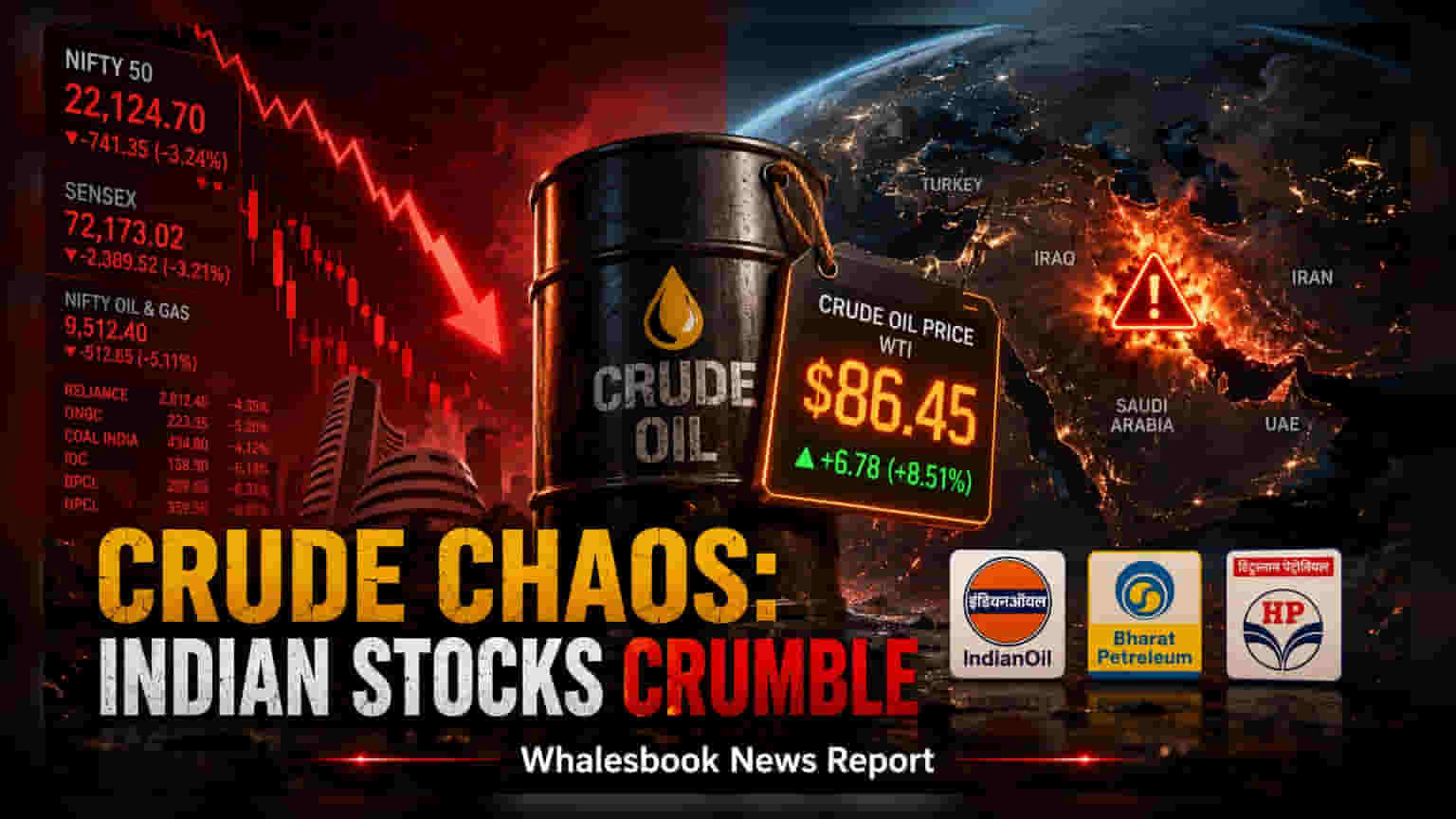
Indian oil marketing companies and aviation stocks faced a sell-off on Wednesday as Brent crude climbed toward $75.5 a barrel following geopolitical tensions. While downstream companies face margin pressure from rising input costs, upstream producers like ONGC and Oil India saw gains. Investors may track how long these elevated energy prices persist and their impact on corporate profitability.
Indian stock markets witnessed a sharp reaction on Wednesday as global crude oil prices surged following U.S. airstrikes in the Middle East. With Brent crude reaching approximately $75.5 per barrel and WTI crude trading near $71.8, investors focused on the immediate financial impact on companies that rely heavily on crude-linked raw materials.
Pressure on Downstream Energy and Aviation
Oil Marketing Companies (OMCs) faced the brunt of the market sentiment due to concerns over their ability to pass on higher crude costs to consumers. In early trading, Bharat Petroleum Corporation (BPCL) and Hindustan Petroleum Corporation (HPCL) shares dropped by over 4%, while Indian Oil Corporation (IOC) saw a decline of more than 3%. For these companies, a rising crude price environment often compresses marketing margins if retail fuel prices are not adjusted accordingly.
The aviation sector also experienced selling pressure, with InterGlobe Aviation (IndiGo) falling more than 2%. Aviation Turbine Fuel (ATF) constitutes a significant portion of an airline's operating expenses, and any sustained increase in oil prices directly impacts their bottom line. The sector’s profitability remains highly sensitive to these costs, especially in a competitive pricing environment.
Impact on Manufacturing Sectors
Beyond energy and aviation, other sectors dependent on crude derivatives also felt the impact. The paint industry, which uses crude-linked inputs for manufacturing, saw Asian Paints trade lower by approximately 1.5%. Similarly, the tyre industry faced selling pressure, with stocks like Apollo Tyres, CEAT, and JK Tyre & Industries declining between 1% and 2%. These manufacturers often face the dual challenge of managing raw material costs while maintaining demand in a price-sensitive market.
Upstream Producers Find Support
In contrast to the broader sell-off in crude-consuming sectors, upstream oil producers benefited from the price jump. Shares of Oil and Natural Gas Corporation (ONGC) and Oil India both recorded gains of about 1%. These companies typically benefit from higher crude prices, as their realisations for oil produced and sold are directly tied to global benchmarks. However, the overall market sentiment remained cautious, with the Nifty falling by 108.50 points and the Sensex down 351.16 points in early trade.
The key monitorable for investors moving forward will be the duration of this crude price spike. If the geopolitical situation leads to a prolonged supply disruption, OMCs may face sustained pressure on their profit margins. Conversely, if crude prices stabilize, the input cost burden for aviation and paint companies may ease. Investors should monitor company management commentaries on cost-management strategies and potential retail price adjustments in the coming weeks.