

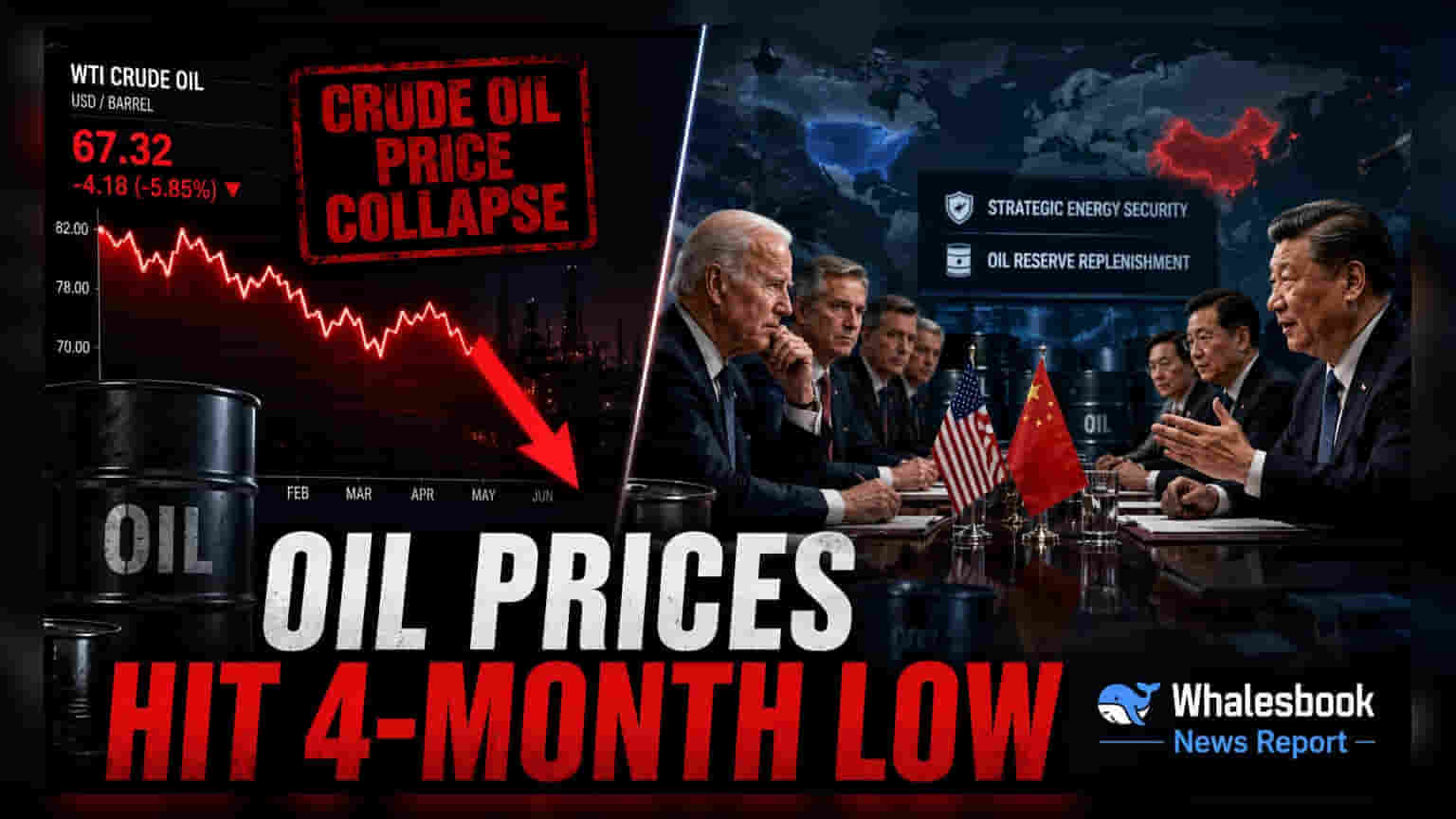
Global crude oil prices have fallen under $68 per barrel as geopolitical tensions between Iran and Israel subside, easing supply disruption fears. While the immediate conflict-driven premium has vanished, market experts suggest that active buying by major economies to refill depleted strategic petroleum reserves may provide a price floor. This shift is significant for major importers like India, where lower energy costs impact inflation and trade balances.
What Happened
Crude oil prices have witnessed a notable decline, with the US West Texas Intermediate (WTI) falling below the $68 per barrel mark. This drop comes as the market removes the risk premium previously priced in due to geopolitical friction between Iran and Israel. As supply routes, particularly via the Strait of Hormuz, appear stable and concerns over immediate supply interruptions fade, market pricing has shifted to reflect current demand and supply dynamics rather than conflict-driven anxiety.
The Strategic Reserve Support
Despite the decline, analysts are observing a key factor that may prevent a sharp, long-term collapse in oil prices: the replenishment of Strategic Petroleum Reserves (SPR). Many nations, including the US, China, India, Japan, and South Korea, allowed their emergency stockpiles to drop significantly during recent years. Data shows that OECD commercial fuel inventories have touched their lowest levels since 2003, and the US reserve itself reached its lowest point since 1983.
Experts suggest that these nations are now expected to step up purchases to refill their inventories. Historically, such government-led buying acts as a support level for prices. Unlike a sudden demand spike, this replenishment process is likely to be gradual, potentially stabilizing prices rather than triggering a rapid rally. Market observers compare this to previous refill cycles, where massive volume purchases were absorbed by the market over time without creating severe price volatility.
Why This Matters for India
For India, which is one of the world's largest oil importers, a decline in global crude prices is generally viewed as a positive development. Lower oil prices help the country manage its import bill, improve the trade deficit, and reduce inflationary pressures on essential goods. For Indian investors, this trend is particularly relevant for sectors that rely heavily on oil as a raw material or input, such as paint companies, tire manufacturers, and Oil Marketing Companies (OMCs). While lower input costs can improve profit margins for these sectors, investors often watch for the sustainability of these price drops, as unpredictable volatility can complicate business planning.
Market Sentiment and Technical View
Market participants are currently debating whether the market has found a true "bottom." Some analysts point out that the market may have overreacted, pushing prices below levels that reflect actual physical demand. There are cautionary notes, however, regarding the technical outlook. Some market observers highlight that if the price of WTI crude breaks through the next major support level of $65 per barrel, it could signal further downward pressure. The current sentiment remains cautious, with market participants closely observing whether physical demand from refiners, who have been drawing down existing inventories, will return to support current price levels.
What Investors Should Track
Investors monitoring the energy sector may want to keep an eye on several key indicators in the coming weeks:
- Official announcements from the US, China, and India regarding the timelines and scale of their strategic reserve replenishment.
- Global inventory reports, particularly from the US, to gauge how quickly existing stocks are being consumed.
- Import data from major economies to see if refiners are returning to the market to purchase oil.
- Any changes in geopolitical stability that could alter the supply-demand balance once more.
The key focus for the market will be whether the combination of strategic purchasing and industrial demand can create a sustainable floor for crude oil prices.