

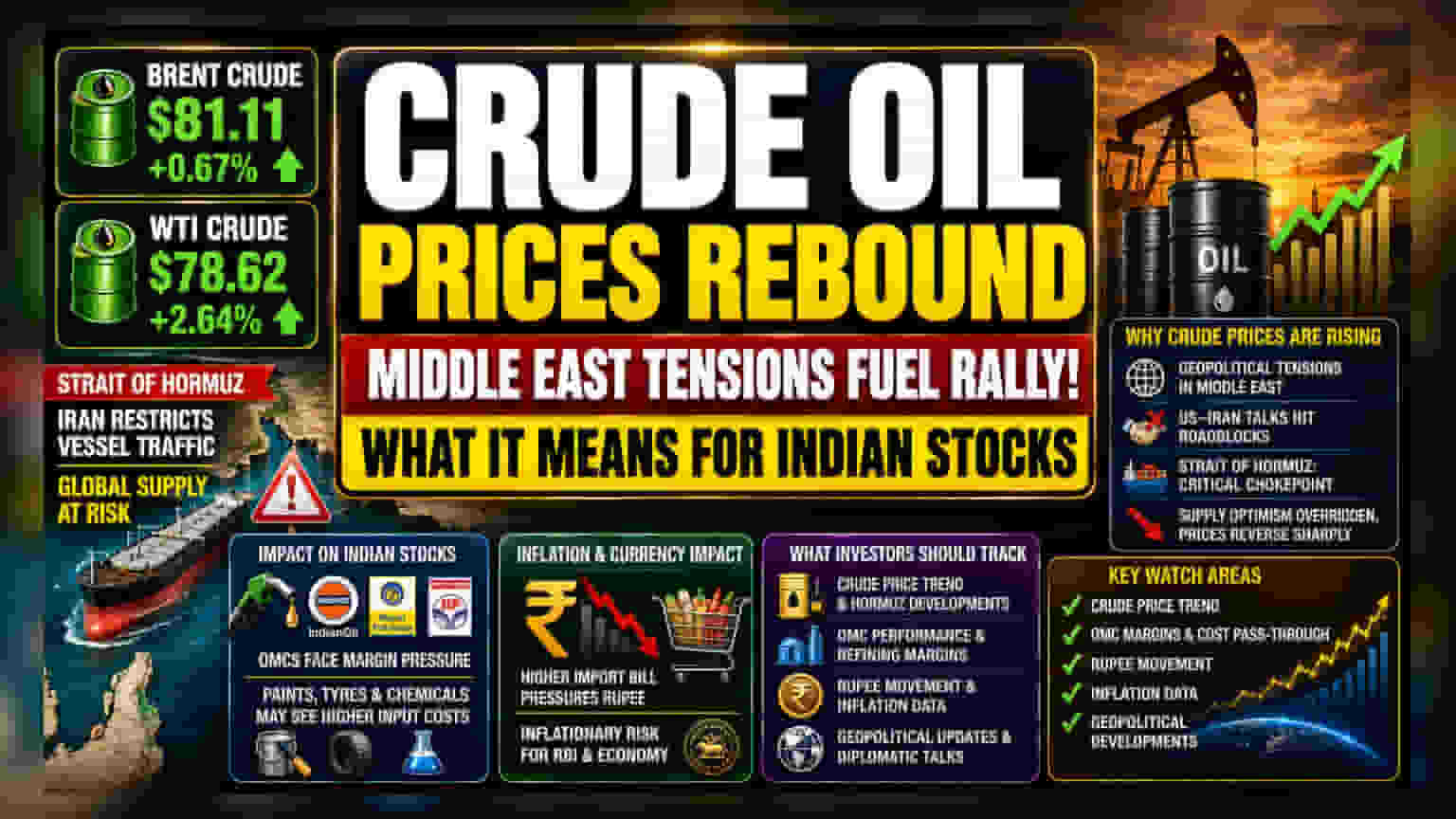
Brent crude climbed to $81.11 a barrel as renewed shipping restrictions in the Strait of Hormuz and stalled US-Iran talks rattled supply confidence. For Indian investors, a sustained rise in oil prices is a key factor to watch, as it directly impacts import costs, inflation, and the profitability of major sectors like oil marketing and manufacturing.
What Happened
Global oil prices saw a rebound on Monday, with Brent crude rising by 0.67% to reach $81.11 a barrel. West Texas Intermediate (WTI) crude experienced a stronger move, gaining 2.64% to trade at $78.62. This price action follows reports that Iran has restricted vessel traffic through the Strait of Hormuz, a critical waterway for global energy supplies. The move has effectively halted market optimism regarding a potential increase in supply, overriding previous expectations that more cargo would flow from Gulf producers.
Why Crude Prices Are Rising
The immediate trigger for the price rise is the renewed geopolitical tension in the Middle East. Expectations of a breakthrough in US-Iran negotiations, which had previously cooled oil prices, have been dampened by recent obstacles in the talks. With the Strait of Hormuz acting as a major chokepoint for global oil exports, any restriction on traffic creates immediate anxiety about supply security. This volatility marks a sharp reversal from last week, where prices had declined by more than 8% on hopes of increased output from major producers like the UAE, Kuwait, and Iraq.
Impact On Indian Stocks
For Indian equity investors, crude oil prices are a significant input factor. Companies directly exposed to oil prices, such as Oil Marketing Companies (OMCs) like Indian Oil Corporation (IOC), Bharat Petroleum Corporation (BPCL), and Hindustan Petroleum Corporation (HPCL), are the first to be affected. When global oil prices rise, OMCs often face pressure on their refining and marketing margins if they cannot fully pass on the cost to consumers.
Beyond OMCs, industries that rely on crude derivatives as raw materials may also feel the impact. Companies in the paints, tyres, and chemicals sectors often see higher input costs when oil prices remain elevated for a long period, which can potentially squeeze their profit margins.
The Inflation And Currency Connection
India imports a significant portion of its crude oil requirements. A sustained rise in global prices increases the country’s import bill, which can put downward pressure on the Indian Rupee. This currency weakness, combined with higher energy costs, acts as a headwind for the broader economy.
For the Reserve Bank of India (RBI), higher oil prices represent an inflationary risk. If high oil costs persist, it can lead to higher transportation and logistics expenses, which eventually feed into the prices of essential goods, impacting overall inflation data.
What Investors Should Track
Investors may keep an eye on the following developments in the coming weeks:
- Crude Price Trend: Whether oil prices stabilize or continue to climb based on further news from the Strait of Hormuz.
- OMC Performance: Quarterly commentaries from oil marketing companies regarding their gross refining margins and ability to pass on costs.
- Macro Indicators: Updates on the Rupee's performance and monthly inflation data, which are sensitive to energy prices.
- Geopolitical Updates: Any progress or further delays in diplomatic talks, which will determine the near-term supply outlook.