

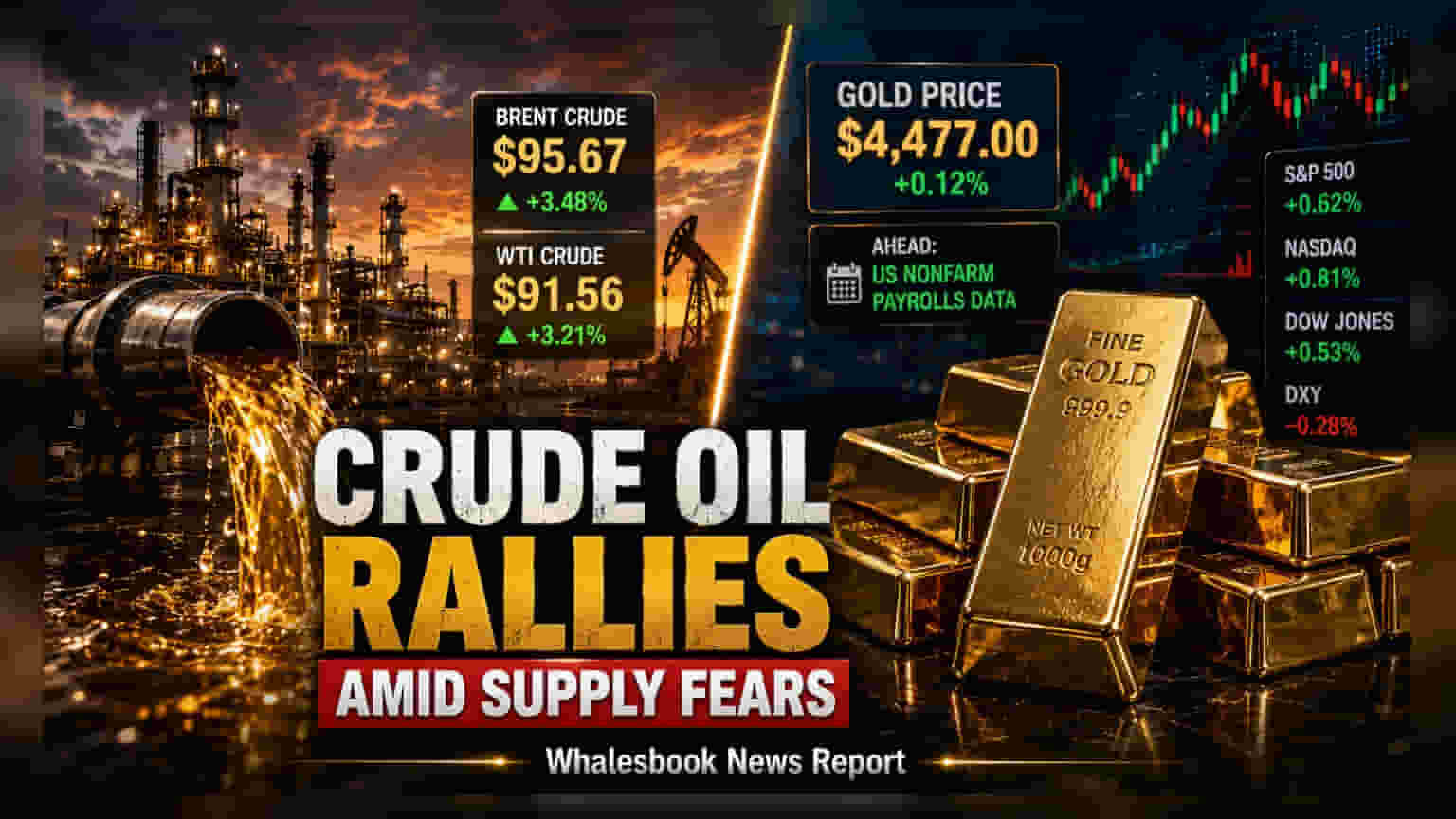
Crude oil prices have recorded their strongest weekly gains since July as the ongoing US-Iran conflict fuels fears of supply disruptions. Meanwhile, gold prices remain steady as investors watch for crucial US payrolls data to gauge future Federal Reserve interest rate decisions.
Global commodity markets are witnessing heightened volatility this week as energy prices climb, driven by escalating geopolitical tensions in the Middle East. Crude oil benchmarks, specifically Brent and West Texas Intermediate, are trading at multi-week highs on Friday, reflecting deep concern over potential supply chain disruptions linked to the ongoing conflict between the United States and Iran.
Oil Prices Driven by Supply Concerns
Brent crude futures are currently trading near $95.67 per barrel, while West Texas Intermediate stands at $91.56 per barrel. These prices represent a significant weekly appreciation, with both benchmarks posting their strongest performance since late July. This rally is directly tied to the seventh month of the US-Iran conflict, which has raised alarm bells among traders regarding the security of oil transit routes through the Strait of Hormuz. For investors, the primary risk remains that sustained oil prices above the $95–$100 range could reignite energy-driven inflation, forcing central banks to rethink their monetary policies.
Gold and Markets Eye Jobs Data
While energy markets grapple with supply fears, the precious metals sector is adopting a wait-and-see approach. Gold prices are holding steady at approximately $4,477 per ounce, consolidating after a sharp 2% jump earlier this week. The market sentiment for gold is currently being dictated by the upcoming release of August nonfarm payrolls data from the United States.
This economic data is critical for investors looking to predict the Federal Reserve’s next move on interest rates. Market expectations for a September rate hike have tempered slightly following recent comments from Federal Reserve Governor Christopher Waller. He suggested that the central bank might maintain steady interest rates if inflationary pressures continue to subside as expected.
The interplay between these factors creates a complex environment for market participants. While higher oil prices threaten to keep inflation elevated, the potential for a pause in interest rate hikes offers support to assets like gold. Investors are now closely monitoring both the developments in the Strait of Hormuz and the upcoming US labor market reports to determine the path for both energy costs and borrowing rates in the coming months.