

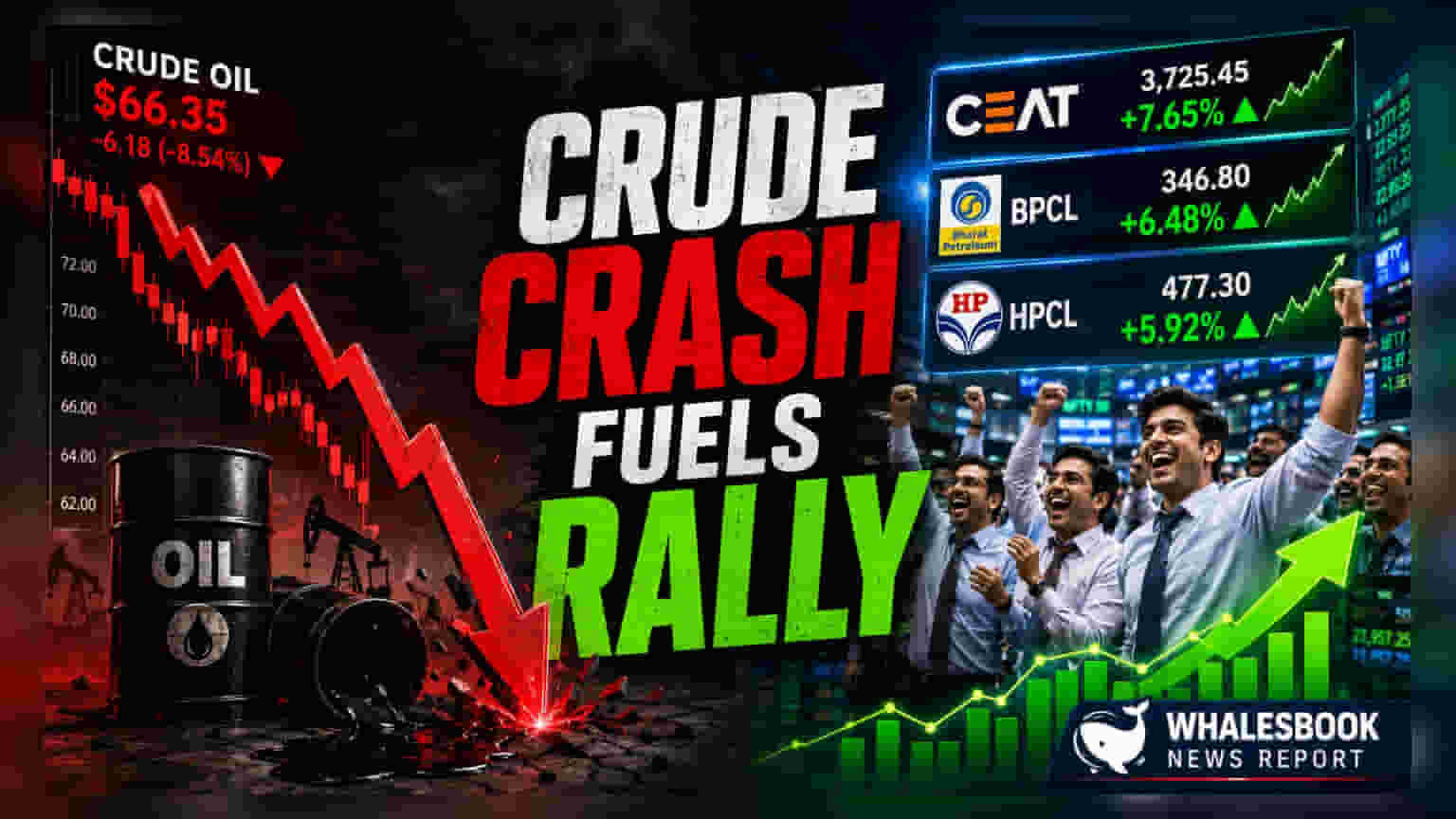
Global crude oil prices have fallen to a four-month low following updates on Iran-U.S. talks, easing supply concerns. This move has triggered a rally in stocks dependent on crude oil derivatives, such as tyre, paint, and airline companies. Conversely, upstream oil producers are seeing pressure on their share prices due to the lower commodity realization.
What Happened
Global crude oil prices have dropped to their lowest levels in approximately four months, providing a relief rally for Indian stock market sectors sensitive to energy costs. The decline in Brent and West Texas Intermediate (WTI) benchmarks was triggered by reports of progress in indirect discussions between Iran and the United States regarding the Strait of Hormuz. By easing fears of potential supply blockages in this critical energy shipping route, the market reacted with optimism, pushing down crude prices by over 1%.
Why Falling Crude Impacts These Sectors
For many Indian manufacturing and service companies, crude oil is a primary input. When crude prices fall, the cost of raw materials derived from oil tends to decline. For investors, this is often interpreted as a sign of potential margin improvement, as lower input costs can help protect or boost profitability if selling prices remain stable. Conversely, companies involved in oil exploration and production (upstream) face the opposite effect, as their revenue is directly linked to the price at which they sell crude oil.
Winners: Tyres, Paints And Airlines
Several sectors benefited from the anticipated reduction in input costs. Tyre manufacturers, such as CEAT Ltd., JK Tyre & Industries, and Apollo Tyres, saw their shares move higher. These companies rely heavily on synthetic rubber, a material derived from crude oil; therefore, cheaper crude can significantly lower production expenses.
Similarly, paint manufacturers like Asian Paints, Berger Paints India Ltd., and Kansai Nerolac Paints Ltd. saw positive sentiment. These firms use oil-based solvents and resins in their manufacturing processes. The aviation sector, including InterGlobe Aviation (IndiGo), also reacted positively, as Aviation Turbine Fuel (ATF) prices are directly linked to global crude benchmarks. A sustained drop in fuel costs is typically favorable for airline operating margins.
The OMC Advantage
State-run Oil Marketing Companies (OMCs) like Bharat Petroleum Corporation Ltd. (BPCL), Hindustan Petroleum Corporation Ltd. (HPCL), and Indian Oil Corporation Ltd. (IOC) also trended upward. When crude oil prices fall, OMCs often experience an improvement in their 'marketing margins'—the difference between the price at which they buy crude and the price at which they sell petrol and diesel to consumers—assuming domestic retail fuel prices are not adjusted downward immediately by the government.
The Downside For Upstream Producers
While consumers of crude benefited, upstream oil producers such as Oil and Natural Gas Corporation (ONGC) and Oil India Ltd. faced downward pressure. These companies earn revenue based on the price they receive for every barrel of oil they extract. A drop in global crude prices means lower realization per barrel, which directly impacts their top-line revenue and profitability. Consequently, investors often view these stocks as having an inverse relationship with crude oil prices compared to the manufacturing and airline sectors.
What Investors Should Watch
Investors may keep track of the sustainability of this price drop. Crude oil prices are highly volatile and influenced by geopolitical factors, such as the situation at the Strait of Hormuz mentioned in recent reports. If the diplomatic situation changes or supply disruptions return, crude prices could rise quickly, potentially reversing the cost benefits for tyre, paint, and airline companies. Additionally, for OMCs, the key monitorable remains potential government intervention in retail fuel pricing, which can offset the benefits of lower crude costs.