

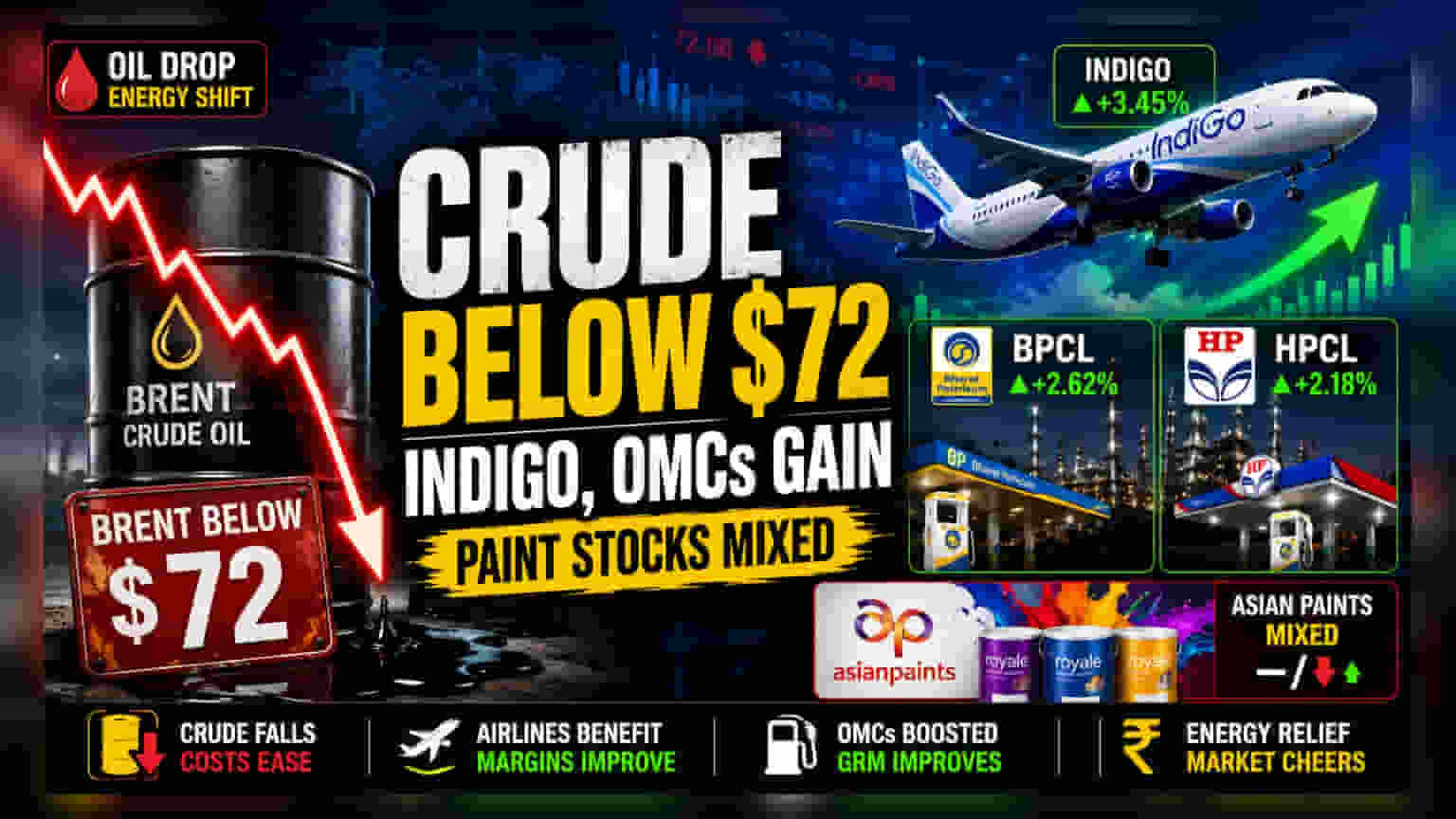
Brent crude oil prices have dropped below $72 per barrel due to easing geopolitical tensions. This decline is driving optimism for aviation firms like IndiGo, which face high fuel costs, and state-run oil marketers like BPCL and HPCL. Meanwhile, the market response for raw-material-dependent companies like Asian Paints remains mixed.
What Happened
Brent crude oil futures dropped below the $72 per barrel mark on Thursday, June 25, 2026. This downward movement marks a significant shift in the energy market, effectively erasing the price gains that occurred during recent geopolitical tensions between the United States and Iran. As global market sentiment pivots from fears of supply shortages to expectations of increased availability—partly due to improved diplomatic conditions and higher output from Middle Eastern and African producers—investors are reassessing the impact of these lower energy prices on Indian equities.
Why Airlines Benefit From Lower Oil
InterGlobe Aviation (IndiGo) shares responded positively to this development, trading higher as the market priced in potential relief in fuel expenses. For airline companies, Aviation Turbine Fuel (ATF) represents one of the largest components of total operating costs. When global crude oil prices decline, the cost of refining crude into ATF typically follows, which can help airlines protect or improve their operating profit margins. Investors often view a sustained drop in oil prices as a favorable tailwind for aviation stocks because it eases the pressure on the company's bottom line without requiring a hike in ticket prices.
The Impact On Oil Marketing Companies
State-owned oil marketing companies (OMCs) like Bharat Petroleum Corporation (BPCL) and Hindustan Petroleum Corporation (HPCL) also saw gains in their stock prices. These companies function by buying crude oil and refining it into fuel for retail sale. When the base price of crude falls, their cost of procurement decreases. If retail fuel prices at the pump remain stable while procurement costs drop, OMCs can theoretically improve their marketing margins. However, investors track these companies closely because their profitability is also subject to government policy and the ability to pass on or absorb price fluctuations.
The Paint Industry Perspective
Interestingly, the reaction was not uniform across all crude-sensitive sectors. Asian Paints, which relies on petroleum-derived raw materials for its products, saw a marginal dip in its share price. While lower crude prices usually help paint manufacturers reduce input costs, the market reaction can be influenced by broader concerns such as inventory levels, demand trends, or the lag time between falling crude prices and actual cost savings for the company. Investors often weigh the benefits of lower raw material costs against the company’s ability to maintain demand in a shifting macroeconomic environment.
What Investors Should Track
As the market adjusts to the current oil price trend, the primary monitorable for investors will be the sustainability of these lower crude levels. Volatility in the energy market remains a core risk factor. For airlines, the focus will be on the next ATF price revision, while for OMCs, market participants will observe how management balances marketing margins against regulatory expectations. For manufacturing companies like Asian Paints, investors may look toward future quarterly earnings to see if the drop in crude prices translates into meaningful margin expansion or if demand-side pressures persist.