

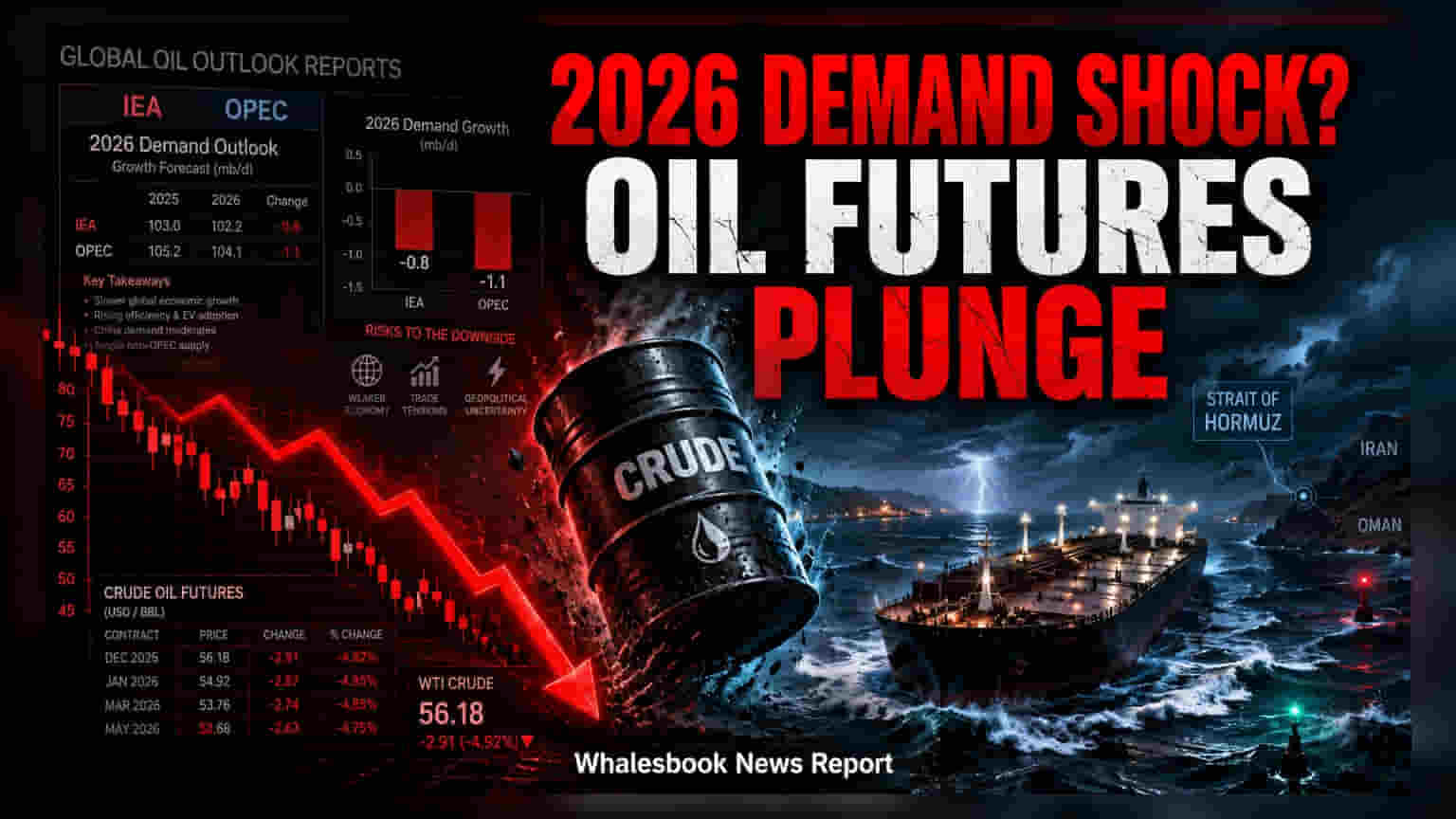
Crude oil futures fell roughly 1.5% on Thursday as the IEA predicted a 1.6 million barrels per day drop in 2026 demand. The decline was deepened by a surprising 17.4 million barrel surge in U.S. crude inventories. Investors are now weighing the impact of weakening demand against ongoing geopolitical tensions in the Strait of Hormuz.
Crude oil futures saw a sharp decline on Thursday, with prices for both Brent and WTI crude dropping by roughly 1.5% and 1.2% respectively. The slide followed warnings from major energy agencies about a cooling outlook for global oil demand in 2026.
The International Energy Agency (IEA) provided the most pessimistic update, forecasting a contraction in world oil demand of 1.6 million barrels per day for the coming year. The agency cited persistently high fuel costs and ongoing geopolitical tensions as primary reasons for this downward revision. In its own August report, OPEC also lowered its growth forecast, projecting an increase of only 0.58 million barrels per day for 2026.
Beyond these demand warnings, the market faced unexpected supply data that added downward pressure on prices. United States commercial crude inventories rose by 17.4 million barrels for the week ending August 7, 2026. This was the largest weekly increase recorded since January 2023, suggesting that fuel supplies are building up significantly faster than traders had anticipated.
Despite the price drop, the energy sector remains highly sensitive to geopolitical undercurrents. U.S. President Donald Trump recently reasserted that the U.S. maintains a naval blockade and effective control over the Strait of Hormuz in response to tensions with Iran. While such military-related news typically causes price spikes due to fears of supply disruption, the market is currently struggling to balance this risk against the reality of weaker demand and rising stockpiles.
For market participants, the current situation highlights the risk of demand destruction, where sustained high fuel prices begin to dampen consumer spending and slow down economic growth. The energy market is now caught between these two conflicting forces: the potential for supply shocks in the Middle East and a cooling global appetite for energy.
Moving forward, the primary monitorables for the energy sector will be incoming weekly U.S. inventory data and official updates regarding the diplomatic and military situation at the Strait of Hormuz. If inventory levels continue to build, it may indicate that the market is oversupplied, which could keep oil prices under pressure even if geopolitical risks remain elevated.