 Whalesbook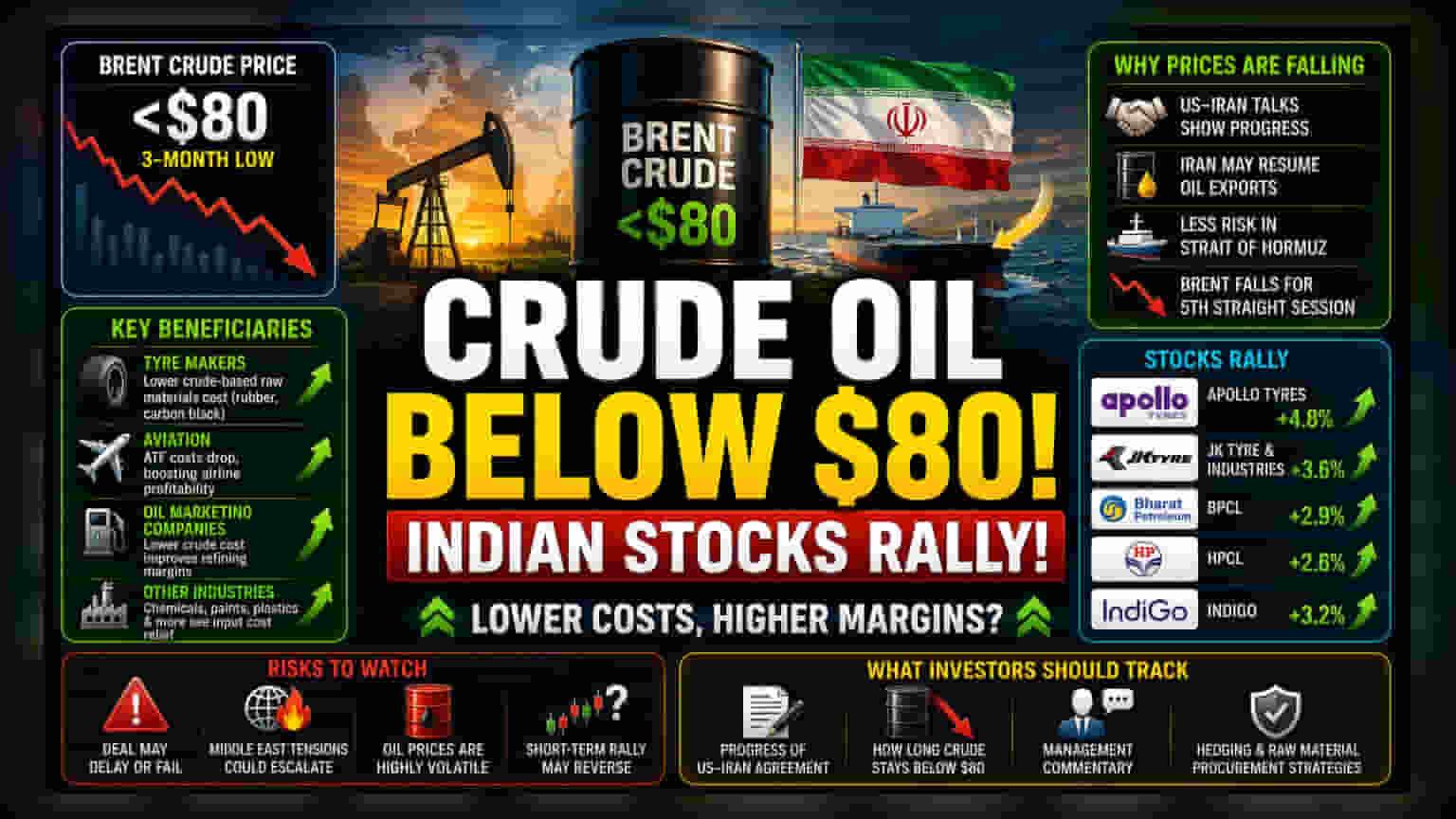


Brent crude falling below $80 per barrel has triggered a sharp rally in Indian stocks dependent on fuel costs. Tyre, aviation, and oil marketing companies are gaining as investors bet on lower raw material and energy expenses linked to potential easing of global oil supplies.
What Happened
Global crude oil prices have fallen below the $80 per barrel mark, triggering a rally across Indian companies that are sensitive to energy and raw material costs. Brent crude has seen a decline for the fifth consecutive session, approaching three-month lows. This market sentiment is largely driven by reports of potential diplomatic progress between the United States and Iran. Investors are optimistic that a breakthrough could allow Iran to resume oil exports and potentially ease concerns regarding shipping routes through the Strait of Hormuz, a critical passage for global oil trade.
Why This Matters for Investors
For many Indian companies, crude oil is not just a fuel—it is a key raw material or a significant operating expense. When oil prices drop, these businesses often see an improvement in their profit margins.
Tyre manufacturers are among the primary beneficiaries because their production relies heavily on crude-based derivatives, such as synthetic rubber and carbon black. Lower crude prices can help reduce the cost of these raw materials, which is a major part of the overall production expense for companies like Apollo Tyres and JK Tyre & Industries.
In the aviation sector, Aviation Turbine Fuel (ATF) accounts for a large portion of operating costs. A sustained drop in crude prices typically leads to lower fuel costs for airlines, which can provide a significant boost to their profitability and operational cash flow.
Oil Marketing Companies (OMCs) like BPCL and HPCL also react to these trends. When crude prices are lower, the cost of purchasing oil for refining generally decreases. However, the actual benefit for these companies also depends on how they adjust domestic petrol and diesel prices, as well as government policies regarding fuel pricing.
How The Stock Reacted
Following the news, several stocks linked to these sectors saw immediate buying interest. Apollo Tyres and JK Tyre & Industries recorded gains as the market factored in potential margin expansion due to lower input costs. Similarly, major oil marketing firms and aviation players also trended higher, reflecting the market’s positive sentiment toward sectors that stand to gain from lower energy prices.
The Reality Check and Risks
While the market is reacting positively to the optimism, investors should distinguish between price movements based on news and long-term business fundamentals. The rally is currently built on the expectation of a deal, rather than a confirmed geopolitical resolution. Geopolitical negotiations are often complex, and shipping routes like the Strait of Hormuz remain sensitive to broader Middle Eastern tensions.
If the anticipated agreement faces delays or if diplomatic talks break down, the market may quickly re-evaluate these stocks. Furthermore, crude oil is a highly volatile commodity. Price drops can be short-lived, influenced by factors such as global demand, OPEC+ production policies, and broader economic growth trends. A sudden spike in oil prices could reverse the margin benefits that investors are currently pricing in.
What Investors Should Track
Investors may monitor the progress of the potential US-Iran agreement, as any official confirmation or further delay will likely influence oil prices. It is also important to observe how long crude prices remain at these lower levels, as the benefit to company profit margins is most visible over sustained periods rather than temporary dips. Monitoring management commentary from these companies regarding their raw material procurement strategies and fuel hedging policies will also provide a clearer picture of how much of this lower cost will actually reflect in their bottom line.