

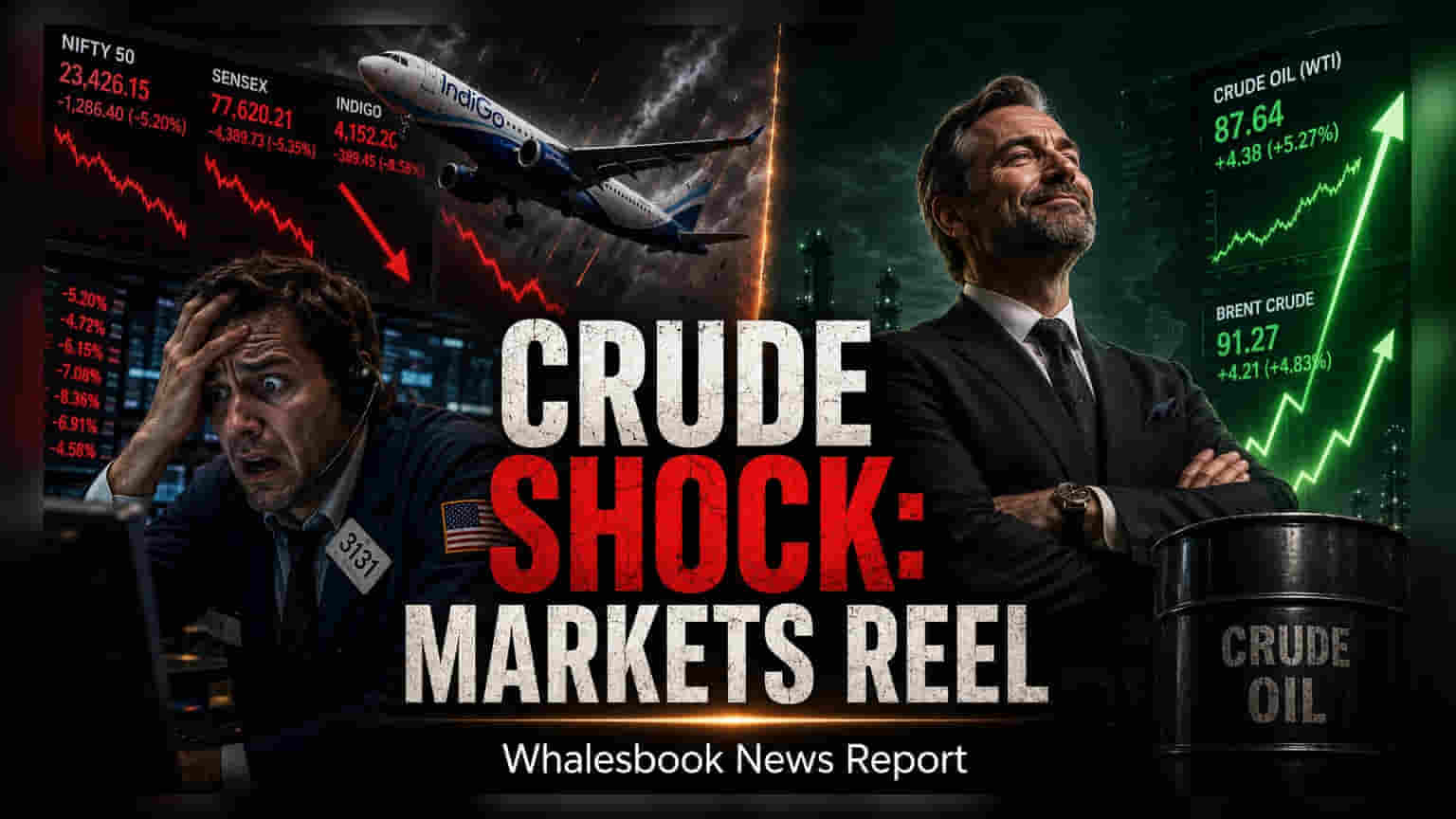
Crude oil prices surged past $79 per barrel today due to rising US-Iran tensions, triggering a sell-off in aviation and paint stocks. While higher costs pressure airline margins and manufacturing expenses, upstream oil producers are seeing gains. Investors are monitoring potential volatility as sector-specific costs rise.
The Indian stock market witnessed a sharp reaction on Monday as crude oil prices climbed above $79 per barrel. This jump, fueled by escalating tensions between the United States and Iran, has created immediate financial pressure for companies that rely on petroleum products as a key raw material.
Impact on Aviation and Paint Producers
InterGlobe Aviation, which operates the IndiGo airline, saw its share price fall by 2.3 percent. For airlines, Aviation Turbine Fuel (ATF) is the single largest operating expense. When oil prices rise, fuel costs increase rapidly, forcing airlines to either absorb the cost—which hurts their profit margins—or raise ticket prices. If higher fares are not accepted by passengers, it can lead to slower demand growth.
Paint manufacturers also faced downward pressure as their production relies heavily on crude oil derivatives. Asian Paints saw a 1.6 percent decline, while Berger Paints fell nearly 1 percent. Similar to aviation, these companies face a challenge in protecting their profit margins if they cannot pass these increased input costs to customers in a competitive market.
Upstream Producers and Oil Marketing Challenges
While manufacturers faced problems, upstream companies that explore and produce crude oil, such as Oil and Natural Gas Corporation (ONGC) and Oil India, traded higher by 1.3 percent and 0.5 percent respectively. These companies benefit directly when crude prices are high because the value of the oil they extract increases.
Conversely, oil marketing companies like Bharat Petroleum Corporation (BPCL), Hindustan Petroleum Corporation (HPCL), and Indian Oil Corporation (IOC) remained under pressure. These companies purchase crude to refine it into petrol and diesel. When global crude prices spike, their refining margins can shrink if they are unable to adjust retail fuel prices quickly enough to match the higher acquisition cost.
Broader Market Sentiment
Market volatility reached a high point today, with the India VIX rising more than 9 percent. This suggests that investors are bracing for uncertainty until crude oil prices stabilize. The Nifty Auto and Nifty Metal indices also dipped by 0.9 percent each, reflecting a broader caution across sectors sensitive to fuel prices and global commodity shifts. Investors will now closely watch for any further changes in crude oil prices, as these will dictate the margin performance for these sectors in the upcoming quarterly results. The ability of companies to manage these costs without hurting their overall profitability will be the main factor to monitor next.