

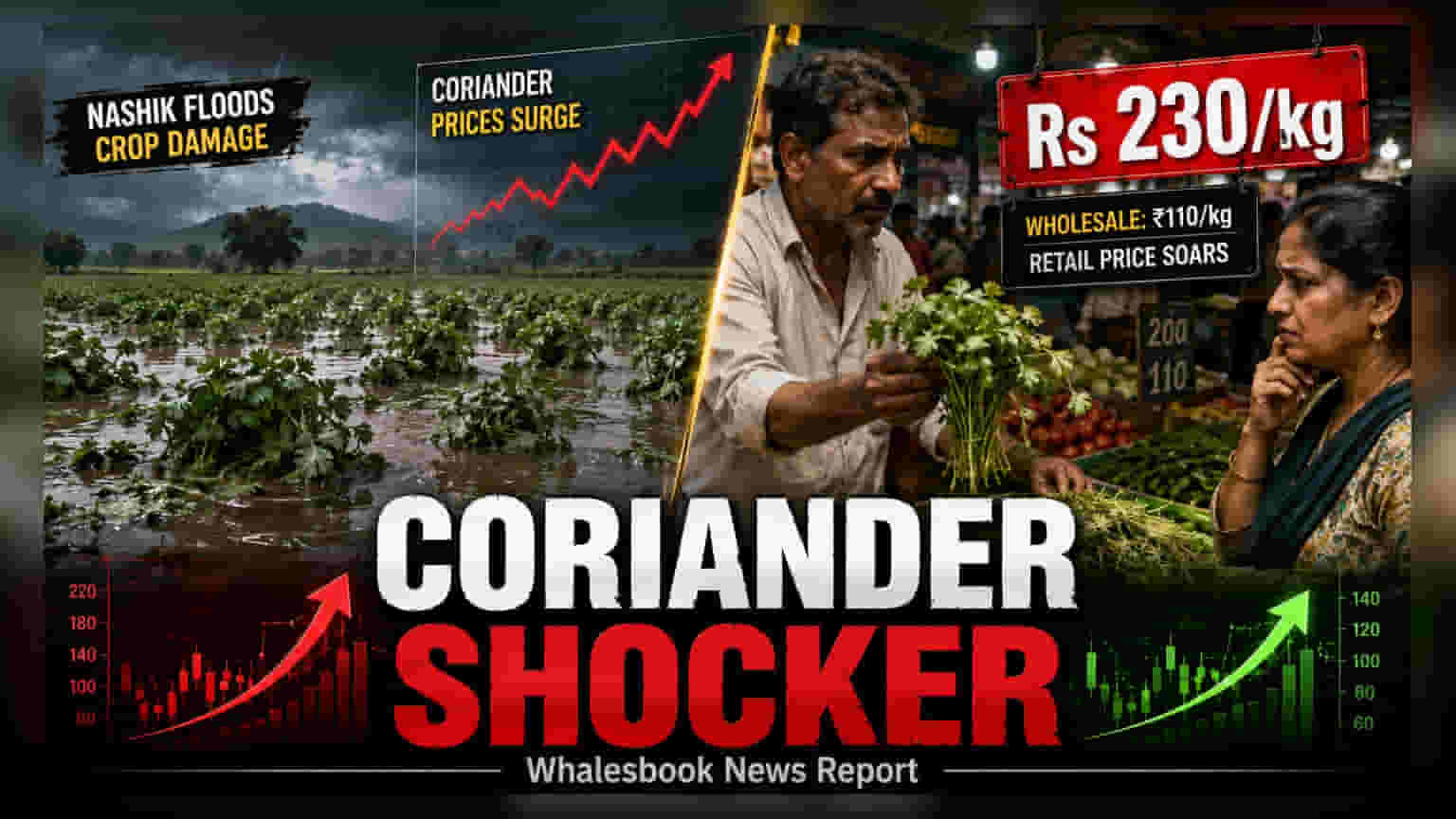
Retail coriander prices have surged past Rs 200 per kilogram following heavy monsoon flooding in Nashik, Maharashtra. The weather-driven damage has disrupted critical supply chains to major hubs like Delhi, leading to significant wholesale price volatility. Commodity market watchers are tracking these supply constraints as they impact food inflation trends and local demand.
Retail prices for fresh coriander have risen sharply, crossing the Rs 200 per kilogram mark in many areas. The sudden spike is primarily driven by intense monsoon rainfall and flooding in Nashik, Maharashtra, a major agricultural hub responsible for supplying coriander to northern India. The excess water has damaged standing crops and halted transport, creating a supply bottleneck.
Market Volatility and Supply Chains
The disruption is highly visible in wholesale markets. At the Azadpur mandi in Delhi, traders reported that wholesale prices briefly spiked to Rs 200 per kilogram earlier this week before settling closer to Rs 110 per kilogram. This volatility highlights the fragility of the supply chain for perishable leafy greens, which rely heavily on consistent logistics. The typical supply route—where coriander is stored in hubs like Indore before reaching Delhi—has been severely impacted by the weather, limiting the arrival of fresh produce.
Impact on Agricultural Commodities
While market prices at the retail level have reached record highs, the impact on agricultural commodity platforms remains volatile. Traders on the NCDEX are observing unpredictable price movements driven by spot demand and weather updates rather than long-term supply trends. Karnataka is currently attempting to fill the supply gap in certain regions, but traders noted that the quality of these arrivals is often inconsistent compared to the produce normally sourced from Maharashtra.
Risks for the Commodity Sector
For those tracking agricultural markets, the current situation carries significant risks. One major concern is demand destruction, where high prices force consumers to reduce their purchases, potentially leading to a sharp market correction once supplies stabilize. Furthermore, farmers are facing a paradox where some regions see record highs while others struggle with crop failure, highlighting the lack of consistent support mechanisms.
The primary monitorable for the coming weeks will be the progress of the monsoon and its impact on harvesting schedules. Continued rainfall could further delay crop recovery and keep prices elevated, while any improvement in weather conditions may allow transport and supply chains to normalize, eventually easing the pressure on both wholesale and retail markets.