

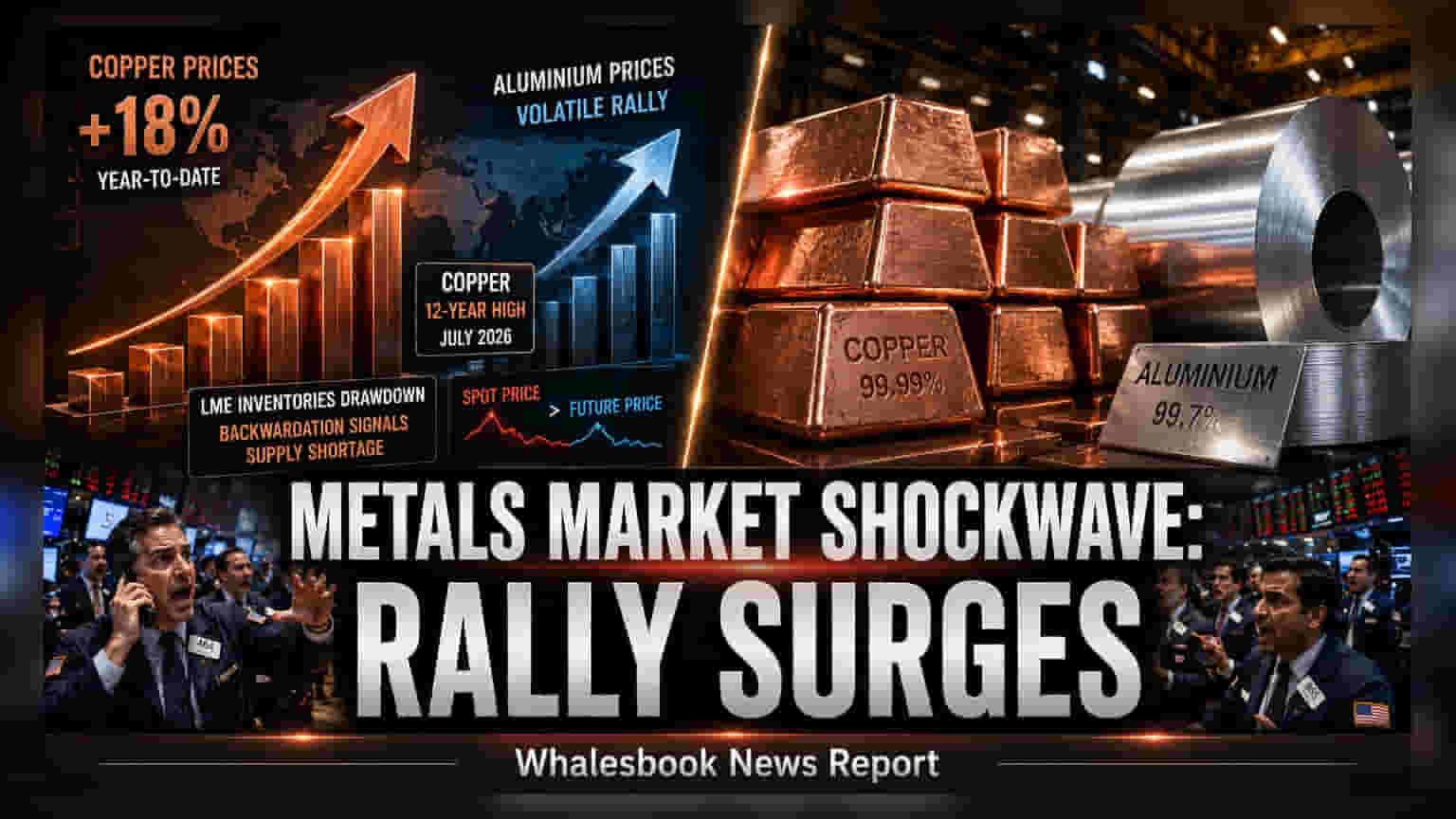
Copper prices have rallied approximately 18% in 2026, driven by record US imports and falling global inventories. This price surge, largely fueled by tariff-related stockpiling, creates a complex landscape for investors, potentially boosting revenues for metal producers while putting margin pressure on manufacturing sectors that rely on these raw materials.
Global industrial metal markets are witnessing a volatile period as copper prices have risen approximately 18% year-to-date, with aluminium also seeing significant price swings. This rally has been primarily triggered by a rush in the United States to stockpile copper, hitting a 12-year monthly high in July 2026, as industries prepare for potential new trade tariffs. The uncertainty surrounding US trade policy has effectively tightened the global supply chain, forcing prices higher in the near term.
The Inventory Crunch on LME
A critical factor driving these price movements is the state of inventories on the London Metal Exchange (LME). Throughout 2026, stocks of both copper and aluminium have seen consistent drawdowns. This has led to a market structure known as backwardation, where the price for immediate physical delivery is higher than the price for future delivery. This happens when the market is worried about an acute shortage of ready-to-use metal. While there was a brief, partial recovery in LME copper stocks in late August, the overall market remains tight, leaving prices susceptible to sudden spikes if demand continues to outpace supply.
Impact on Indian Industry and Investors
For Indian investors, this rally presents a mixed scenario depending on which part of the metal value chain a company sits in. For primary metal producers, higher global prices often translate into better revenue realization, potentially benefiting margins. However, this is not a one-sided positive.
For companies in downstream industries—such as auto components, electronics, construction, and cable manufacturing—higher commodity prices act as a direct increase in input costs. If these companies cannot pass the extra cost to their customers, their profit margins may come under pressure. Investors should carefully monitor whether companies have the pricing power to maintain their profitability during this period of high raw material costs.
Risks and Future Triggers
While the current rally is supported by supply concerns, the market outlook is not entirely one-sided. A significant risk factor is the demand outlook in China, which remains the world's largest consumer of industrial metals. Any sign of a slowdown in Chinese manufacturing could weigh heavily on prices, potentially countering the impact of US stockpiling.
Furthermore, the volatility is closely tied to policy decisions. Any official clarity on potential US tariffs will be a key market driver. Investors tracking the sector should watch for updates on global inventory levels and any shifts in central bank policies that might affect industrial demand. The sustainability of this rally will likely depend on whether the supply shortage continues or if global demand cools down in response to the higher prices.