

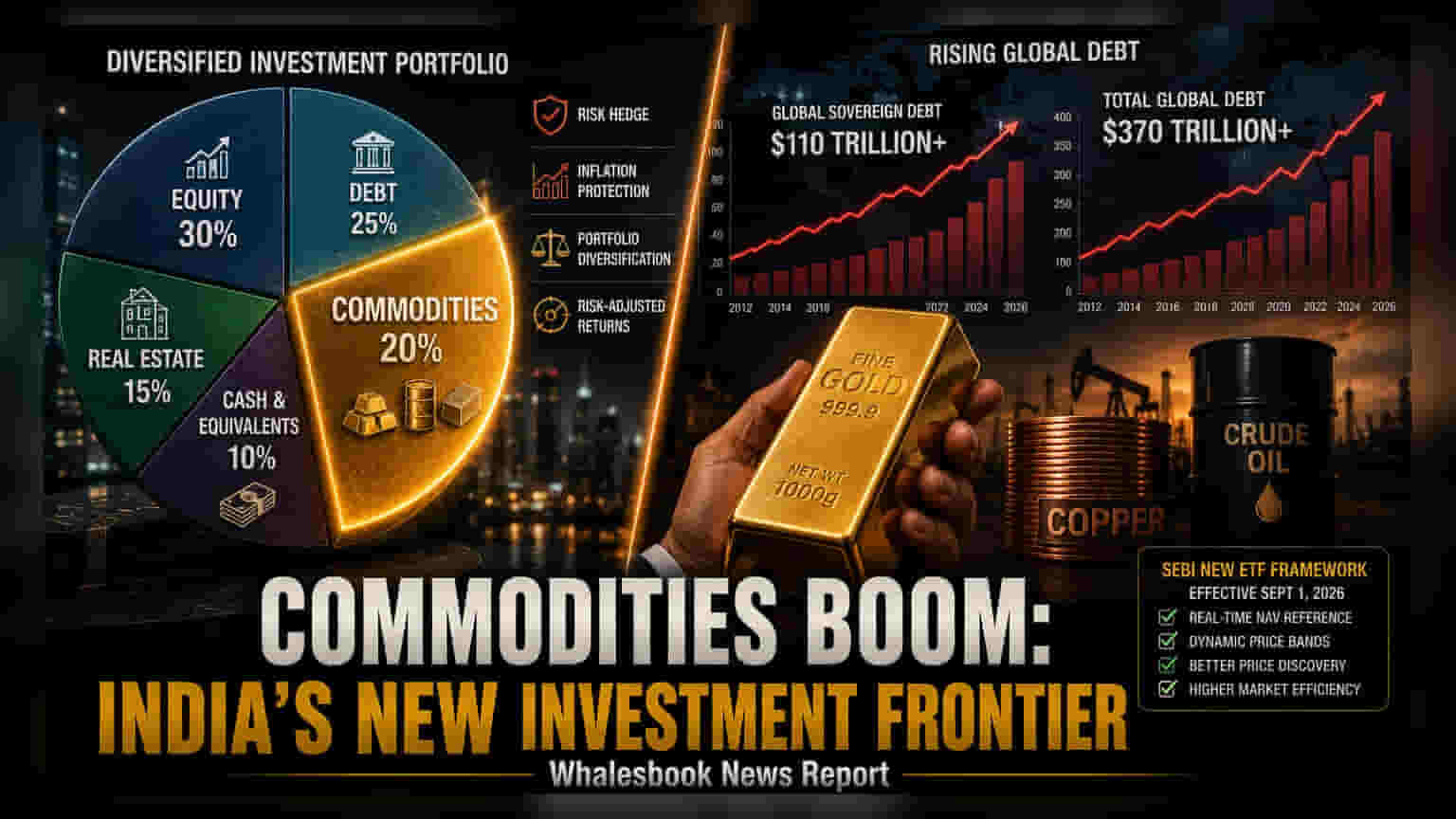
Commodities are becoming more common in Indian portfolios as investors look beyond traditional stocks and bonds. Nippon India Mutual Fund's Vikram Dhawan suggests this trend is fueled by the need for hedges against global debt and the growth of multi-asset strategies. Investors should track the upcoming SEBI ETF trading changes in September 2026, which aim to improve market efficiency.
Commodities are gaining traction as a core component of Indian investment portfolios, reflecting a broader shift in how individuals manage their savings. As investors move toward strategies that do not rely solely on one type of asset, the interest in commodity-backed products is expanding. This evolution in asset allocation is being driven by the need for risk-adjusted returns and the search for effective hedges against macroeconomic uncertainty.
Vikram Dhawan, Head of Commodities at Nippon India Mutual Fund, highlights that the traditional focus on equities and debt is widening. He notes that as portfolios grow, investors are increasingly looking for ways to balance their risks, leading to a higher demand for commodity exposure. Currently, gold and silver exchange-traded funds (ETFs) remain the most popular choices, accounting for a significant portion of passive investment turnover in the fiscal year 2026.
Gold as a Strategic Hedge
The appeal of gold remains centered on its utility as a protective asset. Dhawan points to the continuous rise in global sovereign debt, now estimated to be over $110 trillion, and total global debt approaching $370 trillion. In an environment where major economies face fiscal challenges, gold is often viewed as a hedge against the potential weakening of paper currencies. Furthermore, the metal's lack of credit risk makes it a staple for central banks worldwide, further supporting its long-term relevance for individual portfolios.
New Regulatory Standards
A critical development for investors to watch is the updated trading framework for ETFs, which the Securities and Exchange Board of India (SEBI) has set to become effective on September 1, 2026. These rules are designed to replace older methods of calculating the net asset value (NAV) reference price with more recent, real-time data and introduce dynamic price bands. For investors, this shift is intended to improve market efficiency, ensuring that the market price of an ETF aligns more closely with the actual value of the underlying commodities.
Future of Commodity Funds
While precious metals currently dominate, there is industry discussion regarding the inclusion of industrial commodities like copper and energy products in mutual fund structures. Dhawan suggests that if the industry can establish clear benefits and consensus, such products could help broaden the range of available investment tools. These additions could potentially aid in building reserves within the country and offer investors more specialized ways to gain exposure to different sectors.
Market Risks to Monitor
Investors considering commodity-linked investments should be aware of specific risks. Price volatility is a major factor, particularly for industrial metals and energy, which can cause significant swings in portfolio returns. There is also the issue of tracking error, where the performance of an ETF may slightly differ from the spot price of the commodity, especially for funds that use futures contracts. Additionally, liquidity in niche commodity ETFs and the bid-ask spread—the difference between the buying and selling price—can impact the cost of trading for retail investors.
Regarding the energy sector, the outlook for crude oil appears more subdued. The market is shifting, with pricing power moving away from traditional producer groups like OPEC and toward major consuming nations like China. With the rising adoption of electric vehicles and the potential for new supply sources, the long-term trend for oil remains challenging. Moving forward, the growth of commodity investing in India will depend on the continued adoption of multi-asset fund structures and the successful implementation of the new, more efficient trading regulations.