

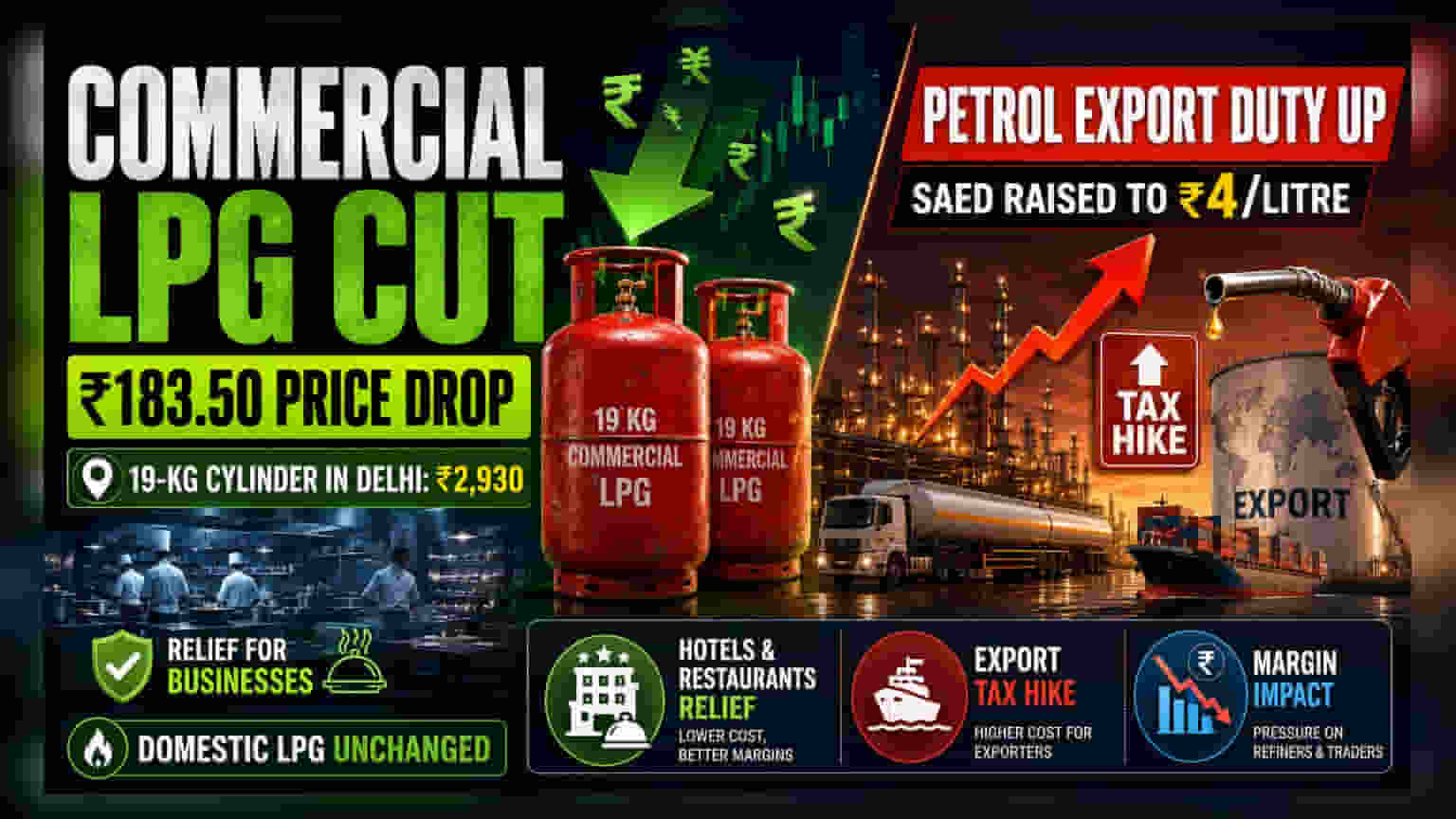
Commercial LPG cylinder prices have dropped by ₹183.50, providing cost relief to the hospitality and business sectors. Simultaneously, the government has raised the special excise duty on petrol exports to ₹4 per litre, a move designed to prioritize domestic fuel supply.
What Happened
Starting July 1, 2026, the price of commercial LPG cylinders has been reduced by ₹183.50. This brings the cost of a 19-kg cylinder in Delhi to ₹2,930, down from the previous ₹3,113.50. This is the first reduction in commercial cylinder prices in 2026, following a series of price hikes earlier this year. Prices for domestic LPG cylinders used in households remain unchanged.
In a simultaneous regulatory update, the government has increased the Special Additional Excise Duty (SAED) on petrol exports from ₹1.5 per litre to ₹4 per litre, effective July 1. This adjustment is part of the government's periodic review of windfall taxes.
Relief for Businesses
The reduction in commercial LPG prices directly lowers operating costs for the hospitality, restaurant, and bakery sectors, which are major users of 19-kg cylinders. For these businesses, fuel is a significant variable cost. While the price decrease offers some margin relief, it follows a period of volatile and higher prices earlier in the year, which had pressured their operating profitability.
Impact of the Petrol Export Duty
The increase in the Special Additional Excise Duty on petrol exports is a regulatory measure aimed at discouraging fuel exports and ensuring sufficient supply in the domestic market. When global oil prices are high, domestic refiners may find it more profitable to export fuel rather than sell it domestically.
This tax acts as a "windfall tax," reducing the extra profit margins that oil companies make from exporting fuel during periods of global price volatility. For listed oil marketing companies and upstream producers like Reliance Industries, ONGC, and Oil India, this policy creates a cap on potential export profits. Investors generally view such tax adjustments as negative for companies with significant export exposure.
Sector and Regulatory Context
The Indian government reviews these export duties regularly, usually every fortnight or as needed, to manage the balance between crude oil prices, refining margins, and domestic demand. These decisions are heavily influenced by global geopolitical events that affect international oil economics.
Because refining margins are sensitive to both crude oil prices and product prices (like petrol and diesel), these tax changes can directly influence the financial performance of major Indian oil and gas companies.
What Investors Should Track
Investors in the oil and gas sector should watch for the next regulatory review of the windfall tax. A key monitorable is whether global crude oil prices remain volatile, as this typically triggers further adjustments in export duties. Additionally, while the lower commercial LPG price is a positive for user industries like restaurants and hotels, it does not have a direct impact on the earnings of oil producers and refiners, whose profitability is more sensitive to global refining margins and crude oil prices.