

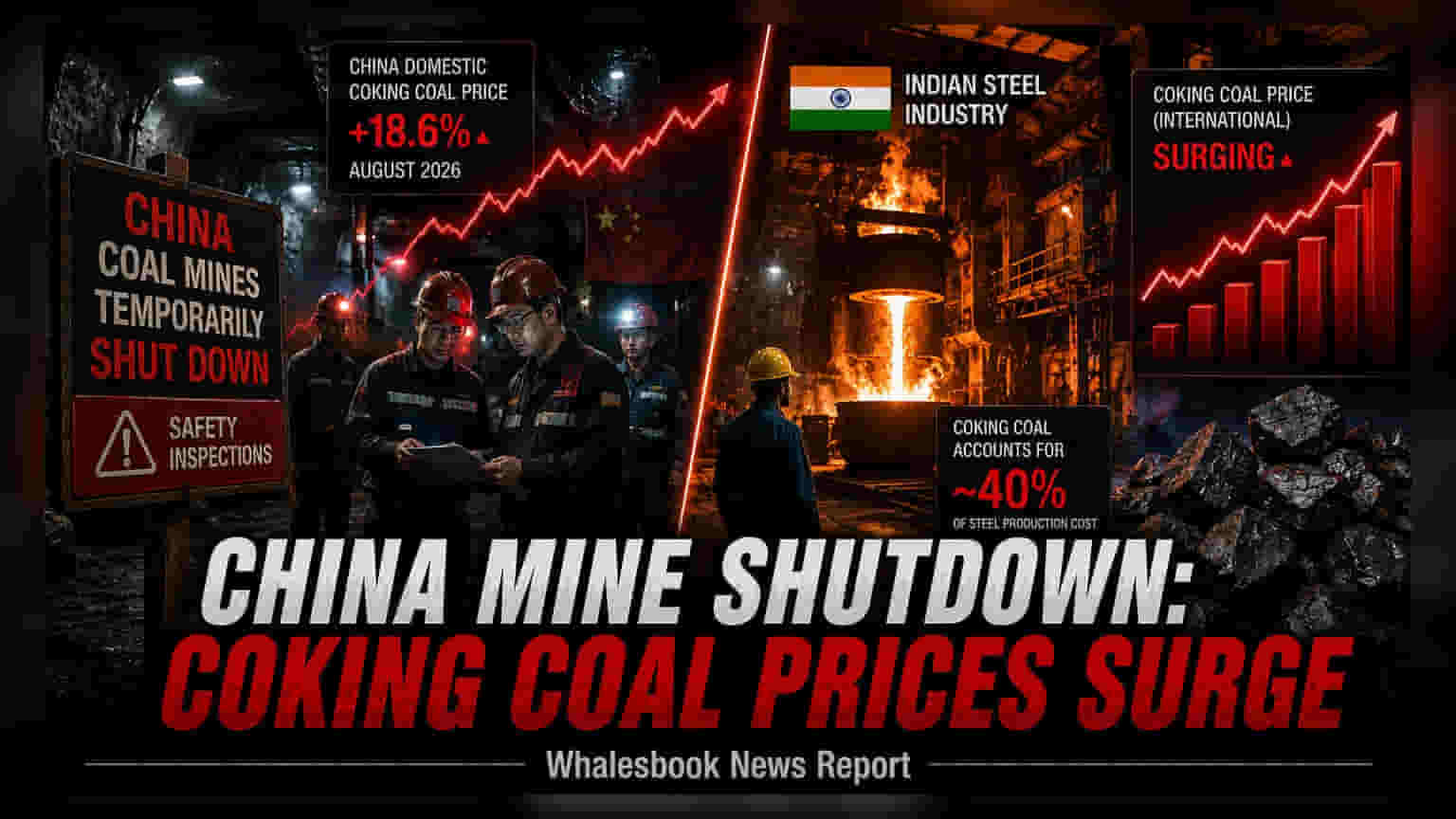
China’s strict safety crackdown following mine accidents has tightened global coking coal supply, leading to price volatility. For Indian steel manufacturers, this raises the risk of higher raw material costs, which account for a significant portion of production expenses. Investors should monitor how these cost pressures impact the profit margins of domestic steel producers in the coming quarters.
The global coking coal market is experiencing increased volatility as China enforces strict safety inspections across its major mining regions. Following a series of safety incidents, including a major accident in Shanxi province earlier this year, Chinese authorities have significantly tightened operational oversight. This regulatory clampdown has led to widespread temporary mine closures and reduced output, which is creating a ripple effect in global supply chains.
Research agencies, including BMI, have raised their price forecasts for 2026, citing the difficulty Chinese mines face in boosting production even when prices rise. Domestic coking coal prices in China have already seen significant gains in August as markets react to the tightened supply. This situation creates a challenging environment for international buyers who rely on steady access to metallurgical coal.
For the Indian market, this development is particularly relevant for the steel sector. Indian steel manufacturers remain heavily dependent on imported coking coal, a critical raw material for blast furnace operations. With coking coal accounting for nearly 40% of the total production cost for many steel producers, any sustained increase in international prices directly impacts financial performance.
Investors should note that this price volatility creates a risk of margin compression for steel companies. While demand for steel in India is expected to remain robust, the ability of manufacturers to pass on these higher raw material costs to customers remains a key question. If steel prices do not rise at a similar pace, companies may see a decline in their operating margins.
Furthermore, the steel sector is currently navigating a complex environment. Beyond raw material costs, domestic producers are also dealing with competitive pressure from lower-priced steel imports in global markets. The combination of elevated input costs and the potential for a softening in steel demand in certain segments adds a layer of uncertainty for the industry. The key monitorable for shareholders will be the management commentary in upcoming quarterly results regarding input cost management, the impact of these higher prices on profit margins, and any strategies companies are using to offset the rise in raw material expenses.