

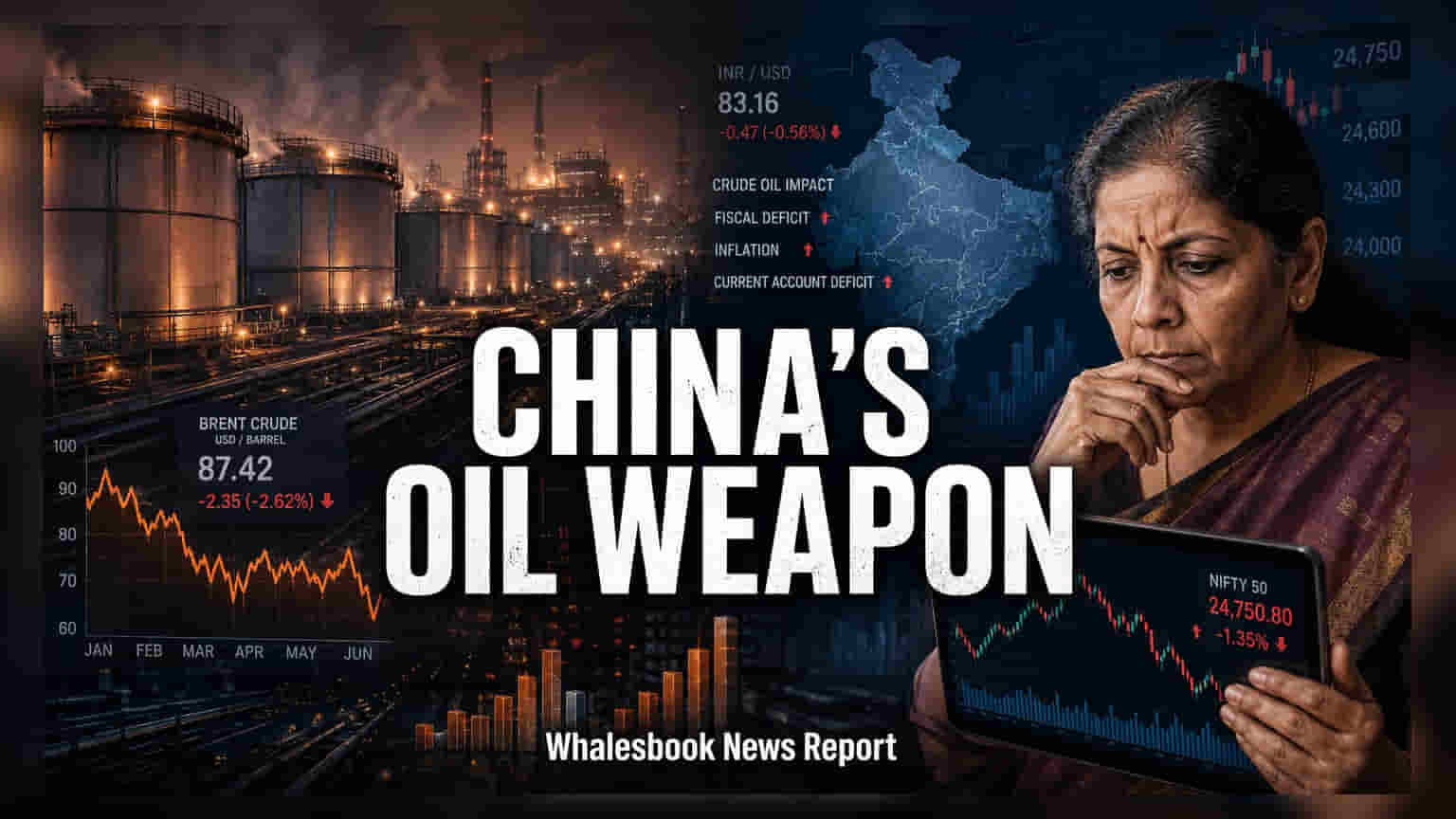
China’s massive 1.4-billion-barrel oil reserve allows it to act as a 'swing buyer,' influencing global crude prices and creating uncertainty for India. With Brent crude near $84 and geopolitical tensions in the Strait of Hormuz, Indian investors face risks from import cost volatility and potential US legislation affecting Russian oil trade.
China has evolved into a powerful market-maker in the global energy space, shifting from a simple consumer to the world’s primary 'swing buyer' of crude oil. By holding an estimated 1.4 billion barrels in strategic and commercial inventories—enough to cover 110 to 140 days of imports—Beijing now has the financial and structural capacity to manipulate global prices by adjusting its purchase or sale pace. This influence is a departure from historical norms where supply-side producers, like those in the Middle East, primarily determined market pricing. For India, this change adds a layer of unpredictability to its already sensitive energy import landscape.
The implications for the Indian economy are significant. India remains heavily dependent on imports to meet its energy needs, and any volatility in global crude prices directly impacts the national import bill and domestic inflation. When China aggressively stockpiles oil, it can create a price floor, keeping costs elevated for other buyers. Conversely, its opaque inventory management means the global market often has limited visibility into its true demand, which can lead to sudden price swings. With Brent crude currently trading around $84 per barrel, Indian energy companies and the broader economy remain vulnerable to these external market shifts.
Beyond price volatility, there are emerging regulatory risks that investors should track. The proposed Lindsey O Graham Sanctioning Russia Act of 2026 has raised concerns about potential tariffs on nations continuing to purchase Russian crude oil. Since India has significantly increased its sourcing of Russian oil—which currently accounts for a substantial portion of its total crude imports—any move toward strict US sanctions or tariffs could force Indian refiners to pivot to more expensive sources, pressuring their profit margins and overall operating costs. This regulatory uncertainty compounds the existing risk posed by geopolitical instability in the Strait of Hormuz, a critical transit route for global oil supplies.
To counter these challenges, India is actively diversifying its energy sources. The country has expanded its supplier base for LNG from 6 to 15 countries and for crude oil from 27 to 41 nations. While this diversification improves long-term energy security, it does not fully insulate the domestic market from short-term global price shocks driven by major economies like China. The lack of a strategic reserve scale comparable to China's leaves Indian refiners with less of a buffer during periods of supply chain disruption or extreme price spikes.
Moving forward, the critical update for investors will be the balance between global oil price stability and India's ability to manage its import costs. Investors may monitor government policy on expanding strategic petroleum reserves and any official clarity regarding trade relations with Russia. Additionally, tracking monthly import data and movements in Brent crude prices will provide insights into how effectively Indian refiners are navigating the current high-cost environment and potential regulatory pressures.