

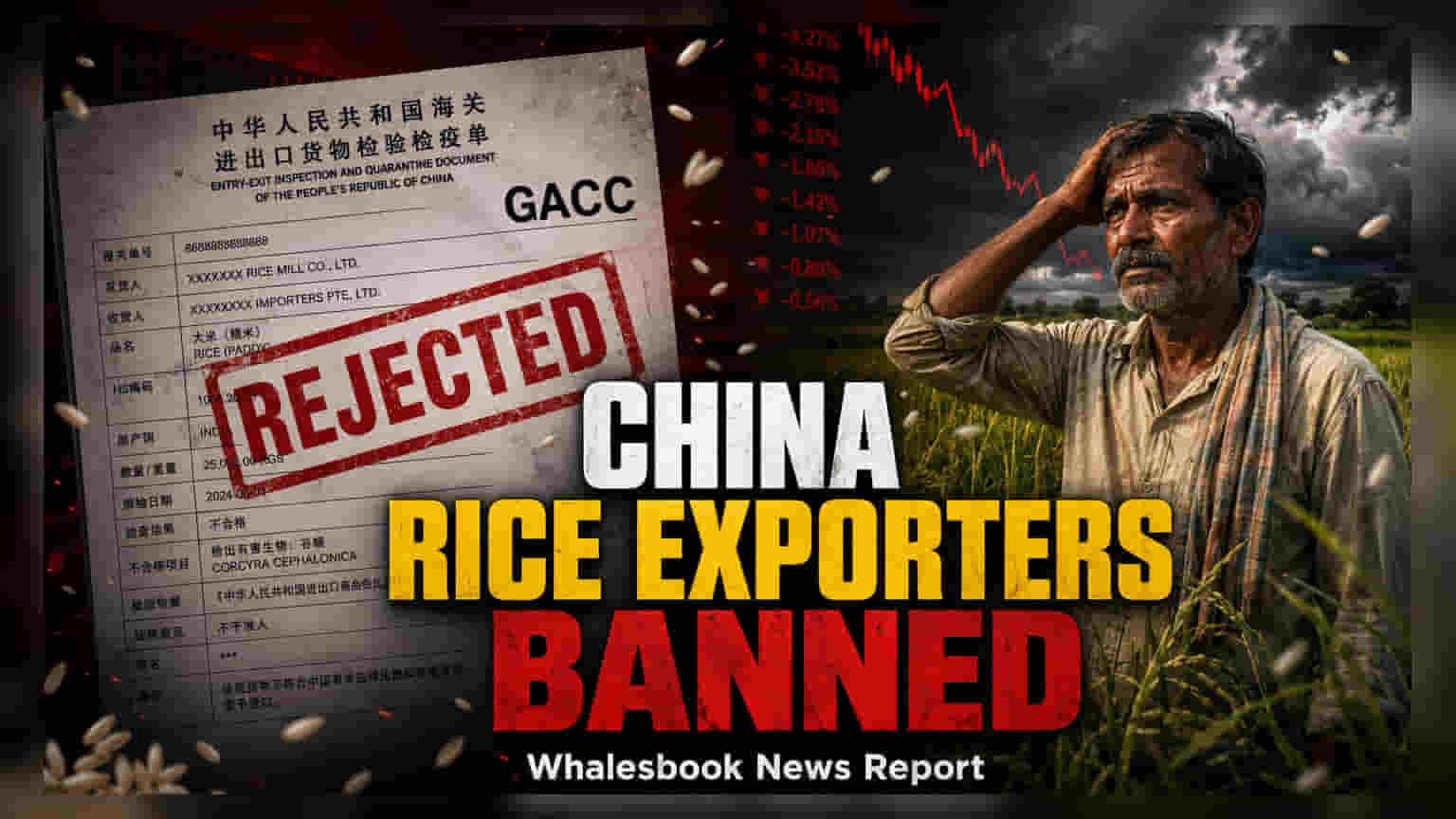
Beijing has revoked the import licenses of seven Indian rice exporters following claims of GMO presence in shipments. While the exporters dispute these allegations—noting that India does not commercially cultivate GM rice—the recurring rejections act as a non-tariff trade barrier. Investors should monitor if these tensions affect India's broader agricultural export reputation or trade relations with other global markets.
Beijing has revoked the registration of seven Indian rice exporters, effectively barring them from shipping rice to China. The General Administration of Customs of the People's Republic of China (GACC) cited the alleged presence of genetically modified organisms (GMOs) as the justification for this move. The ban follows months of escalating trade friction, during which Chinese authorities rejected over 70 consignments of Indian non-basmati rice.
The action has caused significant confusion among Indian exporters. India does not commercially cultivate genetically modified (GM) paddy, making the GMO claims scientifically disputed by domestic authorities. Adding to the friction is the fact that many of these rejected shipments had already received pre-shipment clearance from the China Certification & Inspection Group (CCIC), a state-appointed Chinese agency that tests goods while they are still in India. The contradiction between the clearance received in India and the rejection upon arrival in China has led many in the trade circle to view these actions as a non-tariff trade barrier rather than a genuine safety issue.
Impact on Trade and Market Reputation
For Indian investors and the broader agricultural sector, the immediate financial impact on major listed companies is limited, as the affected entities are largely private, small-to-mid-sized firms. However, the broader risk lies in the diplomatic and economic signal this sends. India currently holds a significant 40% share of the global rice export market, exporting 21.56 million tonnes in the 2025-26 season. If China continues to leverage "GMO" allegations to block imports, it could create a negative narrative that invites stricter scrutiny from regulators in other major markets, such as the European Union.
The Rice Exporters Association has formally requested the Agricultural and Processed Food Products Export Development Authority (APEDA) to intervene and engage with the GACC. Looking ahead, the key monitorable for market participants is whether this issue is resolved through bilateral talks or if it signals a long-term shift toward protectionist policies that could complicate export logistics and pricing for the Indian rice industry.