

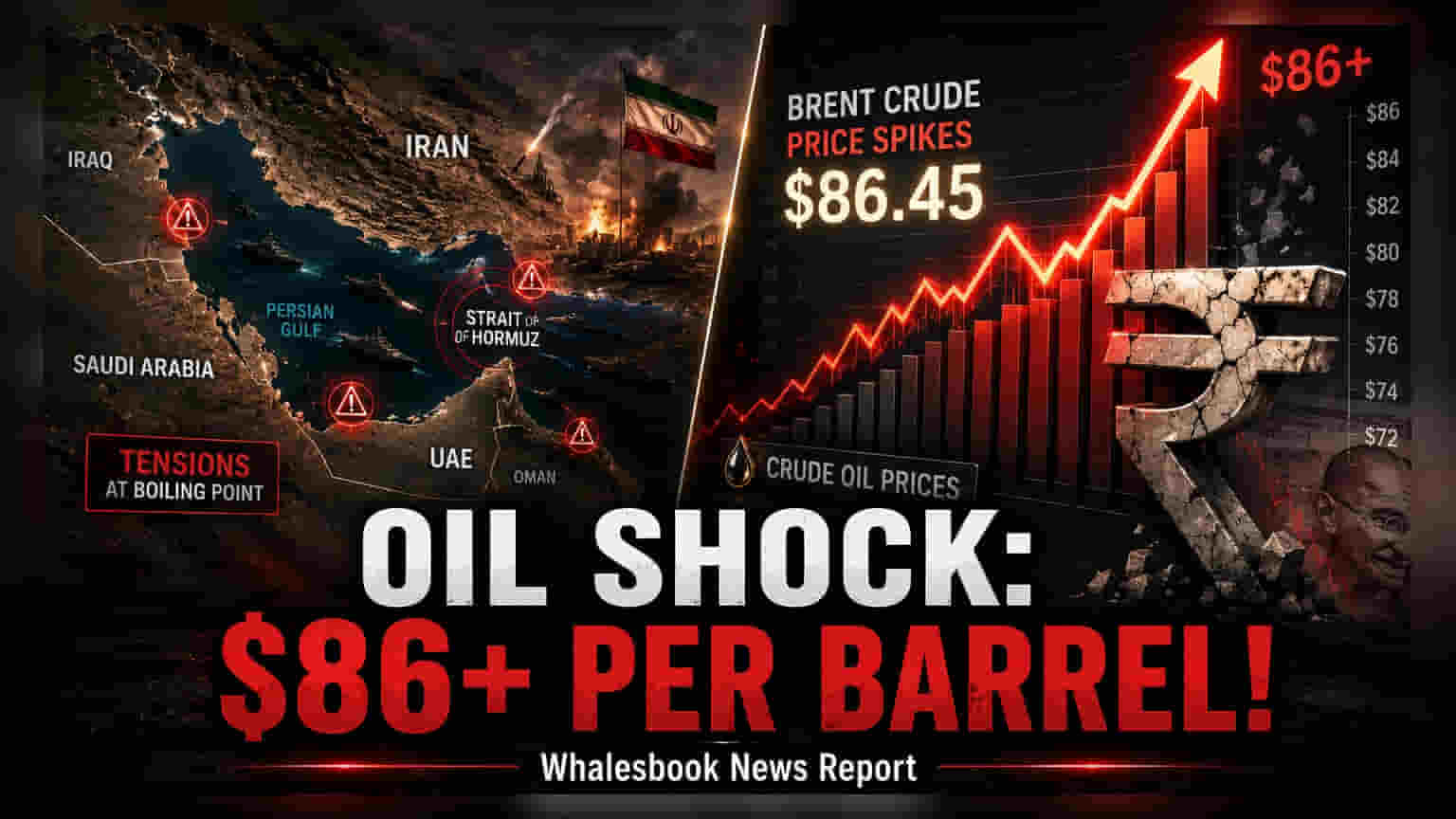
Global Brent Crude prices rose above $86 a barrel on July 14, 2026, following military escalations in the Strait of Hormuz. For Indian investors, this rise increases concerns regarding the national import bill, potential currency pressure, and a possible resurgence in inflationary trends.
Global crude oil prices have reached a one-month high, with Brent Crude futures crossing the $86 per barrel mark on July 14, 2026. This sudden increase is primarily driven by rising military tensions in West Asia, which have sparked fears among global market participants regarding the safety and continuity of oil supplies from the Persian Gulf.
The price jump follows reports of significant military activity involving the United States and Iran in the Strait of Hormuz, a critical maritime route for global energy trade. Reports of damaged tankers in the region have further unsettled the energy markets, reversing the relatively stable pricing trends observed in the preceding weeks.
Impact on India’s Macroeconomic Balance
India remains one of the world's largest importers of crude oil, sourcing over 85% of its total requirements from international markets. For the Indian economy, a sustained rise in crude prices creates direct pressure on the country's import bill. When India pays more for its energy imports, it often leads to a widening current account deficit. This scenario frequently puts downward pressure on the Indian Rupee against the US dollar, as the demand for foreign currency increases to settle import payments.
Inflationary Risks for Consumers and Industry
Investors should monitor how these global price trends influence domestic fuel pricing. Indian oil marketing companies, such as Indian Oil Corporation, Bharat Petroleum, and Hindustan Petroleum, evaluate international benchmark prices alongside government policy and tax structures before deciding on retail price changes. While retail prices for petrol, diesel, and LPG have historically been adjusted based on various fiscal considerations, a prolonged period of crude oil at $86 or higher complicates the inflation outlook.
Beyond direct fuel costs, high energy prices often create a ripple effect throughout the broader economy. Transportation and logistics costs for essential goods and services frequently rise when fuel prices increase. This can lead to higher operational costs for sectors heavily dependent on logistics, such as FMCG, manufacturing, and consumer durables. If these companies pass on the increased costs to the final consumer, it may contribute to broader inflationary pressures, which is a key factor monitored by the Reserve Bank of India when setting interest rates.
Market Monitorables
The most important factor for investors to track in the coming weeks will be the stability of oil supply routes and the official commentary from oil marketing companies regarding retail fuel price revisions. Investors may also observe the performance of energy-consuming sectors on the stock exchanges, as profit margins in these industries are often sensitive to sudden increases in raw material and energy costs. The overall impact on the Indian market will depend on whether these geopolitical tensions remain contained or lead to further disruptions in global energy trade.