

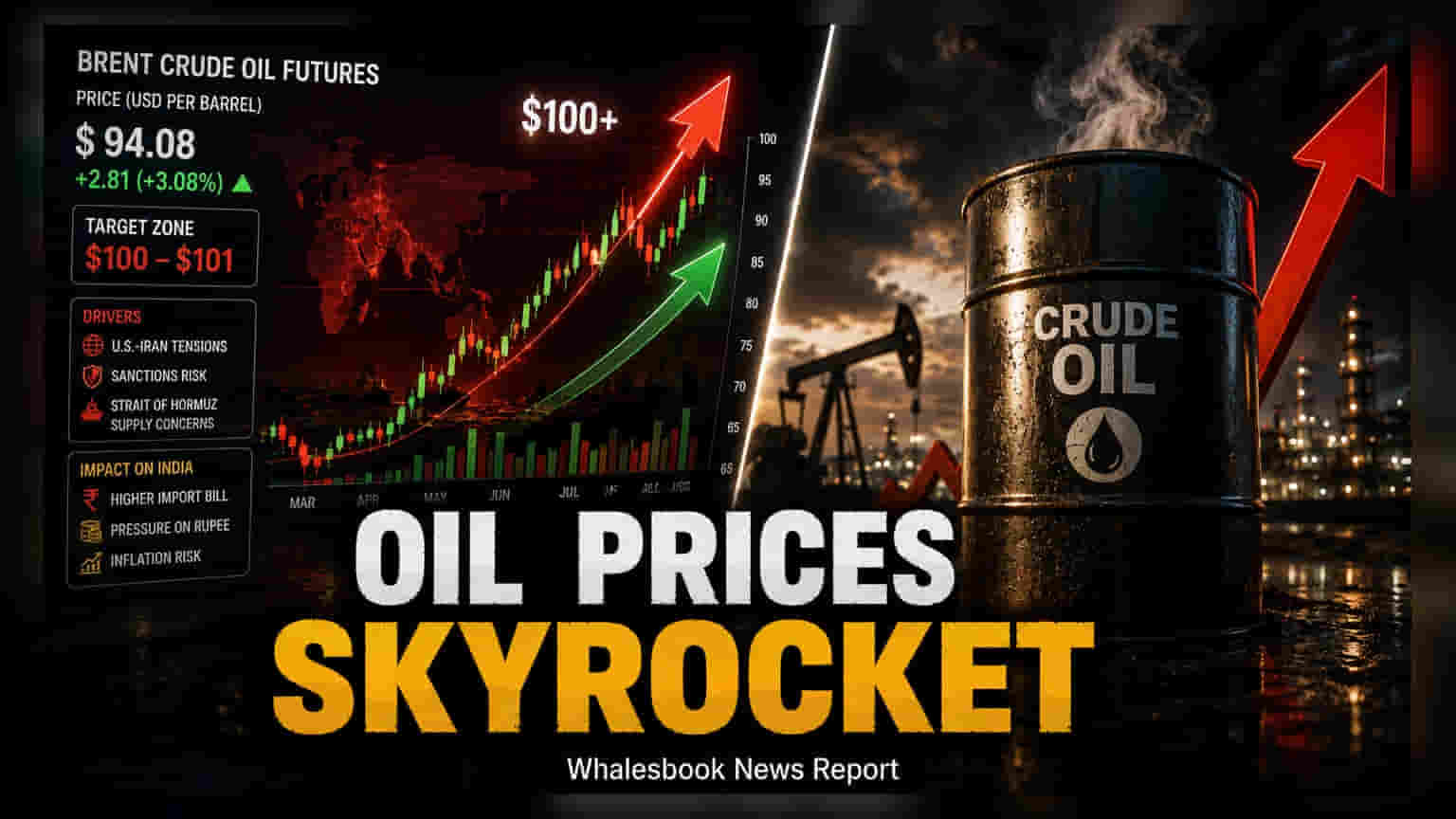
Brent crude oil futures have climbed above $94 per barrel, fueled by rising geopolitical friction between the U.S. and Iran. For Indian investors, this trend is critical as higher global oil prices increase the national import bill, potentially fuelling inflation and creating divergent impacts for domestic oil producers and marketing companies.
Global oil markets are seeing a sustained upward trend, with Brent crude futures settling in the $94 range this week. This price movement is largely driven by escalating geopolitical tensions between the United States and Iran. Markets are currently reacting to the expiration of diplomatic agreements and renewed threats of economic sanctions, which have heightened fears regarding potential supply disruptions. A major concern for global energy traders is the security of the Strait of Hormuz, a vital maritime chokepoint for oil tankers. If geopolitical developments further restrict this shipping lane, supply risks could intensify, pushing prices toward the $100 to $101 level.
In the domestic market, the trend is mirrored on commodity exchanges, where crude oil futures have surpassed the ₹8,000 mark. Because India remains heavily dependent on crude imports, a sustained rise in international oil prices carries significant implications for the domestic economy. Higher energy costs directly impact the country’s import bill, which can put pressure on the Indian Rupee and contribute to inflationary trends that affect the broader market.
For investors, the impact of rising crude prices is not uniform across the energy sector. There is often a clear distinction in how different types of companies handle these changes. Upstream energy companies, such as ONGC and Oil India, are generally the direct beneficiaries of higher crude prices because they earn more for every barrel they produce and sell. When global benchmarks rise, their realization per barrel often improves, which can support their revenue and profit margins.
Conversely, Oil Marketing Companies (OMCs) like Indian Oil Corporation, BPCL, and HPCL often face different challenges. These companies purchase crude oil at international market rates to refine and sell as petrol, diesel, and other products. When global crude prices surge, these companies may face significant pressure on their profit margins if they are unable to fully pass on these higher costs to retail consumers at the fuel pump. Consequently, investors often monitor the refining margins and retail pricing policies of these entities closely during periods of high price volatility.
Beyond company-specific financial performance, the macroeconomic risk remains the primary monitorable. Persistent high oil prices act as a cost-push factor for inflation, which can influence interest rate decisions and overall economic growth. Investors should track diplomatic developments in the Middle East, as any easing of tensions could lead to a correction in oil prices, whereas a further breakdown in relations could maintain upward pressure.