

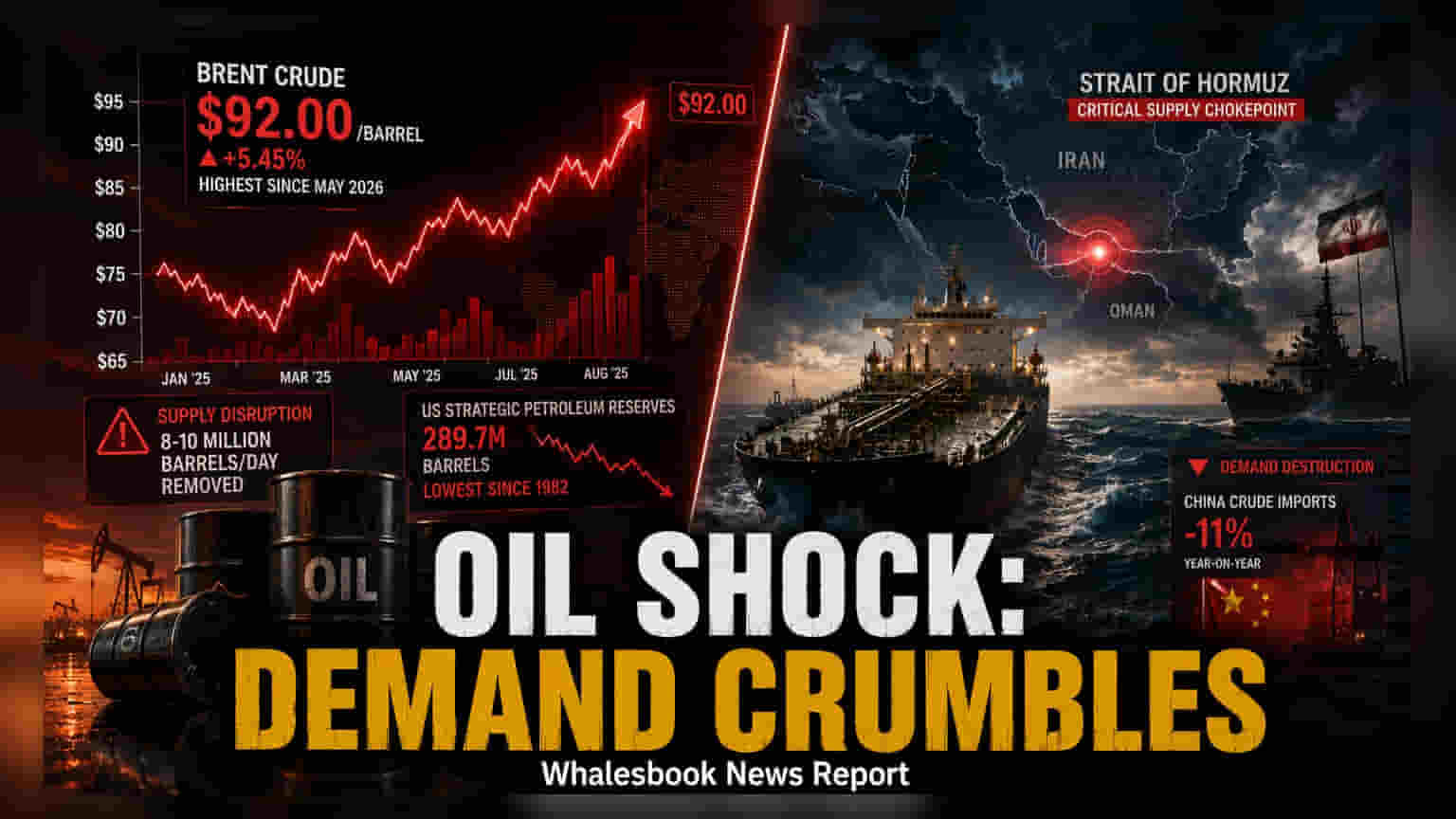
Brent crude oil has risen near $92 per barrel as conflict in the Strait of Hormuz cuts off significant global supply. With emergency oil stocks at their lowest level since 1982 and major buyers like China reducing consumption, the global economy faces pressure from high fuel costs and potential supply shortages.
Global crude oil markets are under intense pressure as Brent crude trades near $92 per barrel. The primary driver for this surge is the ongoing conflict between the US and Iran, which began in February 2026. This geopolitical tension has severely restricted movement through the Strait of Hormuz, a critical shipping lane for global energy. Disruptions in this region have effectively removed between 8 million and 10 million barrels of oil per day from the global supply chain.
Depleting Emergency Stocks
For months, many nations relied on their Strategic Petroleum Reserves (SPR) to keep prices from rising too rapidly. However, these safety buffers are now significantly depleted. According to official data, US strategic petroleum reserves have fallen to approximately 289.7 million barrels, the lowest level since 1982. With these buffers shrinking, the market has less resilience to handle further supply shocks. The International Energy Agency (IEA) has warned that this situation increases the risk of a supply squeeze if the conflict persists.
Demand Weakness and Economic Strain
High energy prices are leading to what analysts call demand destruction. This means that as oil becomes more expensive and difficult to source, companies and consumers are forced to use less of it. China, the world's largest crude importer, has recorded a sharp decline in oil imports. This reduction is driven by a combination of high fuel prices, a slowing economy, and a faster-than-expected structural shift toward electric vehicles. When a major buyer like China cuts consumption, it creates an unusual dynamic where prices remain high due to supply fears, even while actual physical demand is falling.
Impact on Industries and Inflation
For investors, these trends signal potential headwinds for several sectors. High crude prices act as a tax on the global economy. Companies in the transportation, aviation, and logistics sectors face higher operating costs, which can squeeze profit margins if they cannot pass these expenses on to customers. Similarly, petrochemical manufacturers often struggle when oil prices are volatile, as input costs become difficult to predict. In India, elevated crude prices often put pressure on the rupee and increase the import bill, which can influence inflation expectations and central bank policy.
The Path Ahead
The immediate concern for the market is the lack of a clear timeline for restoring shipping routes through the Strait of Hormuz. Because the supply gap is so large, any further escalation in the region could cause rapid price movements. Investors should track updates on inventory levels from the Energy Information Administration (EIA), as well as any diplomatic efforts to secure shipping lanes. Additionally, monitoring the refining sector is essential, as the bottleneck in turning crude into fuel products like diesel and gasoline remains a key factor keeping energy prices elevated for the end consumer.