

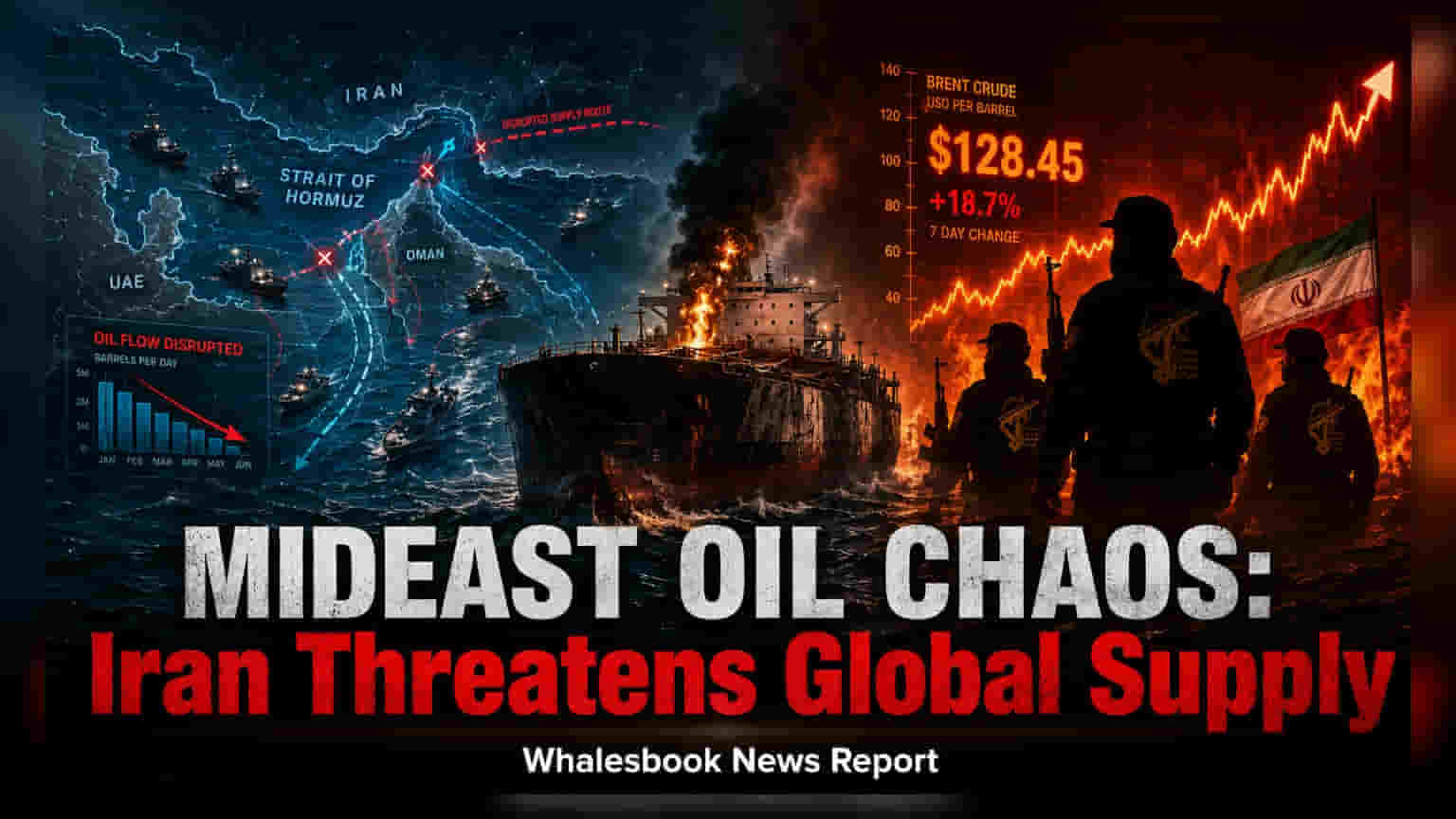
Brent crude prices touched $87 per barrel following the US blockade of Iranian ports and subsequent threats from Tehran to disrupt Middle East energy supplies. This geopolitical escalation creates uncertainty for global oil markets and Indian importers reliant on the region. Investors are monitoring the impact of potential supply disruptions on energy costs and shipping logistics.
Global energy markets are reacting to heightened tensions in the Strait of Hormuz after the United States reinstated a blockade on Iranian ports. The move follows a series of skirmishes in the critical waterway, which serves as one of the world's most important transit points for oil and natural gas shipments. In a direct response, Iran's Revolutionary Guard has warned that if its exports are blocked, energy shipments from the entire region could face disruption.
Impact on Crude Oil Prices
Brent crude prices briefly climbed above $87 per barrel as markets factored in the risk of reduced supply from the Middle East. While this remains well below the highs of nearly $120 observed during earlier stages of the conflict, the current volatility reflects investor concern over potential transit delays or physical damage to energy infrastructure. For India, which imports a large portion of its crude oil requirements, sustained high prices or supply bottlenecks could lead to increased import costs and pressure on profit margins for oil marketing companies and downstream chemical manufacturers.
Escalating Regional Tensions
The situation has deteriorated rapidly, with regional authorities reporting missile and drone activity. Nations such as Bahrain and Kuwait have faced security alerts, while Jordanian forces have taken action against incoming projectiles. US naval officials have confirmed that multiple attacks were directed at neighboring Gulf countries, further complicating the diplomatic environment. The breakdown of previous negotiations regarding Iran's nuclear program has removed a key buffer that previously helped maintain a fragile peace in the region.
Risks to Energy Supply Chains
The Strait of Hormuz is a vital maritime chokepoint. Any physical disruption or prolonged maritime security issues can force tankers to alter routes, leading to higher shipping costs, increased insurance premiums, and potential delays in crude oil delivery. Indian investors should monitor whether these security threats translate into long-term supply shortages or if the current diplomatic efforts can contain the conflict.
The primary monitorables for the coming days include the stability of shipping routes through the Strait, official statements from major oil-producing nations regarding output levels, and any updates on crude oil price trends. Increased energy costs often act as a headwind for the domestic economy by potentially raising inflation risks and affecting the operating costs of energy-intensive industries.