

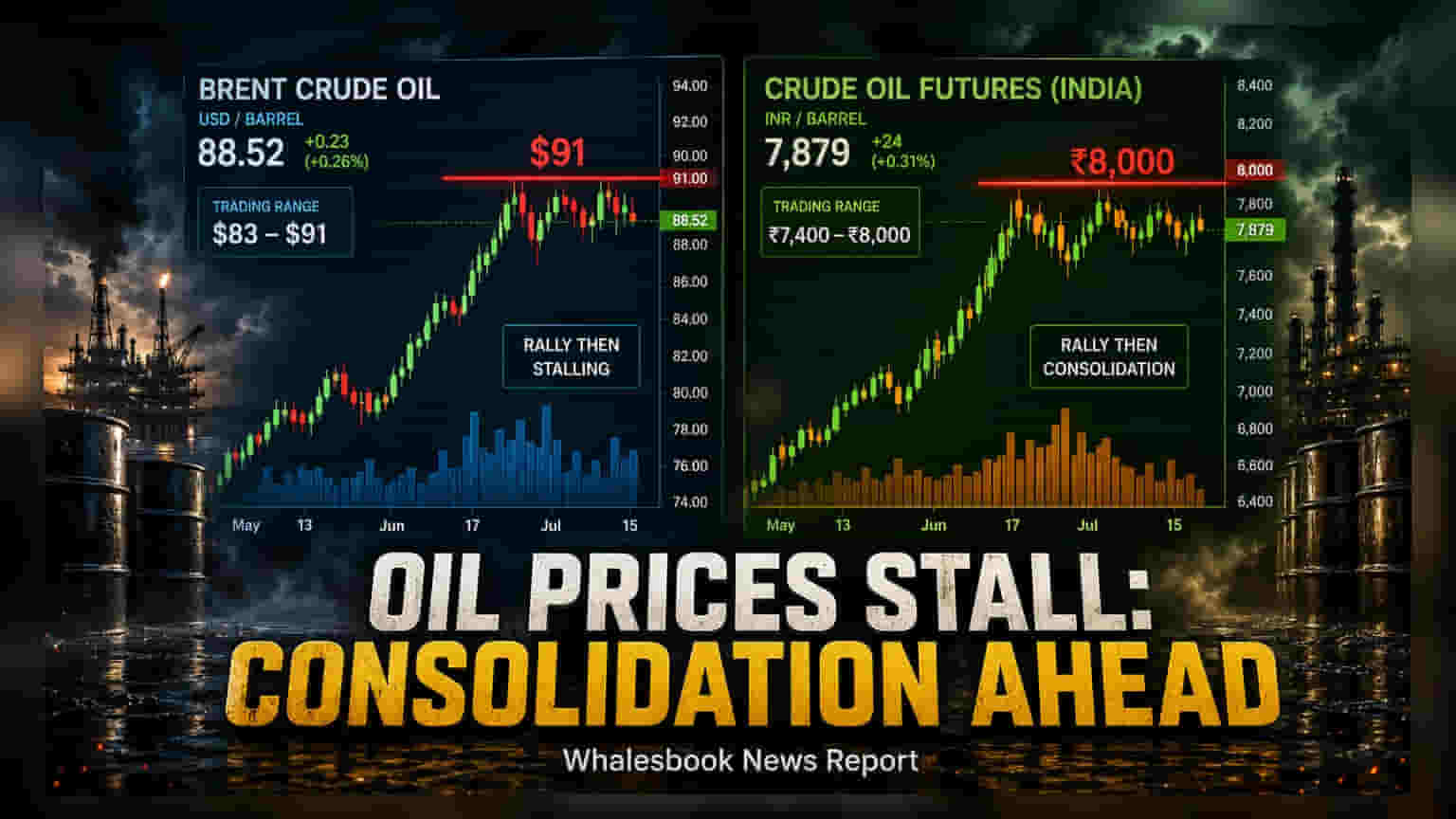
Brent crude futures are consolidating near $88.50 after failing to breach the $91 barrier. The market is currently balancing fears of Middle East supply disruptions against a weak global demand outlook. For Indian investors, this range-bound movement coincides with recent government cuts to windfall taxes on petroleum exports, making sector policy and geopolitical headlines the key areas to monitor.
Global oil markets have entered a consolidation phase, with Brent crude futures trading near $88.52 per barrel. This comes after a recent rally that saw prices climb nearly 6% last week. While the market attempted to push higher, it met a strong psychological and technical barrier at the $91 mark, which now acts as a ceiling. Prices are currently expected to trade within the $83 to $91 range as traders weigh conflicting signals from global supply and demand.
The current price stagnation is largely driven by a tug-of-war in market sentiment. On one side, investors are worried about supply chain safety due to geopolitical tensions, particularly regarding the Strait of Hormuz, where ongoing tanker activity remains a risk factor. On the other side, the International Energy Agency (IEA) has projected that global oil demand will contract by 1.6 million barrels per day in 2026. This lower demand forecast is preventing crude oil from sustaining a breakout above the $91 level.
For Indian market observers, these price trends have specific implications. When global crude prices remain range-bound, it provides more stability for domestic oil marketing companies that rely on predictable raw material costs. Furthermore, the Indian government announced a reduction in windfall taxes on the export of petrol, diesel, and aviation turbine fuel, effective August 15, 2026. This policy adjustment is a relevant factor for domestic upstream and refining companies, as it aims to balance the economic impact of global price fluctuations on domestic producers.
Despite the current stability, investors should remain aware of potential risks. The oil market is highly sensitive to headlines, and any sudden escalation in geopolitical conflict, especially around critical maritime routes, could trigger rapid price increases regardless of the underlying demand trends. Conversely, if U.S. crude inventory data shows unexpected builds, it could put downward pressure on prices, potentially testing the lower support levels around $83 to $86.
Moving forward, the primary monitorables for investors will be any updates on geopolitical stability in the Middle East and upcoming reports on global energy consumption. Additionally, any further changes in domestic windfall tax policies or official statements from the government regarding fuel exports will be important for understanding the profitability and regulatory environment for India's oil and gas sector.