

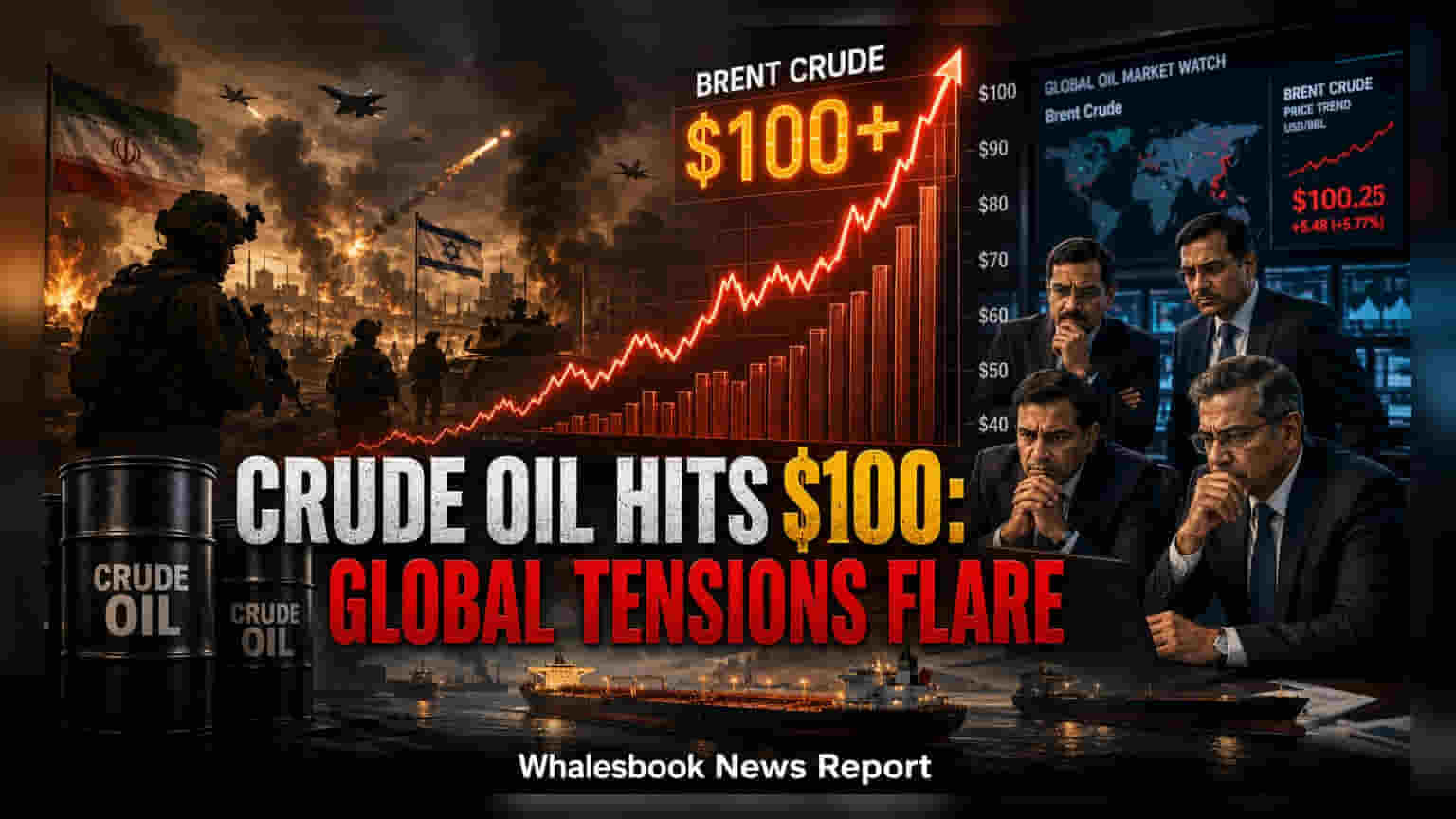
Brent crude has crossed the $100-per-barrel mark due to escalating tensions in West Asia and shipping route disruptions. This rapid price increase poses a significant challenge for Indian oil marketing companies, which face renewed pressure on profit margins from fuel and LPG under-recoveries.
Detailed Coverage
Global oil prices reached a nine-week high as Brent futures surged to $100.71 per barrel on Thursday. The rise, representing a nearly 7% single-day increase, is driven by heightened conflict involving the United States and Iran, alongside ongoing attacks on shipping vessels in the Bab el-Mandeb Strait. These developments have disrupted critical energy supply chains, forcing market observers to account for higher freight costs and potential supply delays from key producers like Saudi Arabia.
Impact on Indian Oil Retailers
For Indian oil marketing companies (OMCs) such as Bharat Petroleum Corporation Limited (BPCL) and Hindustan Petroleum Corporation Limited (HPCL), this sharp uptick in crude costs creates immediate financial pressure. While these companies had seen some relief in June as global prices temporarily moderated, the current surge threatens to reverse those gains. Retailers often struggle to pass on the full impact of higher global crude prices to domestic consumers immediately, which leads to what is known as under-recoveries—the loss incurred when selling fuel below cost.
Financial data from the June quarter highlights the vulnerability of these companies. HPCL and BPCL together reported losses exceeding ₹14,000 crore for that period, with LPG sales alone contributing over ₹7,000 crore to these losses. With crude prices now back above $100, analysts and company executives are concerned that these losses may widen significantly in the coming months if global volatility persists.
Shipping Risks and Supply Chain Challenges
Beyond the base price of oil, the disruption of shipping routes near the Bab el-Mandeb Strait adds a layer of operational complexity. A significant portion of India's crude imports traverses these waters. As vessels are forced to navigate around conflict zones, the resulting increase in insurance premiums and transport times adds to the final landed cost of crude oil for Indian refineries.
Adding to the uncertainty is the evolving nature of oil sourcing. Recent data from rating agency ICRA indicates that Saudi Arabia has emerged as India's third-largest supplier, moving significant volumes through its Red Sea ports. Any threat to these specific maritime routes could force a shift toward more expensive or logistically challenging supply sources. Furthermore, reports indicate that the discounts previously available on Russian crude are currently unavailable, removing a crucial cost-cushion that had supported refinery margins earlier in the year.
Investors will need to monitor upcoming quarterly results to see how these companies manage the balance between government-regulated fuel prices and the rising costs of raw materials. Key updates to watch include management commentary on fuel marketing margins, any changes in government policy regarding subsidy support for LPG, and the duration of the current disruption in West Asian shipping channels.