

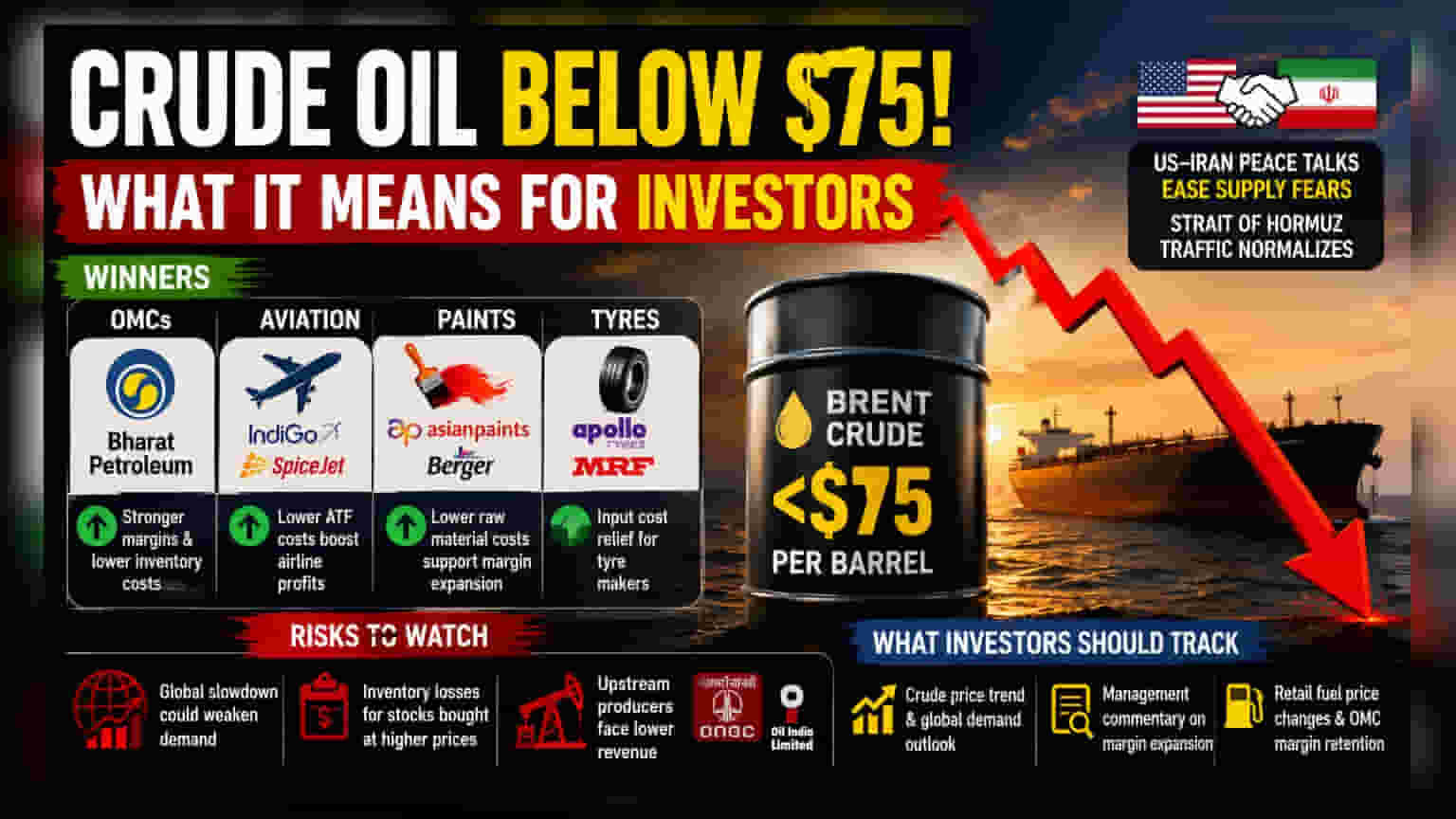
Brent crude has tumbled over 22% in the last month, slipping below $75 a barrel as geopolitical supply concerns ease. This sharp decline lowers input costs for several Indian sectors, including oil marketing companies, airlines, paint makers, and tyre manufacturers. While the move offers margin relief, investors should track whether this dip reflects global demand slowdown and how companies manage potential inventory valuation losses.
What Happened
Global crude oil prices have seen a significant reversal, with Brent crude dipping below the $75-per-barrel mark. This represents a decline of over 22% within a single month. This downward trend is largely attributed to progress in peace negotiations between the US and Iran, which has significantly eased concerns about supply disruptions through the Strait of Hormuz. As global shipping traffic through this key waterway normalizes, supply fears that previously drove oil prices higher have receded, bringing much-needed relief to oil-importing economies like India.
Why It Matters for Investors
For Indian markets, crude oil is a critical macro indicator because the country imports a large portion of its energy needs. A sustained drop in oil prices generally acts as a tailwind for industries where crude derivatives are a primary raw material or fuel source. When oil prices fall, these companies see lower procurement costs, which can lead to improved profit margins if they maintain stable selling prices for their goods and services. However, investors must differentiate between a positive cost-reduction scenario and a negative demand-slowdown scenario, where oil prices fall because global consumption is weakening.
Impact on Key Sectors
Oil Marketing Companies (OMCs): Companies like Bharat Petroleum (BPCL), Hindustan Petroleum (HPCL), and Indian Oil (IOCL) are typically the most immediate beneficiaries. Lower crude prices reduce their procurement costs. If retail fuel prices remain relatively steady, these companies can see stronger marketing margins and a reduced need for working capital, as less cash is locked up in expensive inventory.
Aviation: Aviation Turbine Fuel (ATF) is a massive operating expense for airlines. A lower oil price directly reduces this cost, providing a potential boost to the bottom line for carriers like InterGlobe Aviation (IndiGo) and SpiceJet. Since fuel can account for a significant portion of an airline's total operating expenses, even a moderate price reduction can impact profitability.
Paints and Tyres: These sectors rely heavily on crude-based derivatives. Paint manufacturers use petrochemical-based resins, solvents, and additives, while tyre makers require synthetic rubber and carbon black. Companies such as Asian Paints, Berger Paints, Apollo Tyres, and MRF often face margin pressure when oil prices spike. Conversely, a prolonged decline in crude costs can provide margin expansion, provided the companies do not face intense competition that forces them to lower product prices significantly.
The Other Side of the Story
While lower oil costs are generally seen as positive, investors should remain cautious. First, if oil prices are falling due to a global economic slowdown, it could eventually lead to weaker demand for paint, tyres, and even travel, offsetting the margin gains. Second, companies carrying large stocks of raw materials purchased at higher prices may face 'inventory losses' in the short term as the value of their existing stock adjusts to current, lower market prices. Finally, upstream oil producers, such as Oil and Natural Gas Corporation (ONGC) and Oil India, often see their revenue and profitability hit when realized crude prices decline.
What Investors Should Track
Moving forward, the key monitorables are not just the crude oil price itself, but how companies translate these savings into their financial performance. Investors should look for management commentary on margin expansion in upcoming quarterly results. It is also important to observe whether the government or private players adjust retail fuel prices, as this will determine whether OMCs can actually retain the gains from lower procurement costs.