

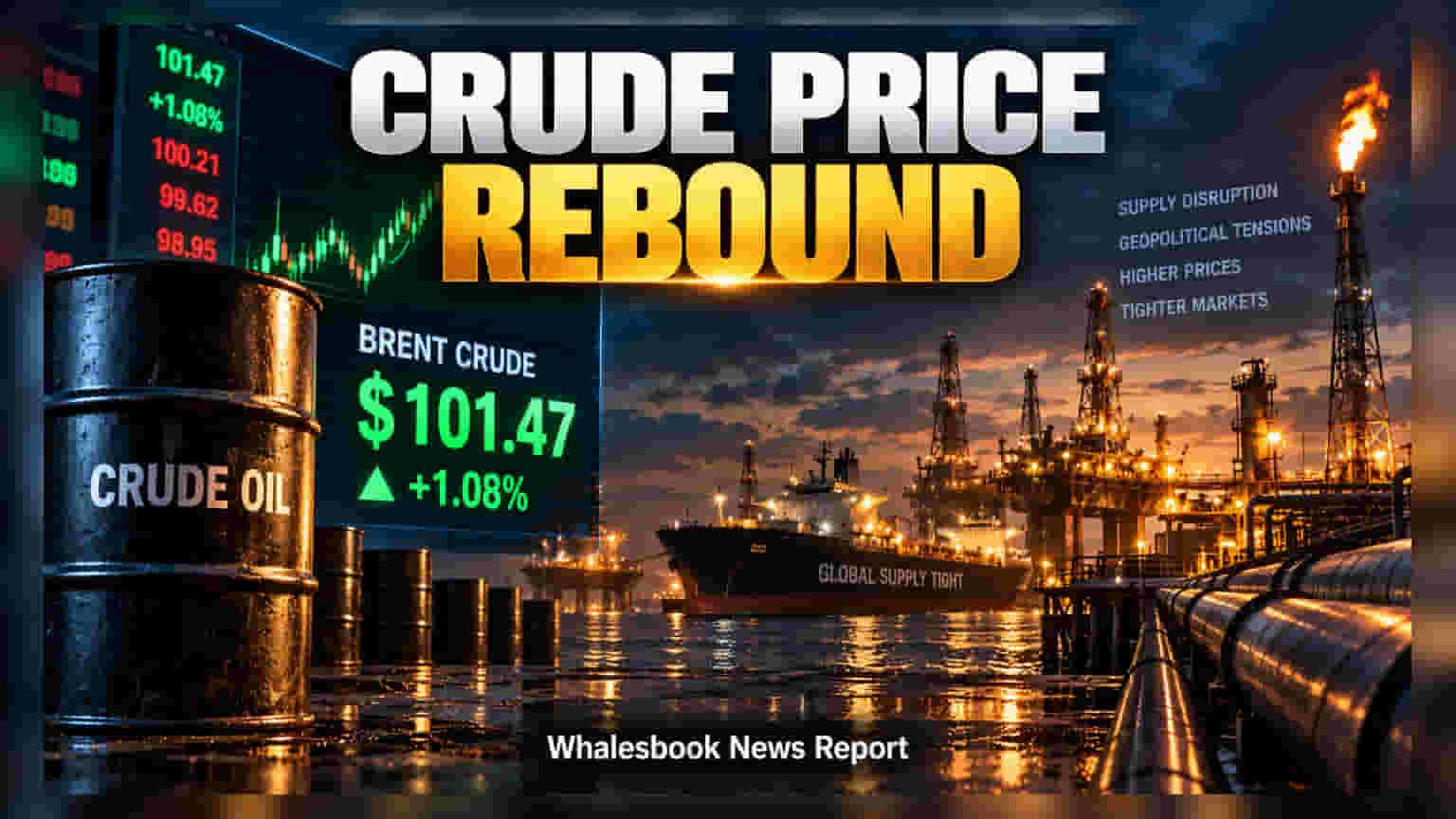
Brent crude futures rose to $101.47 per barrel, supported by logistical hurdles at Saudi Aramco’s Yanbu terminal and geopolitical uncertainty. For Indian investors, this trend is critical as rising crude prices increase the national import bill, potentially impacting the rupee and the profitability of oil marketing companies. The market is also closely tracking diplomatic discussions at the UN General Assembly for signs of future energy supply stability.
Brent crude prices moved back above the $101 mark on Tuesday, rising over 1% to $101.47 per barrel. This recovery marks a pause in the recent downward trend and highlights ongoing supply concerns within global energy markets. The immediate trigger for this price increase is operational trouble at Saudi Aramco's East-West pipeline, which has impacted crude shipments through the Yanbu terminal. Saudi Aramco is currently managing these logistical constraints by rerouting export volumes onto supertankers to maintain delivery schedules.
Analysts note that repairing the damaged pipeline infrastructure could take several weeks, which is expected to keep supply tight for specific crude grades, particularly in the European market. Beyond the physical supply issues, the energy market is factoring in geopolitical uncertainty stemming from the UN General Assembly. Potential US-Iran diplomatic developments, alongside reports of Beijing playing a mediation role regarding regional operations, have introduced a layer of unpredictability to energy supply projections. These multifaceted pressures are keeping a floor under oil prices, despite recent volatility in other commodity markets.
For Indian investors, the rise in global oil prices acts as a significant monitorable. India imports more than 85% of its crude oil requirements, meaning that sustained higher prices can widen the country's trade deficit and place downward pressure on the Indian rupee. Investors often watch how Oil Marketing Companies (OMCs) like Indian Oil Corporation, BPCL, and HPCL react to these price fluctuations. When global crude costs spike, these companies may face margin pressure if they are unable to fully pass the increased costs to domestic consumers.
Conversely, upstream companies such as ONGC and Oil India may see improved realizations when global crude prices trade at higher levels, though this is balanced by broader market concerns. Sustained high energy prices can act as an inflationary force, which may impact the overall cost of doing business across sectors and influence central bank policies. As the market moves forward, investors will be tracking the repair timeline for the Saudi pipeline infrastructure and any signals from global diplomatic discussions, as both will remain key factors in determining the near-term direction of crude prices.