

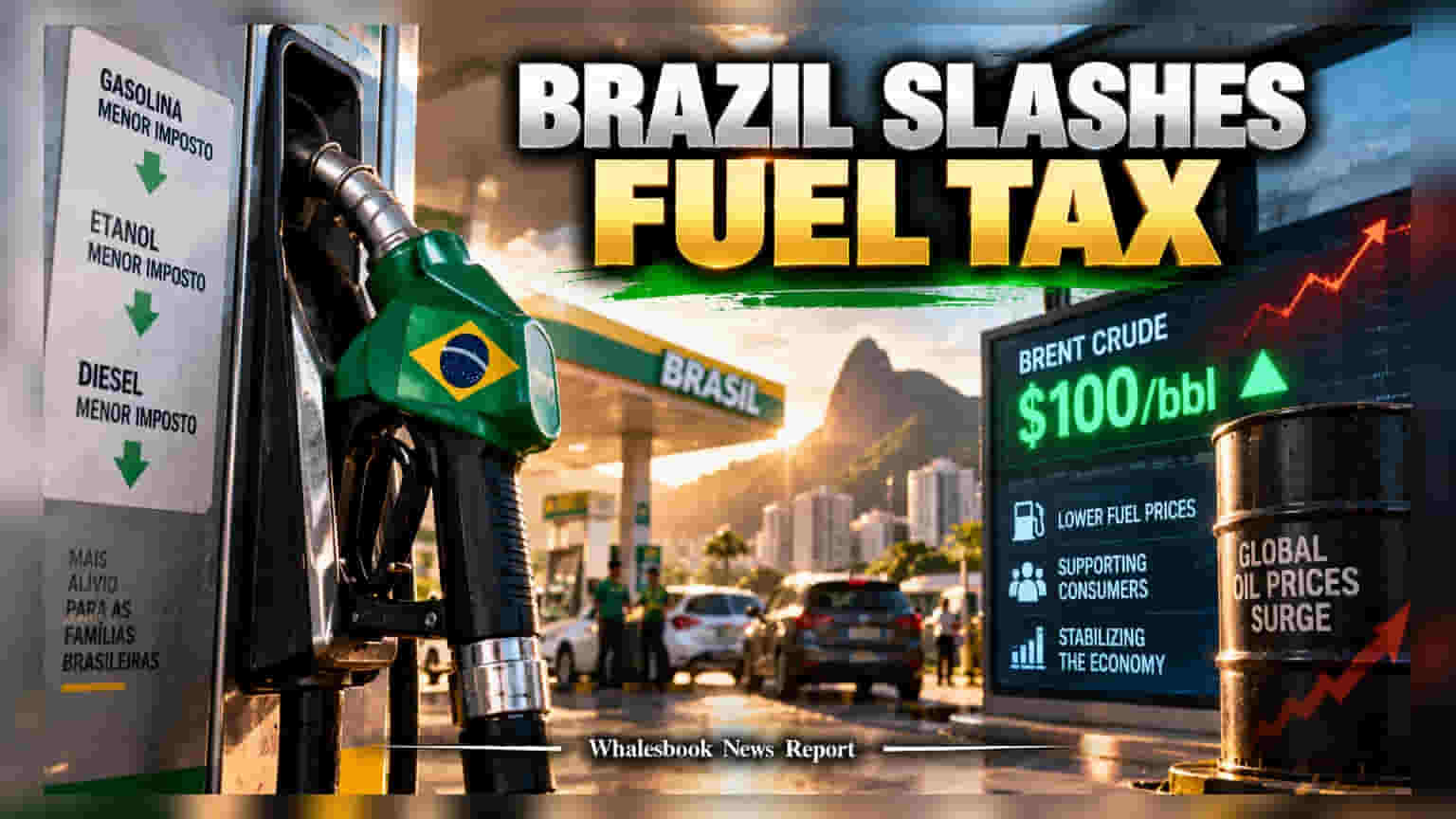
Brazil has launched a 6.6 billion reais fuel subsidy and tax cut package to protect consumers as global oil prices surge past $100 per barrel. The move aims to curb inflation before the October elections, though it raises concerns about fiscal strain and the profitability of state-owned oil major Petrobras.
The Brazilian government has implemented a significant emergency fiscal package, including fuel tax cuts and a 6.6 billion reais ($1.3 billion) subsidy, to shield domestic consumers from the impact of surging global oil prices. With Brent crude breaching the $100-per-barrel mark due to intensifying geopolitical tensions in the Middle East, specifically around the Strait of Hormuz, the administration of President Luiz Inácio Lula da Silva is prioritizing price stability. These measures, effective from September 10 to October 9, 2026, target gasoline, ethanol, and diesel, aiming to prevent inflationary pressure and mitigate the risk of supply chain disruptions caused by potential transport sector strikes.
Impact on Petrobras and Market Sentiment
For investors, the primary area of focus remains the impact on Petróleo Brasileiro SA (Petrobras), the state-controlled oil giant. Historically, when the Brazilian government mandates fuel price ceilings to manage inflation, Petrobras often faces margin pressure, as its domestic pricing may decouple from volatile global market rates. Market participants typically view such government interventions as a risk to the company's financial autonomy and future dividend capacity. While the government provides subsidies to producers and importers, the market remains cautious about the long-term sustainability of these price controls and how they might affect the company's valuation and capital spending plans.
Fiscal and Economic Risks
The scale of this intervention has raised questions about Brazil's broader fiscal health. Relying on subsidies to artificially lower energy costs places significant pressure on public finances, potentially widening the fiscal deficit. While these steps are intended to stabilize the economy ahead of the upcoming October presidential elections, they do not resolve the underlying issue of high energy costs driven by global supply chain disruptions. If the geopolitical situation continues to keep oil prices elevated, the government may face the difficult choice of extending expensive subsidies or allowing domestic prices to rise, which could then trigger the very inflation it is currently trying to prevent.
Global Context for Emerging Markets
The surge in global oil prices to over $100 per barrel is a major headwind for emerging market economies that are net importers of energy. While Brazil is an oil exporter, its heavy reliance on imported refined fuels keeps its domestic market highly sensitive to international price swings. This scenario serves as a reminder for investors across other energy-importing nations, including India, regarding the volatility of global commodity prices and the fiscal trade-offs governments often make to maintain social stability. The key monitorable in the coming weeks will be how long the geopolitical risk in the Middle East persists and whether these temporary subsidies are sufficient to prevent wider economic distress.