

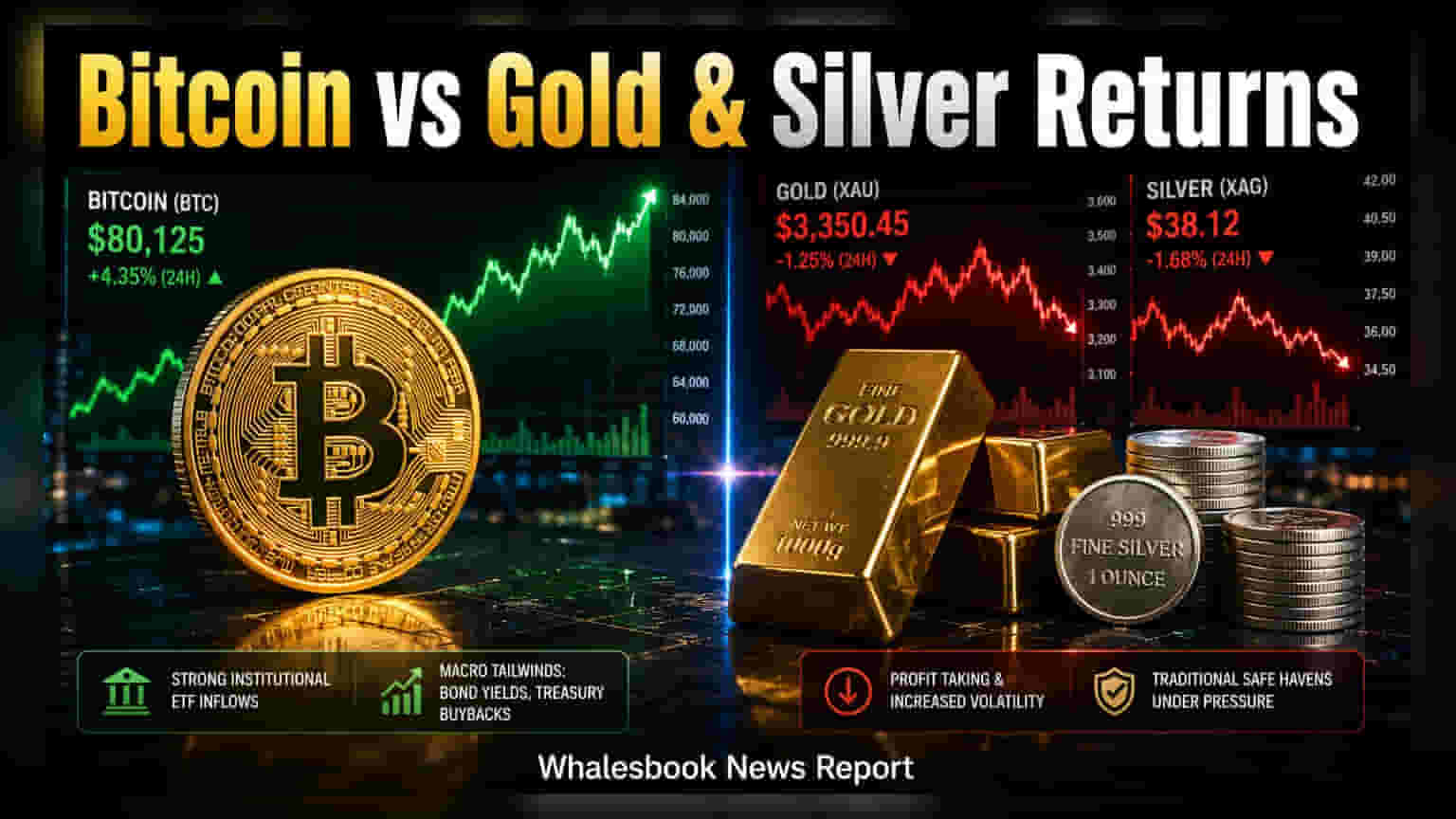
Bitcoin has staged a significant short-term recovery, outperforming precious metals as market dynamics shift. While gold and silver face volatility from profit-taking, macroeconomic factors and institutional demand are reshaping the performance gap between these assets.
The landscape for alternative assets has shifted in recent weeks, with Bitcoin demonstrating notable short-term strength against traditional precious metals like gold and silver. As of late August 2026, Bitcoin has rebounded, trading near the $80,000 mark. This recovery follows a challenging first half of the year, marking a distinct turnaround in momentum for the leading cryptocurrency.
Several macroeconomic factors are driving this change in performance. Investors are responding to shifts in U.S. bond yields and the impact of Treasury bond buyback programs. Furthermore, sustained demand from institutional exchange-traded funds (ETFs) has provided a consistent floor for Bitcoin, helping it regain ground after earlier corrections. This stands in contrast to the precious metals sector, which reached historic highs earlier in 2026 but has since faced price pressure.
Gold and silver, often viewed as traditional safe havens, have experienced increased volatility and institutional profit-taking. While these metals remain central to many portfolios, the recent market environment has seen investors re-evaluating their positions. Interestingly, recent data from industry research indicates that Bitcoin’s correlation with gold has climbed above 50% over a 90-day window. Simultaneously, its correlation with the tech-heavy Nasdaq 100 index has declined, suggesting a shift in how the market perceives Bitcoin. Increasingly, it is being viewed more as a scarce asset with unique drivers rather than strictly a high-growth technology investment.
Despite the recent positive momentum, market participants caution that volatility remains a core feature of digital assets. While the current trend is favorable, Bitcoin has historically seen rapid price corrections. The divergence between assets can be sensitive to sudden changes in Federal Reserve policy, interest rate expectations, and shifts in global geopolitical risk. Investors often view these assets through different lenses, with precious metals serving as long-term wealth protection and digital assets offering a different risk-reward profile.
For those observing these market moves, the primary focus remains on macroeconomic indicators. Changes in U.S. monetary policy, bond market stability, and the continued flow of capital into institutional ETFs are the key factors that will influence the future direction of both crypto and precious metals. As always, a diversified approach helps investors manage the inherent volatility seen across both digital and physical asset classes.