

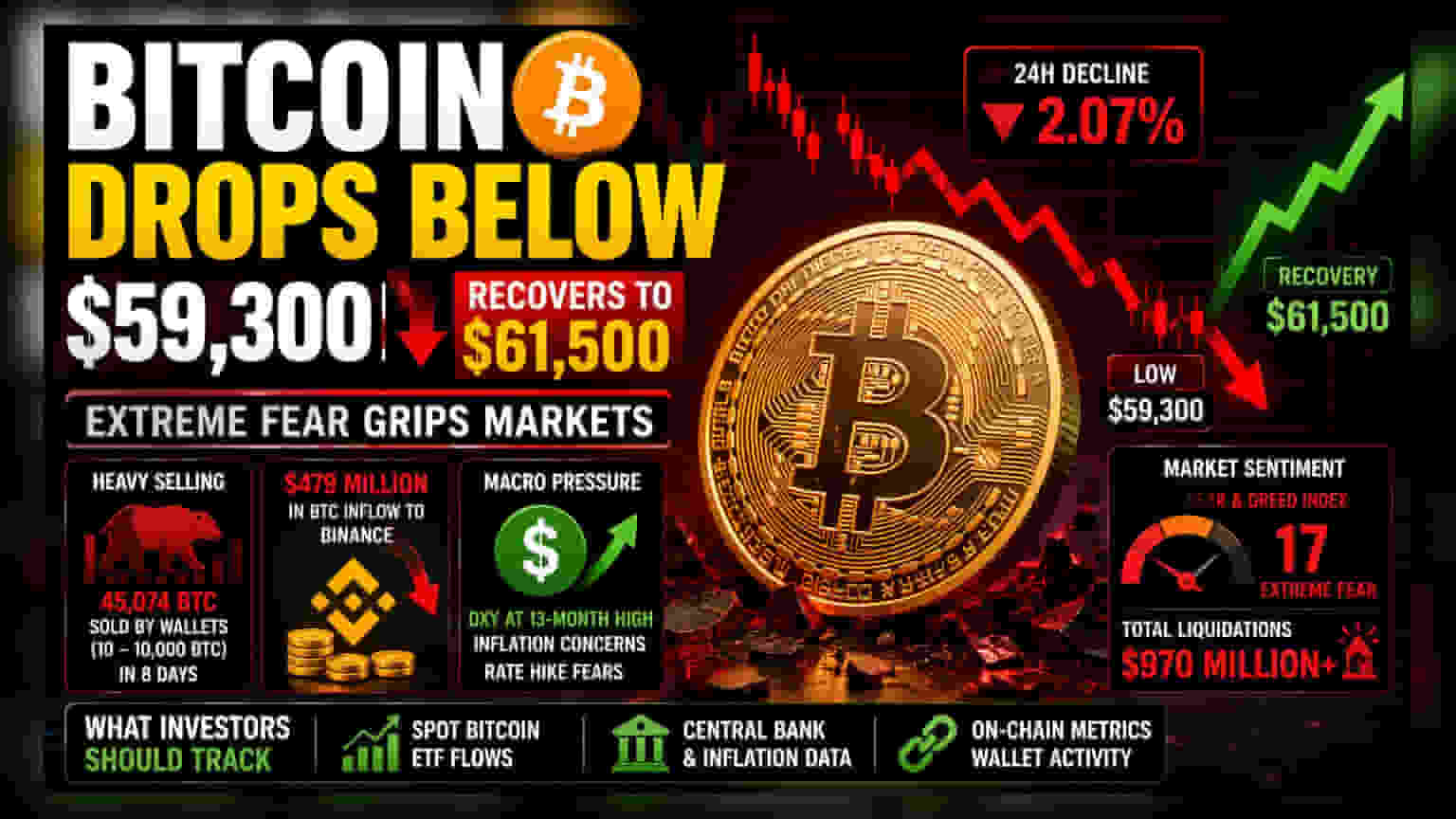
Bitcoin prices briefly fell below $59,300 on June 25 before a partial recovery to $61,500, amidst a broader market downturn. Heavy selling activity and macroeconomic concerns surrounding interest rates led to over $970 million in liquidations across the cryptocurrency market.
What Happened
Bitcoin prices saw significant volatility on June 25, dropping below the $59,300 level before staging a partial recovery to reach $61,500. This movement represented a 2.07% decline over a 24-hour period. The drop occurred against the backdrop of a wider global market downturn, which has put pressure on various risk assets.
The Selling Pressure
Recent data points to heavy selling activity in the market, which has contributed to price instability. Reports indicate that large institutional divestments, including significant amounts of Bitcoin and Ether, have added to supply pressure. Additionally, data from on-chain wallets—specifically those holding between 10 and 10,000 BTC—shows that approximately 45,074 BTC have been offloaded over the last eight days. This, combined with nearly $479 million in Bitcoin flowing into the Binance exchange, suggests that investors have been moving quickly to sell their holdings, creating a cascading effect on prices.
Macroeconomic Pressures
Investors are closely watching the relationship between Bitcoin and global economic conditions. The strength of the U.S. dollar, as measured by the U.S. Dollar Index (DXY), has surged to a 13-month high. Generally, when the dollar strengthens, assets like Bitcoin face pressure because they are priced against it. Furthermore, persistent inflation concerns and expectations that the Federal Reserve may maintain or increase interest rates are weighing on sentiment. Higher interest rates typically make safer assets more attractive, reducing the appeal of speculative or volatile assets.
Impact on Market Sentiment
The market’s fear and greed index has dropped to 17, signaling a state of "extreme fear" among investors. This environment led to more than $970 million in total liquidations in the cryptocurrency market. Liquidations occur when traders who have borrowed money to bet on price increases are forced to sell their positions because prices dropped too low, which often accelerates the decline in value.
What Investors Should Track
The immediate future for Bitcoin will likely depend on several key factors. First, investors may track spot Bitcoin ETF flows, as these indicate whether institutional investors are buying or selling on the exchanges. Second, central bank commentary and upcoming inflation data will be critical in shaping the market's view on interest rates. Finally, on-chain metrics regarding wallet activity and exchange inflows remain important to monitor to see if the recent wave of selling is subsiding or continuing.