

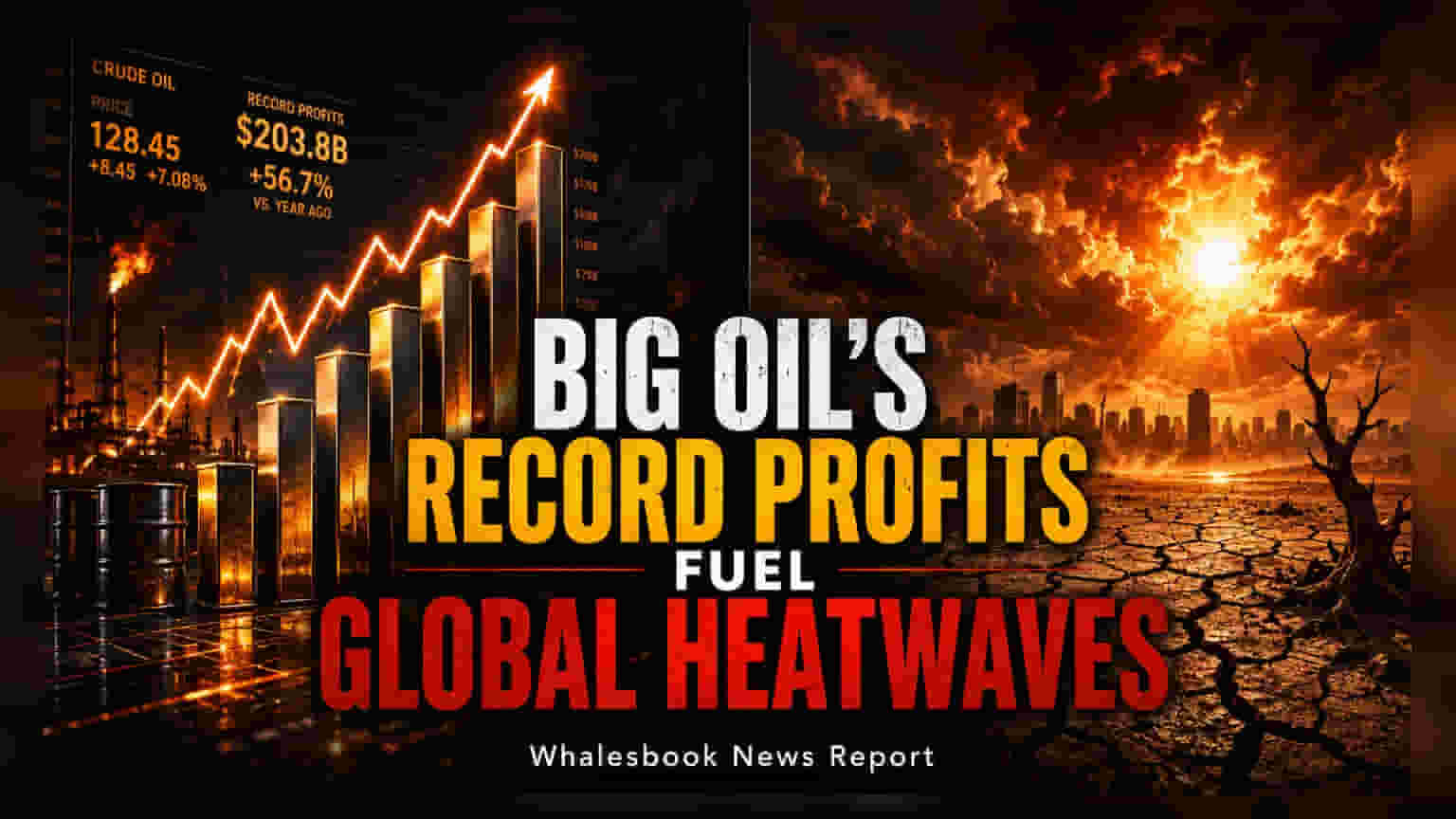
Six major oil companies are projected to earn $45 billion in net income during Q2 2026, nearly doubling from the previous quarter. This surge in profitability has prompted calls from Oxfam for windfall taxes to fund global climate adaptation projects. The financial performance highlights the sector's scale as these firms continue to plan production increases through 2030.
Detailed Coverage
The global fossil fuel industry is expected to report a significant jump in earnings for the April-June 2026 period. Market projections indicate that six of the world’s largest oil and gas corporations—BP, Chevron, Eni, ExxonMobil, Shell, and TotalEnergies—could collectively record $45 billion in net income for the second quarter. This marks a notable increase from the $23 billion reported in the first quarter of 2026.
Scaling Financial Projections
These financial results represent a broader trend of high earnings for the sector. If current market conditions persist, annual profits for these six firms could reach approximately $147 billion for the 2026 calendar year. To put the scale of these earnings into context, internal projections suggest that companies like Chevron could see profits of around $1,200 per second, while ExxonMobil could reach levels near $1,800 per second throughout the quarter. These figures surpass the combined earnings these companies generated over the 21-month period spanning from the second quarter of 2024 through the end of 2025.
Industry Growth and Regulatory Pressure
Despite the profit growth, the industry faces increasing scrutiny regarding its long-term environmental strategy. Major players in the sector have signaled intentions to expand oil and gas production capacity by 14% by 2030, based on 2024 production levels. This planned expansion, which would add roughly 2.5 million barrels per day, is being closely tracked by international policy groups. Oxfam, in its recent analysis, linked the emissions from these operations to the intensity of global heatwaves and extreme weather events. The aid organization argues that the profit bonanza is occurring while nations least responsible for emissions struggle to fund necessary climate adaptation measures.
Taxation and Market Impact
Oxfam has proposed that governments consider implementing windfall taxes on these excess profits to bridge the global climate adaptation funding gap. According to the 2025 UN Environment Programme (UNEP) report, low- and middle-income countries require between $310 billion and $365 billion annually for adaptation by 2035. Oxfam suggests that a global tax on the excess profits of 585 major fossil fuel firms could potentially generate up to $400 billion, offering a source of revenue to meet these costs.
For investors, the primary monitorables remain the potential for new regulatory frameworks and taxation policies in key markets. While the sector currently benefits from strong profit margins, future profitability may be influenced by how governments choose to address the call for windfall taxes and how the industry balances its production growth plans with the rising pressure to accelerate the transition toward renewable energy sources.