

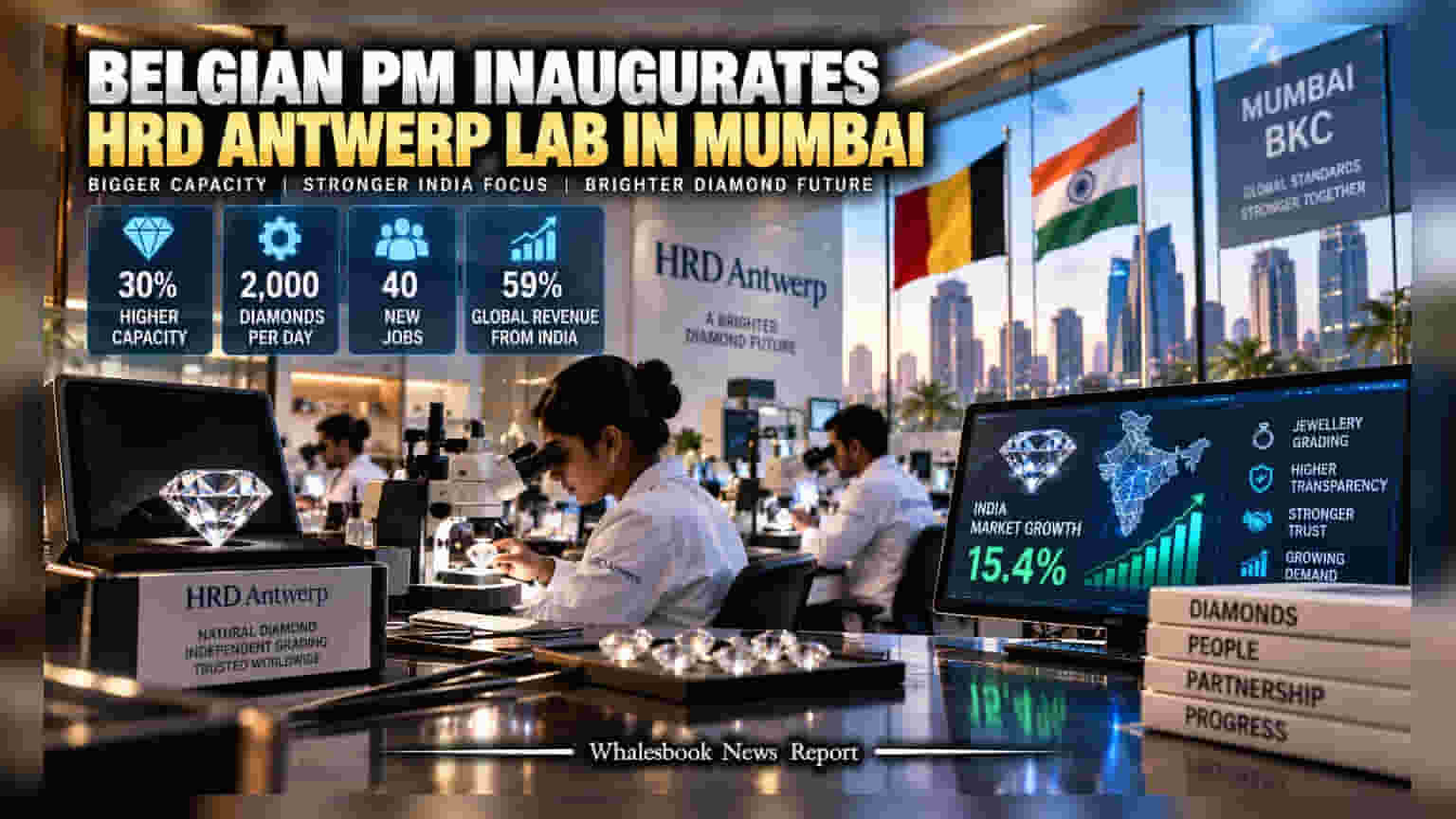
Belgian Prime Minister Bart De Wever has inaugurated an expanded HRD Antwerp laboratory in Mumbai, boosting daily diamond grading capacity by 30% to 2,000 stones. This expansion underscores India's importance as a primary market, contributing 59% of the firm's global revenue. While the company is not publicly traded, this development serves as an important metric for the health and transparency trends within India's diamond trade sector.
Belgian Prime Minister Bart De Wever has officially inaugurated a significantly expanded HRD Antwerp laboratory at the Bandra Kurla Complex (BKC) in Mumbai. The facility, which serves as a critical hub for the Belgian diamond grading authority, has increased its daily processing capacity by 30%, allowing it to grade up to 2,000 diamonds per day. To manage this increased workload, the company has added 40 full-time employees to its local operations.
The investment marks a strategic commitment to India, which has become the most important market for the organization. According to company figures, India currently accounts for 59% of the group’s total global revenue. The expansion is designed to support a projected growth rate of 15.4% for the Indian arm this year, notably outpacing the 12.6% growth expected across the firm's global operations. A major driver of this activity is the jewellery grading segment, which has emerged as a significant contributor to the firm's total revenue growth as local manufacturers and retailers increasingly seek independent, objective certification.
While HRD Antwerp is a subsidiary of the Antwerp World Diamond Centre and is not a publicly traded entity on Indian stock exchanges, this expansion provides a useful indicator of trends within the broader gem and jewellery sector. The move reflects a long-term shift toward higher transparency and independent certification, a trend that can influence how Indian jewellery retailers and exporters operate in international markets. Operating in India since 2012, the firm now serves approximately 1,500 domestic entities, including diamond traders and large-scale jewellery chains.
However, investors and industry observers should be aware of the inherent risks associated with such high market concentration. With 59% of its global revenue dependent on the Indian market, the company faces exposure to localized economic shifts, changes in domestic diamond industry policies, and volatility in global luxury demand. The diamond sector remains sensitive to fluctuations in consumer spending power and international trade regulations. Maintaining the quality of service while scaling up operations by 40 staff members will also be an operational challenge for the firm. The long-term success of this expansion will depend heavily on the continued demand for high-value certified diamonds and the stability of global trade routes for gems, which remain essential monitorables for the overall industry.