

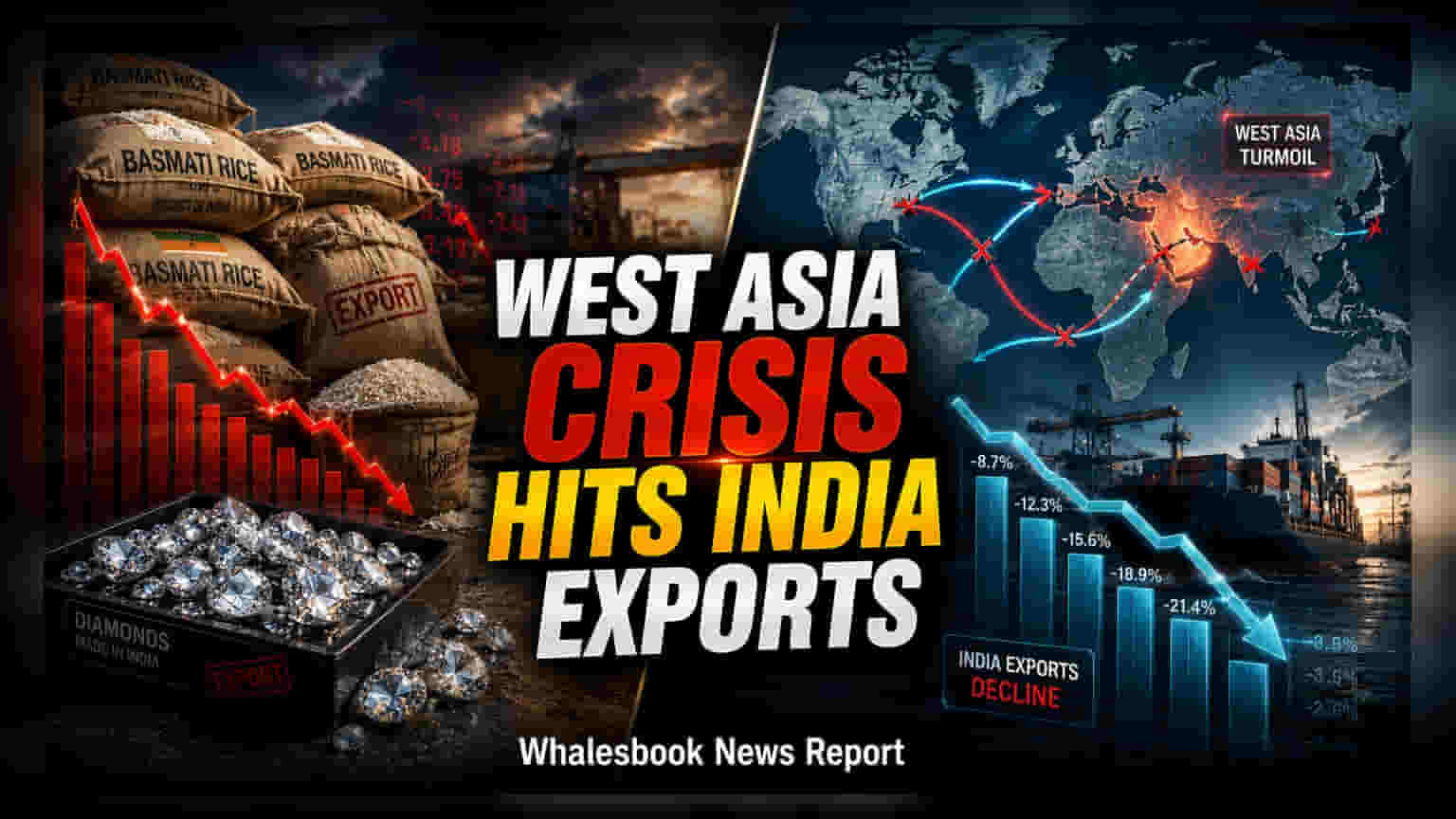
India's basmati rice and precious stone exports declined by 15% and 22.5% respectively between February and May 2026. This drop follows a sharp decrease in shipments to West Asia due to regional instability. While other sectors like telecom have successfully found new buyers, the lack of immediate market alternatives for rice and gems has created specific pressure on these export categories.
The latest Monthly Economic Review for July 2026 reveals that India’s export sector is facing a mixed impact from the ongoing crisis in West Asia. While the broader merchandise trade has shown resilience, specific industries—notably basmati rice and precious stones—have experienced a notable contraction due to their heavy dependence on this key regional market.
Impact on Rice and Gem Shipments
The data shows that between February and May 2026, basmati rice exports to the West Asia region fell by 31.9%. Although Indian exporters attempted to pivot by increasing shipments to the United Kingdom, Turkey, and the United States, these efforts could not fully offset the regional losses. As a result, total basmati rice exports from India recorded an overall decline of 15% for the period. Similarly, the segment for pearls, precious, and semi-precious stones saw a 36.5% drop in exports bound for West Asia. Despite higher demand from markets like Canada, Switzerland, and the United States, the total export figure for this category fell by 22.5%.
Export Diversification Challenges
The Finance Ministry pointed out that the struggle in these sectors stems from limited scope for immediate market diversification. Unlike other commodity groups that could quickly adjust their supply chains to reach new global buyers, rice and precious stones have faced structural hurdles in replacing their traditional West Asian customer base. This highlights the risk of geographic concentration for exporters in these industries, where demand is highly sensitive to regional stability.
Resilience in Other Export Segments
In contrast, other parts of the Indian export economy have displayed greater flexibility. For instance, sectors such as telecom instruments and electric machinery recorded growth in overall exports despite the regional instability in West Asia, as they successfully tapped into robust demand from the United States and other regions. The Ministry also noted that categories such as buffalo meat and ships, boats, and floating structures managed to increase their trade volumes with West Asian countries during the same period, indicating that the impact of the conflict has not been uniform across all sectors.
Investors may monitor the next quarterly export data to see if companies in the agriculture and gemstone sectors can stabilize their margins or if they continue to face pricing pressure due to the loss of key regional markets. The ability of these industries to secure long-term trade agreements in alternative regions will be the primary factor in determining their recovery trajectory.