

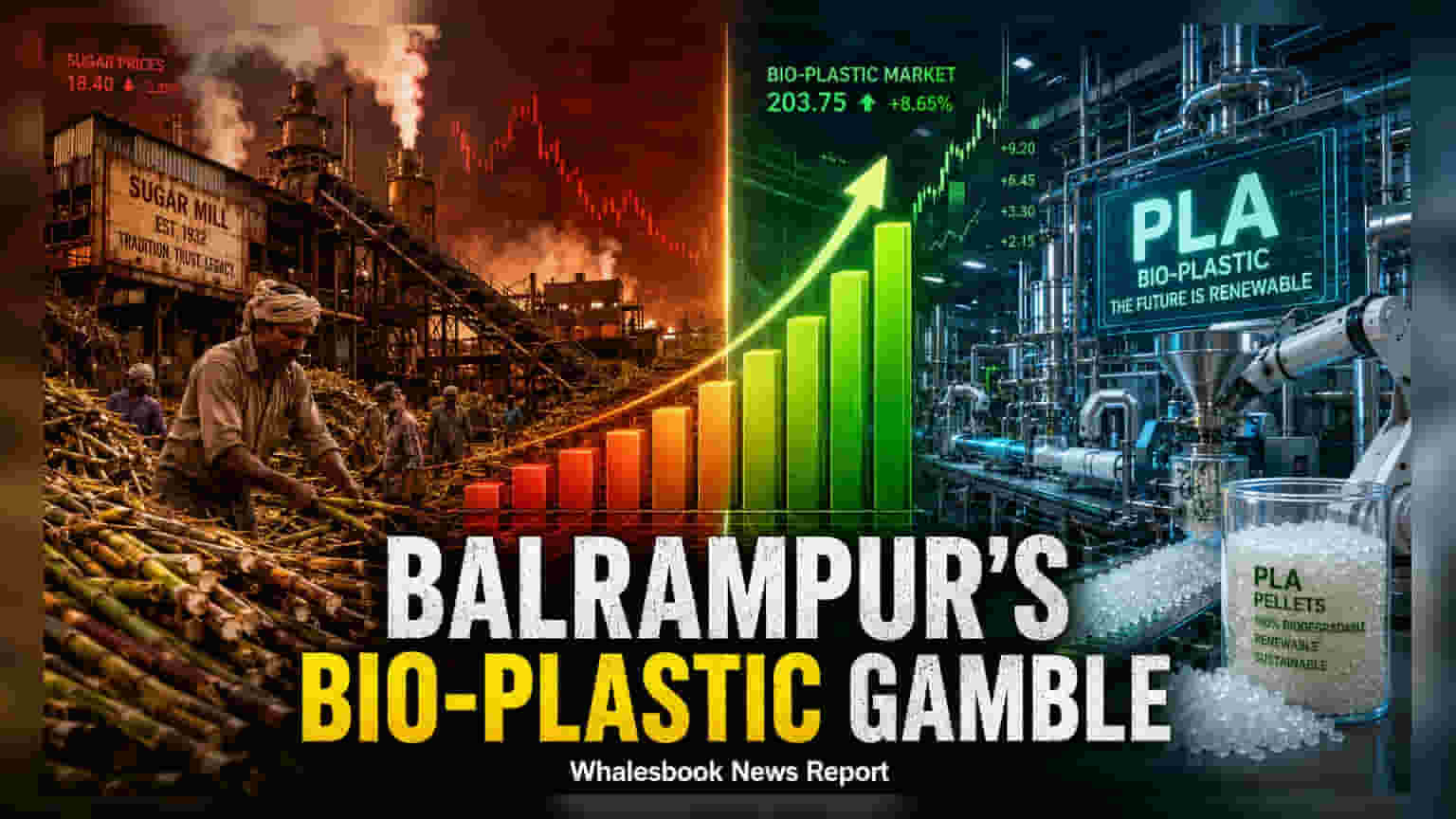
Balrampur Chini Mills is expanding into bio-plastics with a new 8,000-tonne Polylactic acid (PLA) plant expected by Q2 FY27. This ₹3,080 crore project aims to diversify the company beyond its core sugar and ethanol operations. Investors may track whether the company can successfully scale this new business to improve long-term profit margins amidst ongoing sugar industry challenges.
Balrampur Chini Mills is undergoing a major business transformation as it moves to become an integrated producer of bio-plastics. The company is setting up a facility to manufacture Polylactic acid (PLA), a biodegradable plastic alternative, with an investment of ₹3,080 crore. This project is currently scheduled to begin operations by the second quarter of the 2027 fiscal year.
Diversification and Financial Goals
The move into PLA is designed to reduce the company's reliance on the cyclical sugar industry. Historically, Balrampur Chini has relied on its sugar, ethanol, and power co-generation businesses. By entering the bio-plastics market, the company aims to move toward higher-value products. Management estimates indicate the new PLA facility could generate annual revenue of approximately ₹2,000 crore at full capacity. With a guided operating profit margin of 35%, this project has the potential to significantly increase the company's total operating profit in the coming years.
Beyond PLA, the company is also investing about ₹160 crore to build a facility to produce lactogypsum boards using a by-product from the PLA process. This secondary unit is expected to commission within 18 months and is projected to contribute an additional ₹150 crore in annual revenue.
Industry Challenges and Execution Risks
While the expansion is a significant strategic step, the company faces pressure in its traditional sugar and ethanol segments. For the 2026 sugar season, national output is expected to be lower than earlier estimates due to reduced cane yields in states like Maharashtra, Uttar Pradesh, and Karnataka. Furthermore, the government’s ongoing ban on sugar exports continues to limit flexibility in the sugar business.
Regional weather conditions also remain a point of concern for investors. A significant portion of the company's manufacturing plants is located in eastern Uttar Pradesh, where deficient rainfall has been reported. Additionally, the company must navigate the impact of rising cane costs. While the State Advised Price (SAP) for sugarcane was increased in fiscal year 2026, there was no matching upward revision in ethanol procurement prices, which has put pressure on margins. To support the funding of its PLA and board projects, the company recently raised ₹450 crore through a preferential share issue, with ₹193 crore contributed by the promoters.
Monitoring Future Performance
As the company implements this shift, the most important factor for investors will be the successful execution of the PLA project. Investors may track updates on the commissioning timeline, the cost of raw materials, and the company's ability to achieve its target profit margins once the plant is operational. Future financial reports will also be closely watched for signs of how the expansion affects the company’s debt levels and its overall return on capital.