

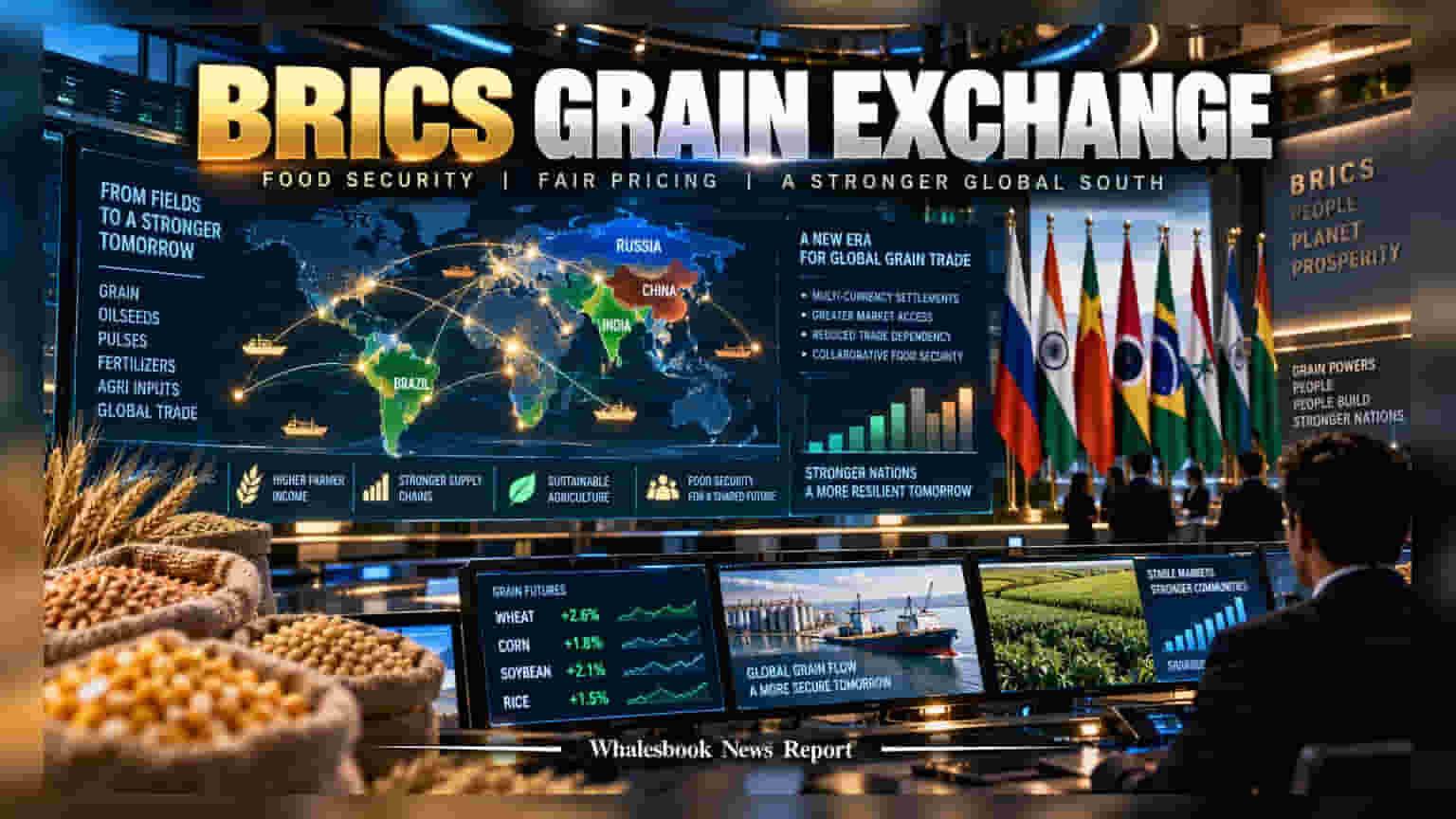
Member nations have officially agreed to develop an independent BRICS Grain Exchange at the New Delhi Summit. The platform aims to counter Western-dominated market benchmarks and stabilize food trade for developing economies. While the proposal is now recognized, investors should monitor the project for technical and liquidity details, as it faces competition from well-established global exchanges.
The BRICS bloc officially endorsed the establishment of a new Grain Exchange during the 2026 Summit held in New Delhi on September 12. This initiative, championed primarily by Russia, marks a significant strategic move to create an independent, digital trading platform for grain and other agricultural commodities. The goal is to provide a viable alternative to established Western-dominated systems, such as the United States-based CME Group, which currently set global agricultural benchmarks.
Strategic Objectives and Market Shift
For the expanded 11-member BRICS bloc, which accounts for a significant portion of global GDP and agricultural output, the initiative aims to increase sovereignty over food supplies. By moving toward a platform that emphasizes national currencies or alternative payment mechanisms, the group seeks to reduce reliance on dollar-based pricing and Western-centric trading infrastructure. Proponents suggest that this shift could lead to more stable pricing and lower trade costs for member nations, though the operational framework is still in the early stages of development.
Along with the exchange, the summit saw the formal agreement to establish the BRICS Agro-Inputs, Genetic Resources, and Information Network (BRICS AGRIN). This network is designed to foster deeper collaboration among members on agricultural policies, climate resilience, and seed technology. These efforts are part of a broader commitment to ensuring food security across diverse geographies, from fisheries to large-scale grain cultivation.
Challenges and Implementation Risks
While the official recognition of the exchange is a major diplomatic step, the project faces significant practical challenges. The most critical risk is its ability to attract sufficient trading volume and liquidity. Established platforms like the CME Group and the Intercontinental Exchange (ICE) have deep pools of liquidity and are trusted globally by hedgers, traders, and institutional investors. A new exchange will need to prove it can offer comparable reliability, clearing, and settlement services to gain widespread adoption.
Furthermore, the initiative requires a high degree of technical and regulatory consensus among the 11 member nations. Achieving a harmonized framework for international trade that involves different legal systems and financial regulations is a complex, long-term undertaking. Investors and stakeholders should keep in mind that the current status is an official endorsement of the proposal. The path to a functional, liquid exchange involves years of deliberation on operational modalities, infrastructure development, and establishing trust with global market participants.
The next important updates to watch will be the release of specific technical frameworks, pilot project timelines, and details on how the exchange plans to handle cross-border clearing and settlement. These factors will determine whether the platform becomes a meaningful competitor to existing global grain markets or remains a primarily diplomatic and policy-focused initiative.