

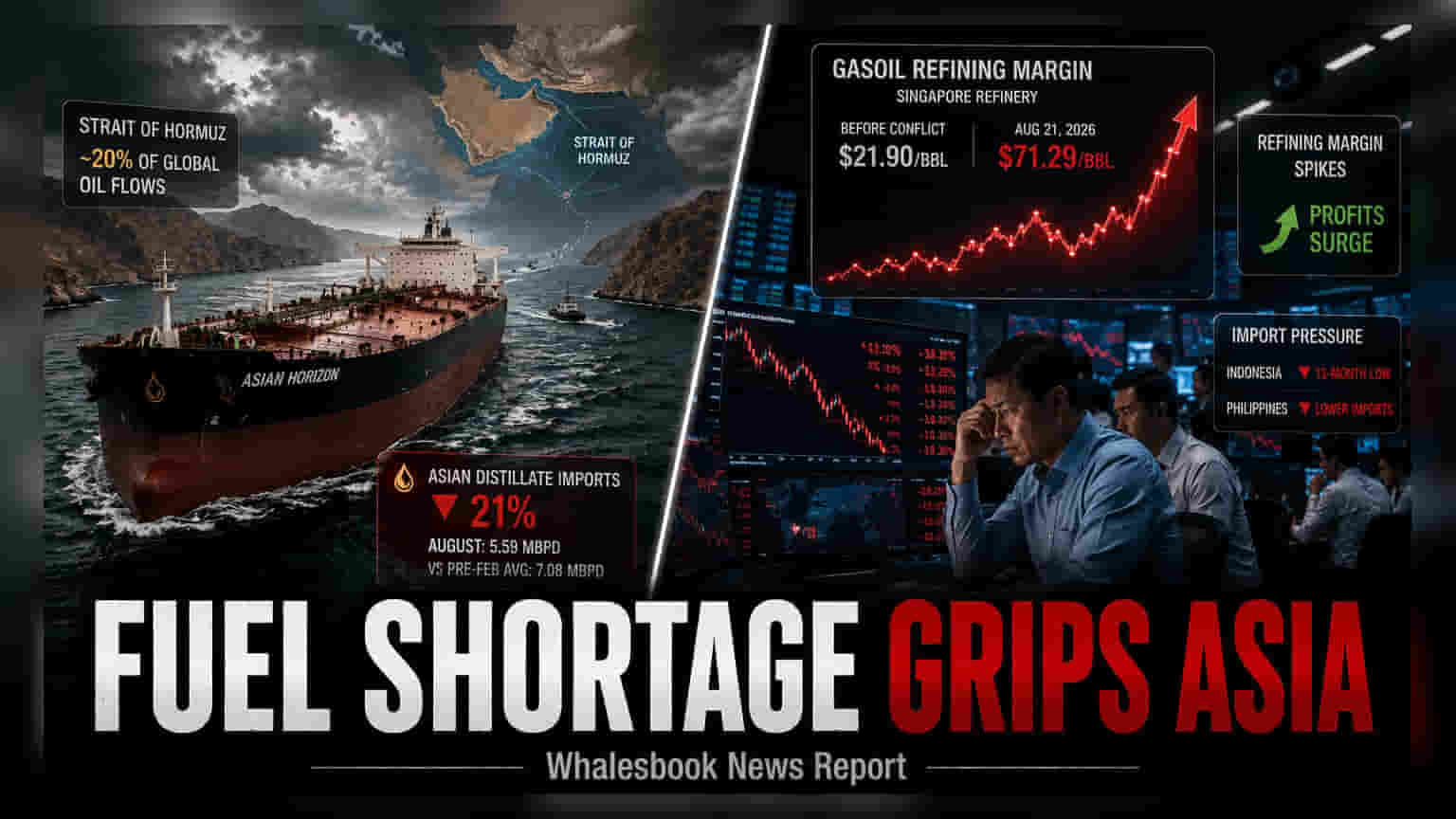
Asian markets face a critical shortfall in refined fuels like diesel and jet fuel, with imports dropping 21% below pre-conflict levels. This supply gap has pushed refining margins at Singapore hubs to $71.29 per barrel, up from $21.90. While this spike supports profits for refiners, it creates significant inflationary pressure and supply risks for nations that rely heavily on imported energy.
The global oil market is currently fixated on crude oil flow estimates through the Strait of Hormuz. However, data suggests that the true pressure point for the Asian economy lies elsewhere: a persistent and severe shortage of refined products like diesel, jet fuel, and gasoline. While crude headlines grab attention, the scarcity of finished fuels is having a more immediate impact on regional energy security and corporate profitability.
The Refining Margin Spike
Recent data highlights a sharp decline in Asian light and middle distillate imports. In August, these imports were estimated at 5.59 million barrels per day, which is a 21% drop from the 7.08 million barrels per day average seen in the three months prior to late February. This creates a supply gap of roughly 1.49 million barrels per day for essential fuels.
This lack of supply has sent refining margins—the difference between the cost of crude oil and the price of the finished fuel products—to extremely high levels. As of August 21, 2026, the refining margin for a barrel of gasoil at a Singapore refinery reached $71.29. This is a dramatic increase compared to the $21.90 margin seen before the conflict. For oil refining companies, these elevated margins often translate to higher short-term profits. However, these figures also signal that the market is struggling to produce enough fuel to meet basic demand, creating a volatile price environment.
Economic Impact and Regional Risks
The consequences of this fuel shortfall are not distributed evenly. Wealthier nations, such as Australia, have managed to maintain their fuel supply levels relatively well, though they are forced to pay these record-high market prices. Conversely, less affluent Asian countries are struggling to secure enough volume, leading to potential economic instability.
Indonesia, for example, is seeing its light and middle distillate imports drop to a 13-month low, falling below its pre-conflict averages. The Philippines is also facing similar pressures with lower-than-usual import volumes. For these countries, the combined burden of high fuel prices and supply scarcity can lead to rising inflation and may hinder economic growth. When businesses pay significantly more for diesel or jet fuel, those costs are often passed on to consumers, affecting the price of goods and transportation.
Investors tracking this sector should watch closely for shifts in refining margins and import volumes. While high margins may support the earnings of regional refiners, the sustainability of these profits depends on whether demand holds up at these high prices. If fuel costs remain elevated for too long, it may trigger demand destruction, where users simply stop using the fuel, eventually forcing prices and margins to cool down. The next key data points to follow include monthly import statistics from major Asian economies and any changes in refinery output levels.