 Whalesbook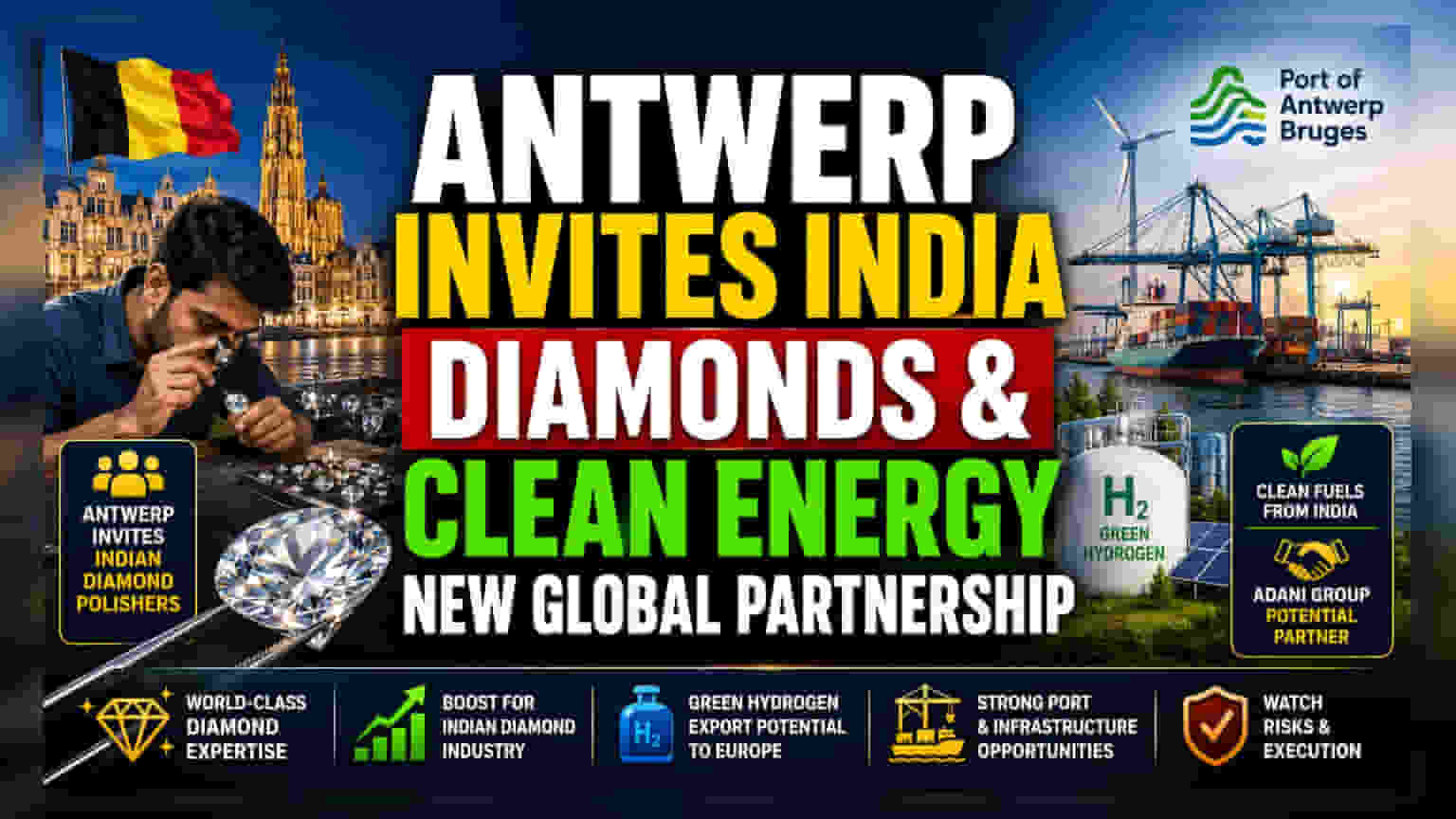


Antwerp, Belgium, is easing immigration rules to attract Indian diamond polishers, aiming to address labor shortages. Simultaneously, the port is exploring clean energy partnerships with India, with the Adani Group named as a potential collaborator. For investors, this underscores the global reliance on Indian skilled labor in the diamond sector and the rising international interest in India’s green energy capabilities.
What Happened
Antwerp, Belgium, one of the world's most significant centers for the diamond trade, is taking steps to attract skilled diamond polishers from India. The city’s administration is simplifying immigration processes to bring in experts, citing a persistent labor shortage that threatens the city's role in the global diamond market. Beyond the diamond trade, the Port of Antwerp-Bruges is also looking toward India to meet its future clean energy needs. Officials from the port have expressed interest in sourcing clean fuels, such as green hydrogen, from India to support Europe’s energy transition. During discussions, the Adani Group was highlighted as a potential partner, given its existing infrastructure and business footprint.
The Diamond Sector Context
For the Indian diamond industry, centered largely in hubs like Surat and Mumbai, this development highlights the global value of Indian expertise. While the sector in India has faced recent challenges—including fluctuating global demand, high inventory levels, and the competitive rise of lab-grown diamonds—the demand for skilled polishers of high-value natural diamonds remains a specific niche. Antwerp’s move suggests that even as the industry evolves, the specialized skill set of Indian craftsmen remains a critical component for maintaining the viability of high-end diamond manufacturing in traditional European centers.
Energy Transition and Infrastructure
The interest in Indian clean fuels is a significant signal regarding India’s emerging role in the global green energy supply chain. The European market is increasingly focused on importing green energy to meet decarbonization goals, and India’s push toward green hydrogen and renewable energy infrastructure is drawing attention from major international gateways like the Port of Antwerp-Bruges. For a large conglomerate like the Adani Group, which has focused heavily on port infrastructure, logistics, and renewable energy, this indicates potential for long-term international trade alignment. However, such projects are capital-intensive and typically have long gestation periods before they contribute to financial performance.
Why This Matters For Investors
Investors may look at this as a two-fold development. First, it reaffirms the resilience of the Indian diamond polishing sector, which, despite cyclical demand pressures, remains a key node in the global supply chain. Any policy shift that facilitates labor mobility can help Indian diamond companies manage human resource costs and maintain operational stability. Second, the energy partnership highlights the potential for Indian companies to export green energy-related products or technology to Europe. This is part of a broader trend where Indian industrial players are looking to integrate into European energy infrastructure.
Risks and Considerations
While these developments are noteworthy, investors should remain aware of inherent risks. The global diamond industry is highly sensitive to consumer sentiment in major markets like the United States and China. Economic slowdowns in these regions often lead to reduced demand for luxury goods, which can impact profitability for polishing units. Regarding the clean energy and infrastructure front, large-scale projects involving international energy imports face complex challenges, including regulatory hurdles, high initial spending requirements, and shifting global energy policies. Success will depend on the ability to execute these projects on time and within budget, as well as the long-term viability of green fuel pricing in global markets.
What Investors Should Track
Moving forward, the primary monitorables include any formal agreements or Memorandums of Understanding (MoUs) signed between Indian entities and the Port of Antwerp-Bruges. Investors should also watch for updates on the diamond industry’s export data to understand if the labor-related changes lead to increased efficiency or volume in trade. On the energy side, tracking the progress of major Indian conglomerates in securing international green energy contracts will provide better insight into the potential revenue impact of these strategic initiatives.